

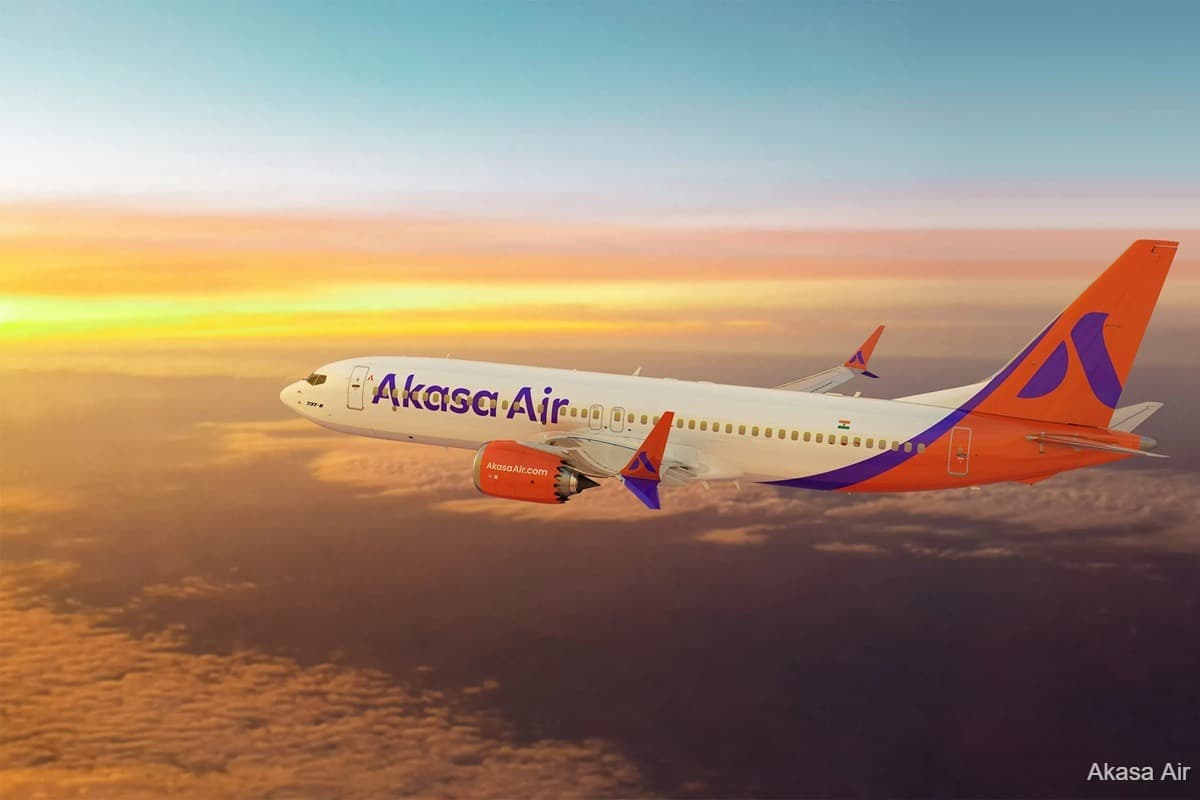
(July 14): Akasa Air is looking to raise 10.5 billion rupees (RM450 million) through equity and debt, people familiar with the matter said, as India’s youngest airline seeks funds to overcome challenges brought on by the Iran war.
The airline has approached existing as well as two new investors to raise about eight billion rupees through equity, said the people, who asked not to be identified as the discussions are private. It is also in talks with state-run banks for at least 2.5 billion rupees in debt, they said, under an India government credit line for carriers hit by the conflict.
Akasa, which began operations in August 2022 and is owned by SNV Aviation Pvt, raised funds from investors in June last year based on market conditions that later shifted after the conflict between Iran and the US. The war triggered flight disruptions and a surge in jet-fuel prices — which accounts for about 40% of an airline’s operating costs — creating fresh financial pressure.
Its need for additional capital reflects the broader strain facing both Indian and global carriers. Tata Group-owned Air India Ltd recently reported its highest-ever loss and is seeking funds from its founders, including Singapore Airlines Ltd. Budget carrier SpiceJet Ltd is separately in talks with banks to raise as much as five billion rupees as part of the government’s credit programme, local media reported.
For the equity portion, Akasa’s existing owners will contribute five billion rupees and the remainder will come from one Asian investor and one American investor, said the people.
While Akasa did not directly comment on its fundraising plans, the company said it looks forward to availing the benefits of the government’s credit line, “as appropriate, to further strengthen our growth plans".
SNV Aviation’s shareholders include Akasa’s founder and CEO Vinay Dube, the family of the late billionaire Rakesh Jhunjhunwala, a private equity fund overseen by 360 ONE Asset Management and other investors.
Despite the war-induced headwinds, Akasa has been the only airline to meaningfully expand its operations in the local market. While industry capacity dropped 6% in March and April, the Mumbai-based carrier increased flights by 13.2% compared with a year earlier.
Industry observers say the war in the Middle East, if it drags on, has the potential to become a systemic threat.
“The industry could face structural changes in how capacity is allocated and how it manages fuel risk,” said Amit Mittal, director at consultancy AeroIntellect Aviation. It “has already materially reduced capacity, increased costs, and forced a sharp rethink of route networks and risk management across the global airline industry.”
Akasa, which operates a fleet of 40 Boeing 737 MAX aeroplanes, announced last month that its operating revenue increased 37% in the year ended March 31. This was supported by a 30% growth in capacity measured by available seat kilometres.
The airline also announced plans to increase capacity by 30% during the current financial year ending March 31, 2027, chief financial officer Ankur Goel told reporters last month.
Uploaded by Arion Yeow