

This article first appeared in Capital, The Edge Malaysia Weekly on July 13, 2026 - July 19, 2026
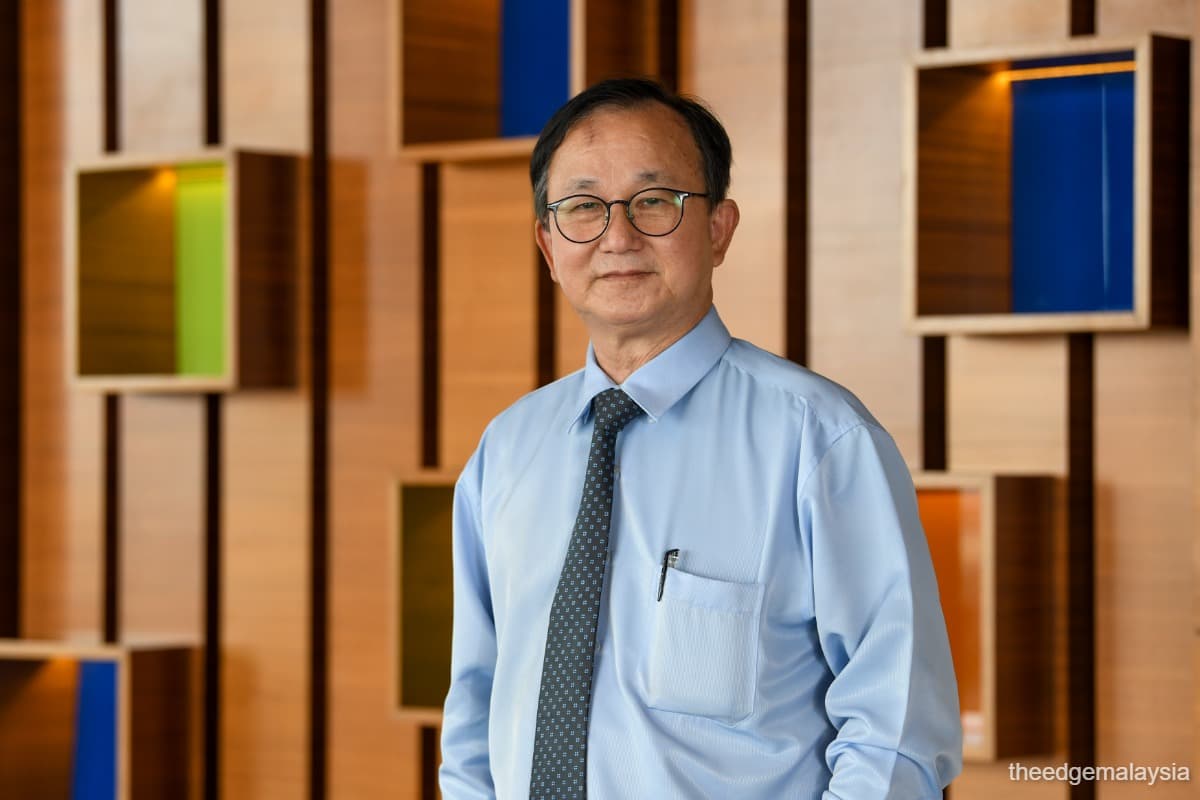
LISTED on Bursa Malaysia’s ACE Market in late 2024, Metro Healthcare Bhd (KL:METRO) is in a long-term growth phase. Its founder and executive vice-chairman Dr Tay Swi Peng @ Tee Swi Peng says returns from its diversification into the multidisciplinary Rimbayu Medical Centre in Bandar Rimbayu, Shah Alam, will only be realised five to seven years from now.
The group plans to invest RM200 million to build the 120-bed hospital, with part of the capital expenditure (capex) funded through equity.
“We are not on a capex expansion, and I do not expect a sudden jump [in capex]. But for those who are going on this long march with us, invest with us. I don’t think the destination [investment returns] will be reached in two years’ time,” says Tee, a practising obstetrician and gynaecologist.
The provider of fertility, obstetrics and gynaecology (O&G) services started as a maternity centre known as Tee Maternity and Gynae Specialist Centre in Klang, Selangor, in 1989. Tee ventured into fertility care treatment — intrauterine insemination (IUI) and in-vitro fertilisation (IVF) — in 1998 under the Metro IVF Fertility Centre brand name.
Today, the group operates 16 O&G facilities, comprising three maternity hospitals, six fertility centres, six clinics for women and one diagnostic imaging centre.
At its extraordinary general meeting (EGM) on June 29, shareholders voted for a proposal to issue up to 244.73 million free warrants on the basis of one warrant for every four existing ordinary shares in the group.
The proposal, alongside another — for the variation of usage for RM15.5 million, or 65.7% of the balance of proceeds from its initial public offering (IPO) — was approved by shareholders.
Assuming the full exercise of the warrants at the illustrative exercise price of 20 sen each, Metro Healthcare is expected to raise up to RM48.9 million, which is earmarked to fund its future working capital and/or capex.
Metro Healthcare graduated from the LEAP Market, where it had been listed since 2018, to the ACE Market in November 2024, raising RM39.16 million through its listing.
According to the group, the reallocated IPO proceeds are expected to be used for healthcare-related services including multidisciplinary specialist services. In total, the group has reallocated RM23.53 million from its IPO proceeds for diversification.
Asked about the rationale for the diversification, Tee says it is aimed at hedging against any “eventualities” affecting the IVF business, but he did not specify what those eventualities might be. “We cannot just stay on with this speciality in obstetrics and gynaecology and IVF. Because just like any other business, it can be good now, [but] we cannot say that it will continue to be good,” he says.
“In other words, we are looking at providing a better business environment for our investors, so that in case of any eventuality, our business will still be here.”
In February last year, Tee said Metro Healthcare would focus on expanding its maternity healthcare business to strengthen its position as a leading women’s healthcare provider. At the time, the group was considering acquiring a four-storey shopoffice in Subang Jaya that housed a 10-bed maternity hospital operated by Quality Health Care Sdn Bhd.
The deal was aborted six months later after the seller failed to fulfil its obligations under the sale and purchase agreement signed in February.
Then, in October, Metro Healthcare announced that it would diversify beyond O&G through the RM320,000 cash acquisition of Tee’s RMC Specialist Sdn Bhd.
RMC Specialist owns a four-acre commercial parcel in Bandar Rimbayu, the site of the planned Rimbayu Medical Centre. Its first phase will comprise 120 beds and five operating theatres, with construction slated to begin in the third quarter of this year and be completed within two years.
Tee expects the hospital, which will have a total built-up area of 340,000 sq ft, to start generating returns within two years of its establishment. He says profitability is unlikely to rise significantly in the near term as the group will incur capex on the new venture without immediate returns.
“Investors investing in [Metro Healthcare] have to expect that they are investing for the long term. But when the fruit finally arrives, I think it will be a different picture,” says Tee.
Of the RM200 million cost to build Rimbayu Medical Centre, RM48.9 million will come from warrant conversion and RM23.53 million from the variation of IPO proceeds.
This means Metro Healthcare will need to borrow up to RM127.57 million from financial institutions to fund the remaining capex.
As at March 31, 2026, Metro Healthcare had no bank borrowings. Its liabilities comprised long-term lease liabilities of RM16.26 million, short-term lease liabilities of RM1.9 million and short-term trade and other payables of RM6.26 million.
On the other side of the balance sheet, the group had RM17.13 million in cash and bank balances and RM32.24 million in fixed deposits. The business generated net cash of RM1.75 million in its first quarter ended March 31, 2026.
The scale of Rimbayu Medical Centre represents a significant undertaking for Metro Healthcare, given its share capital base of RM56.3 million and total assets of RM100.8 million as at March 31, 2026. If Metro Healthcare were to raise RM120 million in bank borrowings at a low fixed interest rate of 4%, the group would incur RM4.8 million in annual interest.
The group generates RM9 million to RM10 million in annual net cash from operations, based on its FY2024 and FY2025 financial results. Over the two years, it reported net profits of RM4.6 million and RM5.9 million on revenue of RM48.6 million and RM50.4 million respectively.
The new hospital is projected to deliver an annual return on investment of 15% to 20%, according to Tee, implying a payback period of five to seven years.
“I think the establishment of this hospital will take two to three years. And after that, there’s also a gestational period. So, that will come to five to seven years [payback period].”
Asked whether he expects Metro Healthcare to grow aggressively in the near future, Tee says it depends on the support of shareholders and investors who are willing to commit their capital to the group.
“Of course, if I had RM1 billion in our portfolio, then expanding would not be an issue. But our funds are limited. We have to make use of these funds, maximise the outcome and not make the base we are sitting on unstable,” he says.
Tee and his wife, Dr Kong Lan Moon, who is also a non-independent non-executive director, collectively hold a direct interest of 58.17% and an indirect interest of 5.05% in Metro Healthcare.
Since its debut on the ACE Market, Metro Healthcare’s shares have declined 5.76% to 23 sen as at last Tuesday, giving the company a market capitalisation of RM225.1 million.
Save by subscribing to us for your print and/or digital copy.
P/S: The Edge is also available on Apple's App Store and Android's Google Play.