

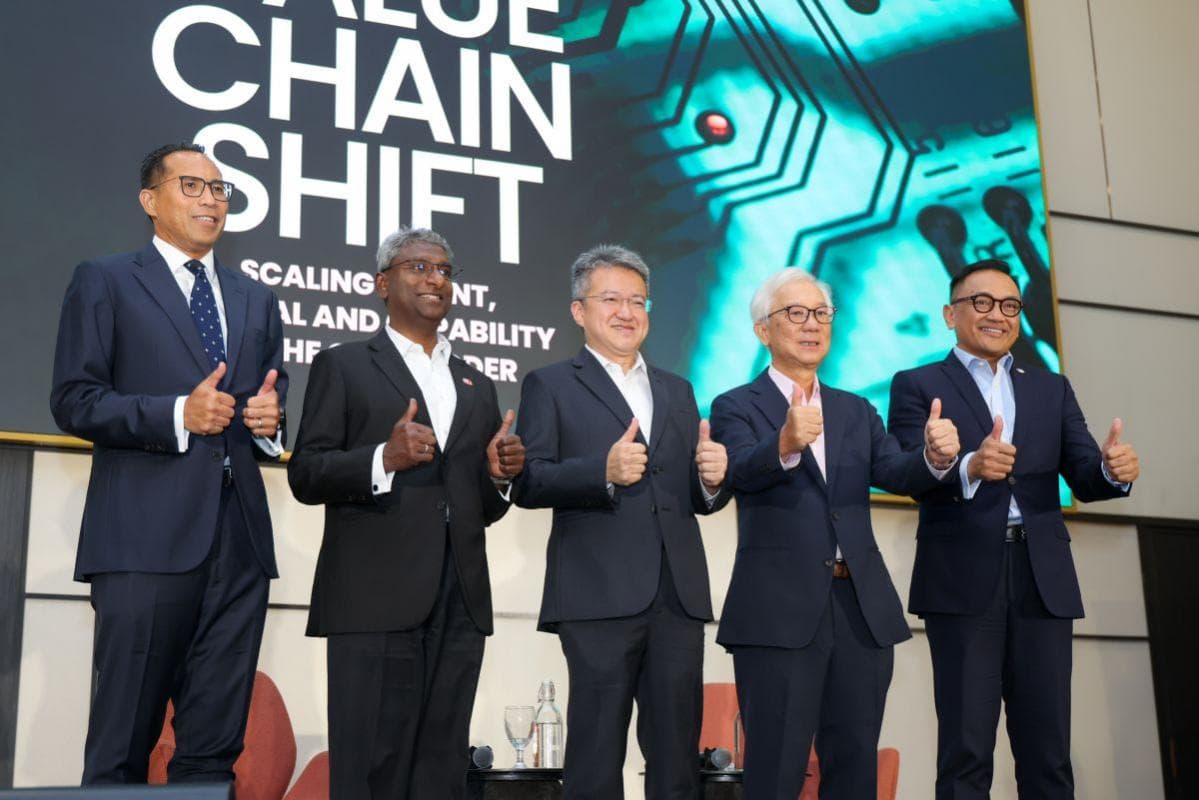
KUALA LUMPUR (July 13): Malaysia’s semiconductor industry needs better access to capital financing. At the same time, the industry needs to focus on its niche strength within the global semiconductor supply chain to secure the country’s position moving forward.
Speaking at The Edge-HSBC E&E Symposium 2026, Deputy Finance Minister Liew Chin Tong said that the country's biggest challenge is no longer capability, but ownership of the value it creates.
Organised in collaboration with HSBC Bank Malaysia, the symposium, themed 'The Value Chain Shift: Scaling Talent, Capital and Capability Up the Chip Ladder', was held at the KLGCC Convention Centre and attracted 460 participants — comprising 206 in-person attendees and 254 virtual participants — from across Malaysia's semiconductor and electronics ecosystem. The event was supported by IJM Corporation Bhd while Sime Darby Property Bhd acted as the venue sponsor.
Malaysia has been “an indispensable player” and its engineers have spent decades developing world-class semiconductor designs and intellectual property (IP) within multinational corporations (MNCs) but much of that value continues to be registered, owned and monetised overseas, said Liew.

Citing an example from a 2023 visit to Detroit, Liew said that then-US Commerce Secretary Gina Raimondo told a group of Asian ministers that when Malaysian factories halted production during the Covid-19 pandemic, Detroit's automotive industry was also forced to stop because it relied on semiconductor components produced in Malaysia.
“While we did not produce the most expensive chips and the most top-end products, we were an indispensable part of the ecosystem. The problem was never our capability. It is how little the value our capability creates is kept by Malaysian companies, shareholders and workers,” said Liew.
Economy Minister Akmal Nasrullah Mohd Nasir said in his closing keynote address that in the first quarter of 2026, the Malaysian economy expanded by 5.4%, supported by broad-based growth across services and manufacturing.
Investment momentum also remained strong as Malaysia recorded RM92.8 billion in approved investments during the first quarter of this year, with more than 50,000 jobs expected to be created.
In the first five months of 2026, electrical and engineering (E&E) exports expanded by 39.7% to RM382.9 billion, accounting for 48.2% of Malaysia’s total exports.
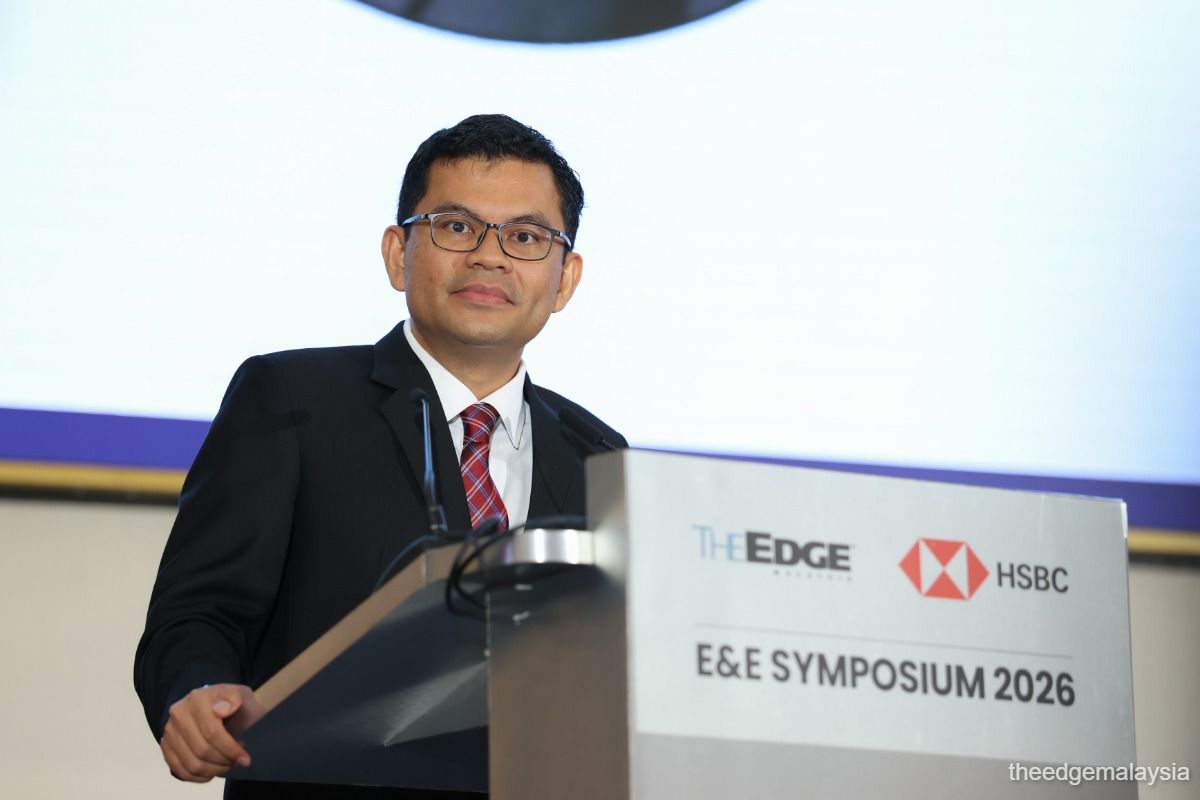
“These figures demonstrate resilience. But they also remind us of our responsibility. A sector that contributes almost half of national exports cannot remain merely a production platform. It must become an innovation platform that drives higher productivity, better wages, stronger local companies and deeper technological capability,” said Akmal.
When the symposium was held in Penang in 2024, the conversation was about Malaysia’s once-in-a-generation opportunity in semiconductors, but now the question is whether the industry can seize it quickly, pointed out Datuk Ho Kay Tat, publisher and group CEO of The Edge Media Group.
“Despite [the economic] cycles, the industry has only trended upward over the long term, as chips find their way into more and more of what we make and use. The numbers have shown that the appetite for chips is insatiable for the foreseeable future,” he said.
“We need to find our sweet spot in the value chain and identify where we can genuinely compete and win, rather than simply doing more of what we have always done. We need to find our footing fast.”
However, the E&E sector’s continued growth and success cannot be taken for granted, reminded HSBC Bank Malaysia Bhd CEO Datuk Omar Siddiq. It also needs to be grounded in deep and strong partnerships with the government, local players and MNCs.
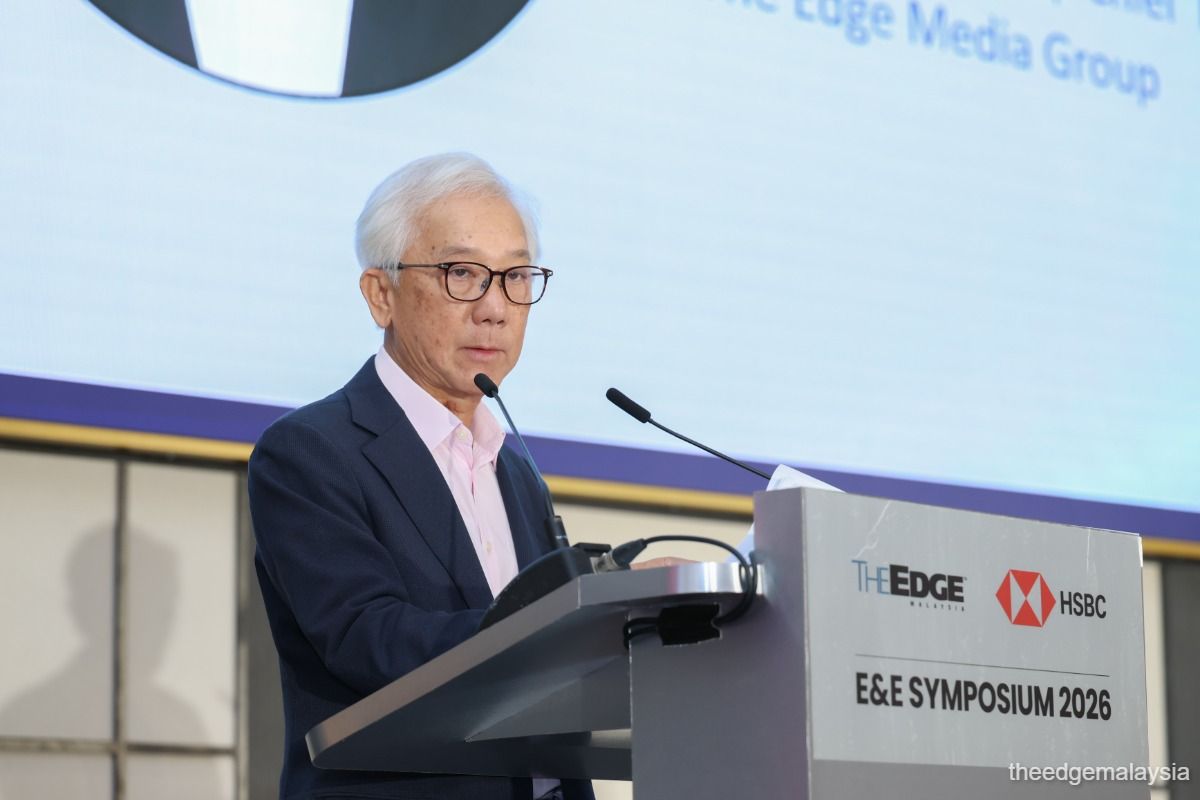
“Given geopolitics, the competitive global landscape that we find ourselves in and the nature of the E&E sector, we will need to move at speed. We will need to ensure that the dialogue between government, our local players and MNCs is constant, deep and continuing, and that key decisions on critical matters are acted upon decisively and very quickly.”
During a fireside chat, Liew stressed that semiconductor expertise must be strengthened across the ecosystem — from regulators such as Bursa Malaysia and government agencies to banks, institutional investors and government-linked companies (GLCs) — to build a financing ecosystem capable of supporting the industry's next phase of growth.
This is because financing semiconductor companies require a deeper understanding of the sector's unique characteristics, including its longer product development cycles, technology risks and capital requirements. Building that expertise across both the public and private sectors is crucial to enabling more effective financing for companies seeking to move up the semiconductor value chain, he added.
“When we talk about the linkage between semiconductors and the capital market, employee share options are a very important point. We don’t necessarily have to pay the same salaries as Singapore, but employees, especially engineers, need to feel that they have a future. That is the missing link that we must fix,” said Liew.
Speaking from the floor, Malaysia Semiconductor Industry Association (MSIA) president Datuk Seri Wong Siew Hai said funds were available, but investors and venture capital firms often sought to exit within a fixed period that was shorter than the industry’s development cycle.

“The time period for the semiconductor industry is longer than normal. The question is whether we can adjust our mindset and support it, even though the journey is longer. The returns, if you look at the world’s most successful companies, can be tremendous,” he said.
HSBC’s Omar added to the discussion, saying that while there was ample liquidity and capital, there was a mismatch in investors’ willingness to accept risk.
“We need to bring Malaysia up in terms of access to risk capital. We need to bring together international investors who are willing to put risk capital into projects that our founders and CEOs want to take on, where the outcome is not entirely clear,” he said.
Liew also said the development of Malaysia’s semiconductor industry is linked to its ability to retain engineering talent, arguing that the country did not lack skilled workers but struggled to offer them sufficiently attractive pay and long-term prospects.
“Malaysia has no talent problem. Malaysia only has a pay problem. The biggest Malaysian talent pool is in Singapore. You just have to bring them back, but whether they want to come back is a separate story,” he said.
More insights from the fireside chat between Liew and Ho, as well as panel discussions featuring Wong, Intel Malaysia Design Centre vice-president and general manager Suresh Kumar Dass, Selangor Information Technology and Digital Economy Corporation (Sidec) CEO Yong Kai Ping, SkyeChip Bhd chief technology officer Teh Chee Hak, Lam Research Malaysia Sdn Bhd corporate vice president & general manager (Southeast Asia) Andrew Goh, and Collaborative Research in Engineering, Science and Technology (CREST) CEO Jaffri Ibrahim, will be featured in a dedicated pullout on the symposium to be published on July 27.