

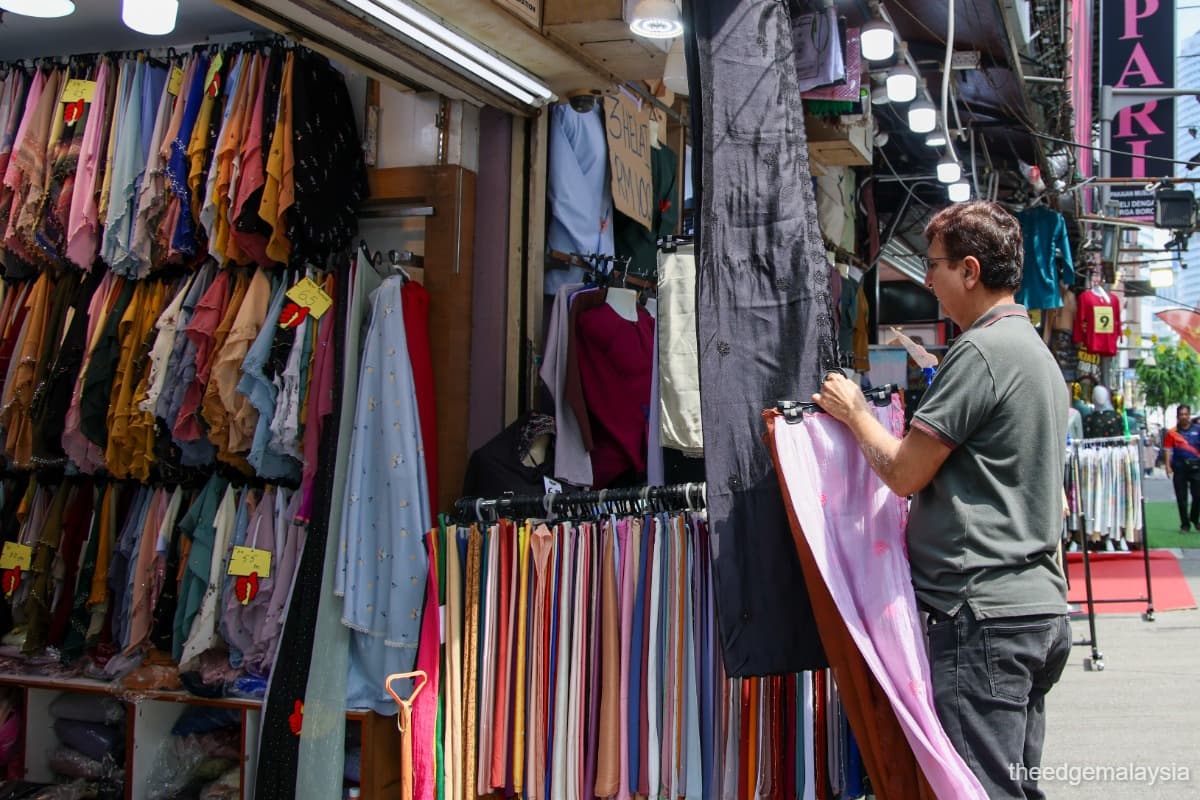
KUALA LUMPUR (July 13): Economists expect Malaysia's distributive trade sector to remain on a positive growth trajectory this year, although expansion is likely to moderate in the second half as consumers become more cautious amid rising cost pressures.
BIMB Securities kept its 2026 distributive trade growth forecast at 5.4% but expects growth to slow in the second half due to lower inventory buildup, higher costs, and cautious consumer spending amid subsidy concerns.
For the first five months of this year, distributive trade growth averaged 9.7%, driven by robust wholesale trade (+14%), retail trade (+7%) and motor vehicles (+4%), the research house noted.
The research house expects a healthy labour market, low inflation supported by targeted subsidies and resilient tourism activity to cushion the slowdown and keep distributive trade on a positive growth trajectory this year.
In addition, the research house also noted that a stronger ringgit could improve household purchasing power by containing imported inflation and reducing input costs.
"Looking ahead, narrowing interest rate differentials between the US federal funds rate (FFR) and Malaysia’s overnight policy rate (OPR), resilient external trade driven by the AI-tech upcycle, and elevated energy prices are expected to provide continued support for the ringgit,” BIMB Securities added.
The BIMB Securities outlook comes after Malaysia's distributive trade sector reported an 11% increase year-on-year to RM171.3 billion in May, easing from April's 15.3% expansion — the strongest expansion in nearly four years, largely driven by higher prices.
The sector was supported by an 18.4% increase in wholesale trade and a 7.2% rise in retail trade, while motor vehicle sales declined 2.3%.
In 2025, the distributive trade sector expanded 5.6% to RM1.87 trillion.
The latest distributive trade figures came as consumer price inflation accelerated to 2% in May, the highest level since July 2024. On a seasonally adjusted basis, the index was up 0.1% month-on-month in May.
Inflation in Malaysia has remained relatively more benign than in many other Asian countries while oil prices have begun moderating as geopolitical conflict in the Middle East eased following a temporary truce between the US and Iran.
Targeted subsidies and price controls on essential goods have partially shielded the average Malaysians against spikes in prices of global commodities.
MBSB Research expects retail sales growth to ease to 5.5% in 2026 from 6.1% last year, as it cautioned that the consumer spending outlook may be constrained by higher prices as reflected in the gradual uptrend in consumer price index (CPI) inflation.
It noted that consumers have already been affected by higher transport and utility charges following adjustments in fuel and energy prices, while cost pass-through from businesses and supply chain disruptions could keep inflation elevated in the second half of the year, despite easing geopolitical tensions and lower crude oil prices.
TA Securities was more sanguine, saying that while inflation risks remain tilted to the upside, overall price pressures remain manageable and unlikely to materially weigh on consumption momentum.
The research house has maintained its 2026 private consumption growth forecast at 4.8%, with household spending continuing to serve as a key pillar of economic expansion.
It nevertheless warned that a prolonged period of elevated energy costs or faster-than-expected subsidy rationalisation could pose downside risks to household spending and warrant a reassessment of its consumption outlook.