

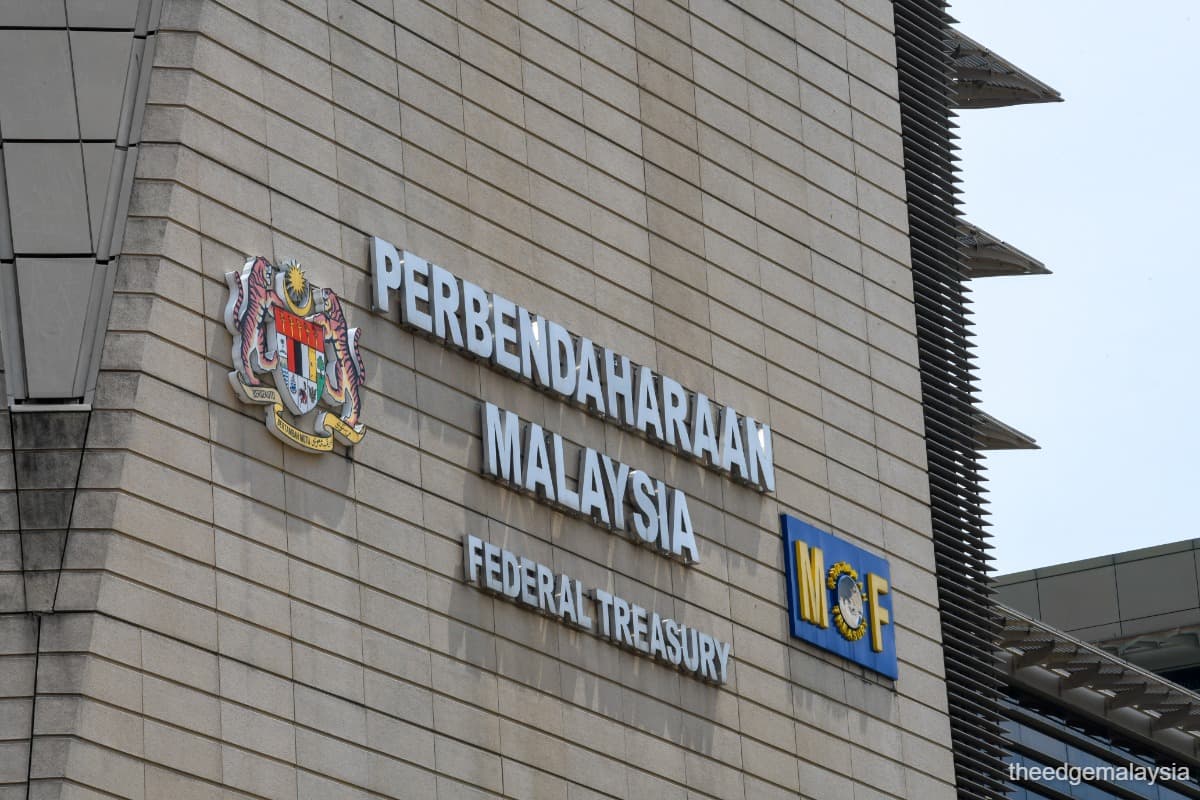
KUALA LUMPUR (July 9): The Ministry of Finance (MOF) has disclosed the reasons behind its decision to terminate the letter of intent awarded to a joint venture between Berjaya Group and Naza Group for a government fleet management contract seven years ago.
One of the key issues was a difference between the shareholders of the consortium's special purpose vehicle (SPV), Cekap Urus Sdn Bhd, as declared in the tender documents and those registered with the Companies Commission of Malaysia (SSM).
Treasury deputy secretary general (investment) Datuk Dr Shahrazat Haji Ahmad said the tender documents listed Berjaya Corporation Bhd (KL:BJCORP) and Naza Corporation as the SPV's shareholders. However, SSM records showed that Cekap Urus' shareholders at the time were Berjaya Corporation Automotive Sdn Bhd and Berjaya Group Bhd.
"They are different entities altogether with different financial performances," she said during a Public Accounts Committee proceeding on Nov 3, 2025. The full PAC report was released on Thursday.
Shahrazat said the tender evaluation included an assessment of the financial capability of the shareholders backing Cekap Urus.
"If the actual shareholders registered with SSM had been used in the financial assessment, the company would have failed because of negative cash flow," she said.
She added that the Attorney General's Chambers considered the shareholder difference a serious error that affected the initial tender evaluation.
Nevertheless, Shahrazat said the Public-Private Partnership Unit (UKAS) had given the consortium some flexibility to rectify the issue by allowing it to revise its shareholder structure, which it subsequently did.
To recap, Cekap Urus received the letter of intent for the government fleet management concession in 2019. However, the LOI was revoked in 2020, several months after the change in government that saw former prime minister Tan Sri Muhyiddin Yassin succeed Tun Dr Mahathir Mohamad.
The government subsequently awarded the concession to Spanco Sdn Bhd, a company linked to businessman Tan Sri Robert Tan Hua Choon.
Cekap Urus subsequently filed a judicial review against the government, the MOF and Spanco, challenging the cancellation of the LOI.
Berjaya Group founder Tan Sri Vincent Tan Chee Yioun later alleged that the government had opted for a proposal that would cost RM700 million more than the consortium's bid.
The case remains before the courts. Cekap Urus is currently 51%-owned by Berjaya Corp, while Naza holds 29% and Tunku Tun Aminah Sultan Ibrahim Ismail, the daughter of Malaysia's current King, owns the remaining 20%.
Failed negotiations
During the PAC proceedings, Shahrazat also revealed that the MOF negotiated with the consortium for almost two years after issuing the LOI but failed to reach agreement on several key issues.
Among them were maintenance costs and the vehicle purchase price, which remained unresolved because the consortium did not provide sufficient supporting documents or respond to the government's requests during the negotiations.
She also said the MOF was unable to verify the consortium's claim that its proposal would save the government RM700 million because it failed to substantiate the lower pricing.
"When we substantiated the difference, it was derived from the difference between the value of the cars offered and the actual value of the cars. However, we were unable to obtain supporting documents to prove whether the lower price had actually been agreed upon," she said.
She added that some cost components classified as "other costs" were quoted at lower values without any detailed breakdown, making it impossible for the government to verify the claimed savings.
Shahrazat stressed that the LOI was never a final contract award but was subject to negotiations between the government and the consortium.
She added that the LOI expressly allowed the government to terminate it at any time without assigning any reason.
Responding to allegations that the contract was later awarded to Spanco through direct negotiation, Shahrazat said the company was approached as the second-ranked bidder under the original tender exercise.
"We will negotiate with the second-best bidder. If that is unsuccessful, only then will we reopen the request for proposal," she said.