

KUALA LUMPUR (July 7): The US International Development Finance Corporation (DFC), self-described as “America’s deal team”, is looking to deploy part of its newly expanded US$205 billion (RM835.27 billion) investment capacity into Malaysia, which it sees as a strategic investment destination for semiconductors, digital infrastructure, critical minerals and advanced manufacturing.
This renewed focus reflects Washington's growing use of investment, alongside diplomacy and trade, to deepen its economic presence in Southeast Asia amid intensifying competition with China.
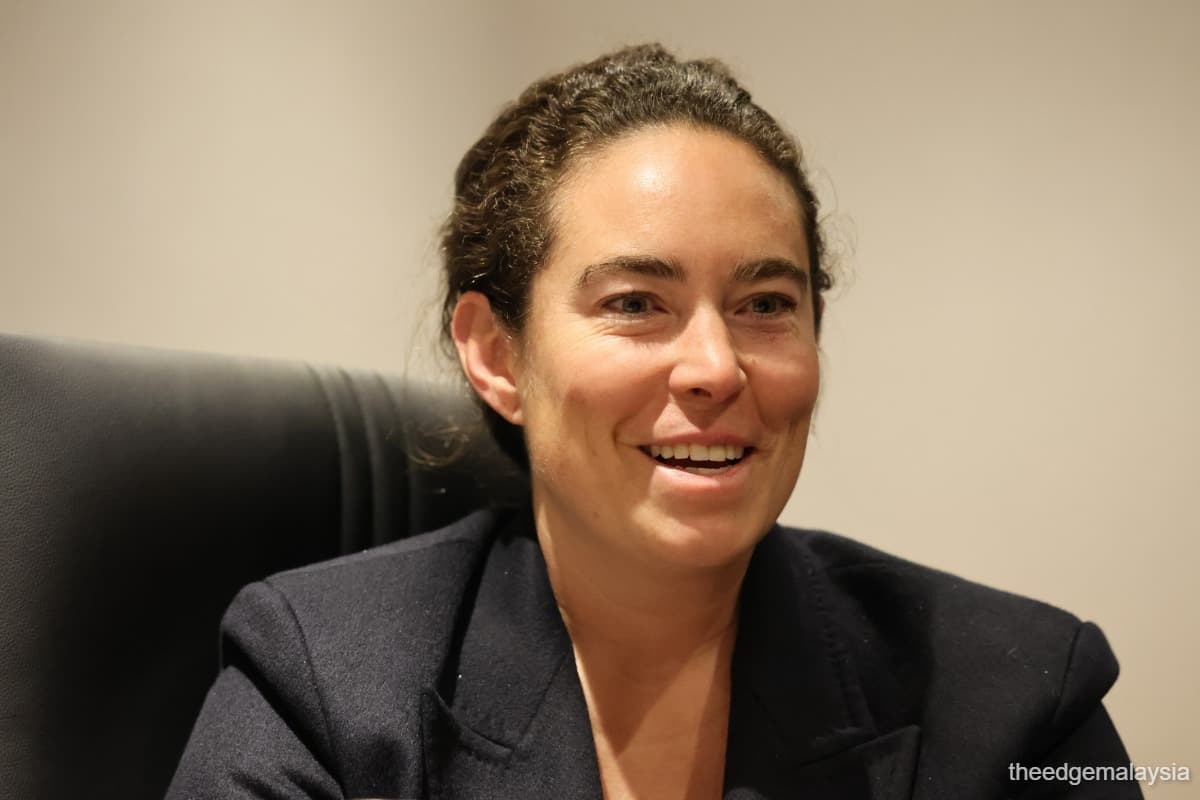
"We came to do business. We came to identify investment opportunities, build partnerships, and develop the next generation of projects that can strengthen both Malaysia's economy and America's economic engagement in the region. Simply put, we are here to build our pipeline," Caroline Vik, chief policy officer of the DFC, told The Edge in an exclusive interview during a recent visit to Kuala Lumpur.
A 'strategic investment fund'
Established in 2019 by merging the Overseas Private Investment Corporation and the Development Credit Authority, the DFC was initially created to mobilise private capital into emerging markets while advancing US foreign policy objectives.
Following its congressional reauthorisation in December 2025, the institution has undergone a significant transformation. Its investment ceiling more than tripled from US$60 billion to US$205 billion, as its mandate expanded beyond traditional project finance to include equity investments, joint ventures, mezzanine financing, political risk insurance, partnerships with state-owned enterprises and investments in public companies.
"You should think of the US DFC as the US government's international investment fund, halfway between a development finance institution and a sovereign wealth fund — what we're calling a strategic investment fund," Vik said. "We are not a traditional development finance institution. We are, as our CEO likes to say, America's deal team."
For decades, Washington's Southeast Asian strategy relied on trade liberalisation, foreign assistance and multilateral institutions such as the World Bank and the International Monetary Fund. Today, investment has become another instrument of economic statecraft as the US seeks to strengthen supply chains and expand its commercial presence across the Indo-Pacific.
Unlike aid agencies, DFC seeks commercially viable investments, although financial returns are intended to support its broader development and foreign policy objectives rather than maximise profits.
"We don't do grants," Vik said. "Our mission is to advance the economic development of our allies and partners, in this case Malaysia, while advancing American foreign policy. Our means for doing so is by making good financial bets."
Malaysia’s strategic alignment
According to Vik, Malaysia's well-established semiconductor industry, expanding data centre ecosystem, strategic location and ambitions to move further up the manufacturing value chain closely align with DFC's priorities.
"We have three broad global objectives," she said. "The first is building diversified supply chains for critical goods such as critical minerals, pharmaceuticals, chemicals, batteries, and telecommunications equipment. The second is strengthening strategic sectors such as energy, artificial intelligence and financial services. The third is building critical infrastructure in high-priority locations, including ports, airports, strategic corridors and digital infrastructure."
Following meetings with government officials and industry representatives, Vik said she saw considerable alignment between Malaysia's priorities and DFC's own.
"We talked about semiconductors, data centres, pharmaceuticals, critical minerals, chemicals — a lot of the areas that we're focused on," she said. "I think they're also interested in building more diversified supply chains. A lot of the objectives are super aligned, and we'll have a lot of follow-up conversations."
Beyond manufacturing, DFC also sees opportunities in telecommunications infrastructure, terrestrial fibre, subsea cables, financial technology and logistics infrastructure.
"There seems to be a huge amount of opportunity in Malaysia," Vik said.
Building the pipeline
While Vik did not disclose specific transactions under discussion, she confirmed the DFC is already evaluating opportunities in Malaysia across digital infrastructure, semiconductors, data centres, infrastructure and critical minerals.
"It's a little early to give details, but yes, we have a lot of interesting partnerships and opportunities in the works," she said.
The agency is also looking beyond conventional infrastructure financing.
"We're trying to build manufacturing capabilities. We're trying to invest in large-scale infrastructure projects, whether it's transport infrastructure or digital infrastructure," Vik said. "We're generally pushing to do larger projects than we have in the past."
There is no predetermined investment allocation or target for Malaysia, Vik said, adding that the DFC's focus is on identifying strategic opportunities rather than meeting country-specific investment targets.
"We don't have country caps, limits, or anything like that. So it's really just about finding opportunities that align with our strategy.”
"A thriving pipeline, several highly important deals having been done, a bunch of strategic partnerships having been launched, and more deals to come," she said, when asked what success would look like for DFC in Malaysia.
More than geopolitics
As Washington and Beijing vie for influence across the Indo-Pacific through trade, technology and investment, Southeast Asian nations often find themselves navigating a delicate geopolitical balance between the world's two largest economies.
Malaysia has long maintained close economic relations with both countries while preserving a non-aligned foreign policy.
Vik rejected suggestions that the DFC's investments are intended to force countries to choose sides.
"I've found almost no daylight between the things we're interested in and the things our partner countries are interested in," she said. "We're not about choosing sides necessarily. We're trying to build diversified supply chains so they're resilient. We're trying to build critical infrastructure so countries can grow quickly, enhance connectivity, trade and growth."
Instead, the DFC's approach is to identify where US priorities intersect with those of partner governments, she said. "We want to do Malaysia's most important, most impactful, most strategic projects."