

This article first appeared in The Edge Malaysia Weekly on July 6, 2026 - July 12, 2026
THREE years after the cabinet’s bold decision in July 2023 to end pensions for new civil servants, the government is still “reviewing and refining details” of the new public service “contributory permanent appointment scheme”, reflecting the delicate balance needed to secure public buy-in for the fiscal reform.
Prime Minister Datuk Seri Anwar Ibrahim did not specify when the new scheme would be ready in his written parliamentary reply dated June 25, 2026, to former defence minister Datuk Seri Hishammuddin Hussein, who sought clarity on the fiscal impact of the new civil service salary scheme and an update on pension reform.
Areas being fine-tuned include “retirement benefit packages and the appropriate implementation measures” to ensure that the new scheme “will safeguard the country’s fiscal position while continuing to attract the best talent and ensuring that the welfare of public servants remains protected and preserved”, Anwar said.
It remains to be seen whether details of the new scheme will be ready within seven months, when the first batch of the three-year interim contracts used to hire civil servants from Feb 1, 2024, comes up for renewal at end-January 2027.
Or will the Public Service Department (JPA) be forced to seek an extension of these interim contracts to address the matter after the 16th general election (GE16), which must be held by mid-February 2028?
It is understood that close to 20,000 civil servants have been hired on the interim three-year contracts since Feb 1, 2024, pending finalisation of benefits under the new scheme. This excludes members of the armed forces and police, where reforms are being handled separately.
The number of parties involved is not limited to new civil servants, as public pension beneficiaries include not only pensioners but also eligible legal dependants, including spouses and legally recognised children aged under 18.
Close to 30% of the 810,000 public pension recipients in 2024 are derivative beneficiaries, such as widows and widowers of deceased civil servants, while pensioners make up just over 70%. In other words, pension payments continue even after a pensioner’s death, as long as an eligible dependant remains entitled.
The “contributory permanent appointment scheme” essentially means civil servants hired from Feb 1, 2024, will have to save for retirement through the Employees Provident Fund (EPF), like private-sector workers. This was affirmed by the Fiscal Outlook Report 2026, which states that the government is expected to finalise the implementation of a defined-contribution (DC) scheme to replace the defined-benefit (DB) pension scheme for public servants. “The new scheme will be administered by EPF, while Retirement Fund Inc (KWAP) will continue to manage the defined-benefits pension scheme under the Retirement Fund Act 2007,” says the report released last October alongside Budget 2026.
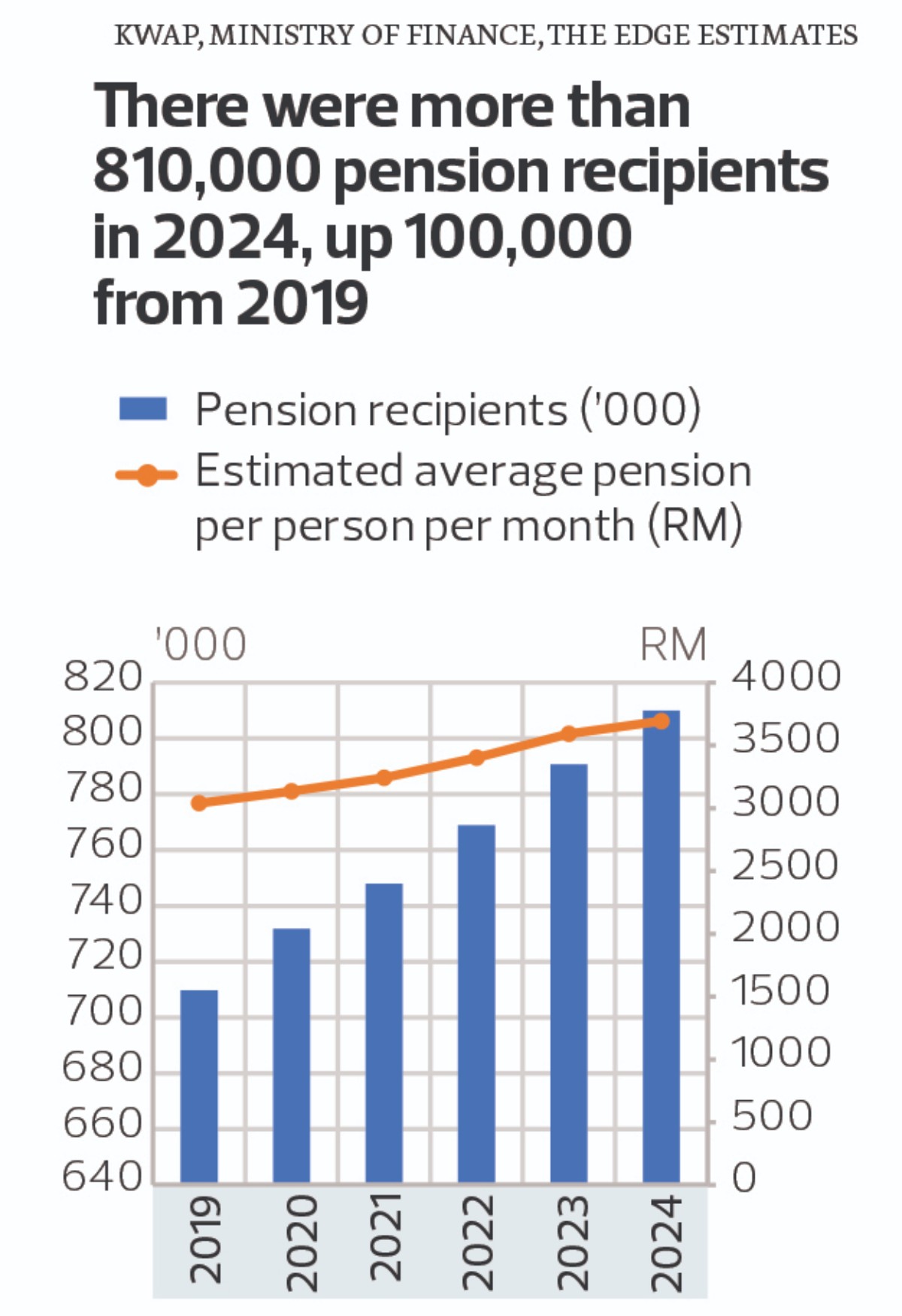
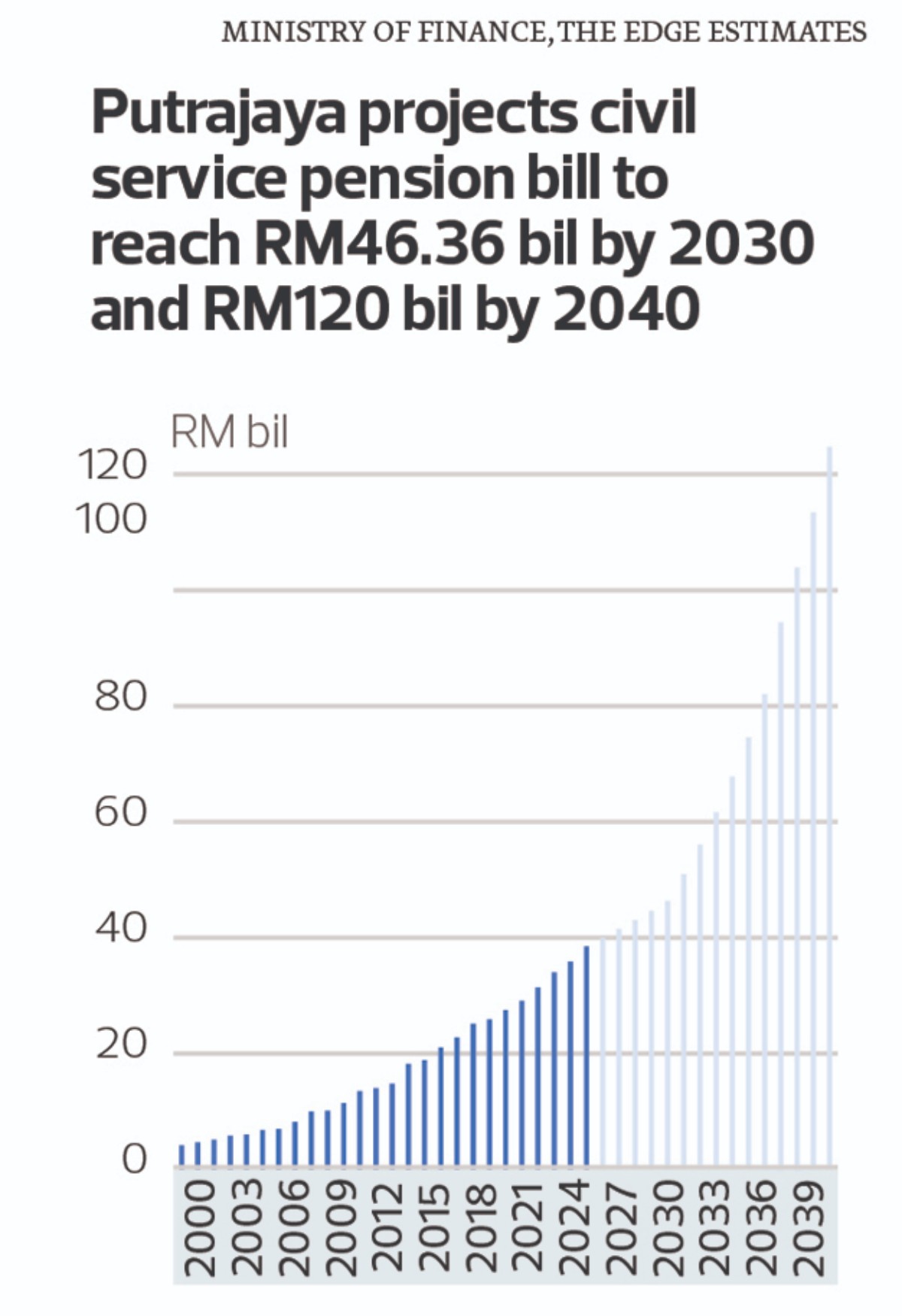
Putrajaya’s sizeable public pension obligation reflects “the growing number of pensioners and beneficiaries, which is now approaching one million”, the report says.
Instead of the gargantuan “RM120 billion by 2040” public pension obligation figure — cited by Deputy Prime Minister Datuk Seri Ahmad Zahid Hamidi and Finance Minister II Datuk Seri Amir Hamzah Azizan in January 2024 ahead of the Feb 1, 2024, cut-off date — Anwar said Putrajaya’s public pension obligation is set to hit RM46.36 billion by 2030.
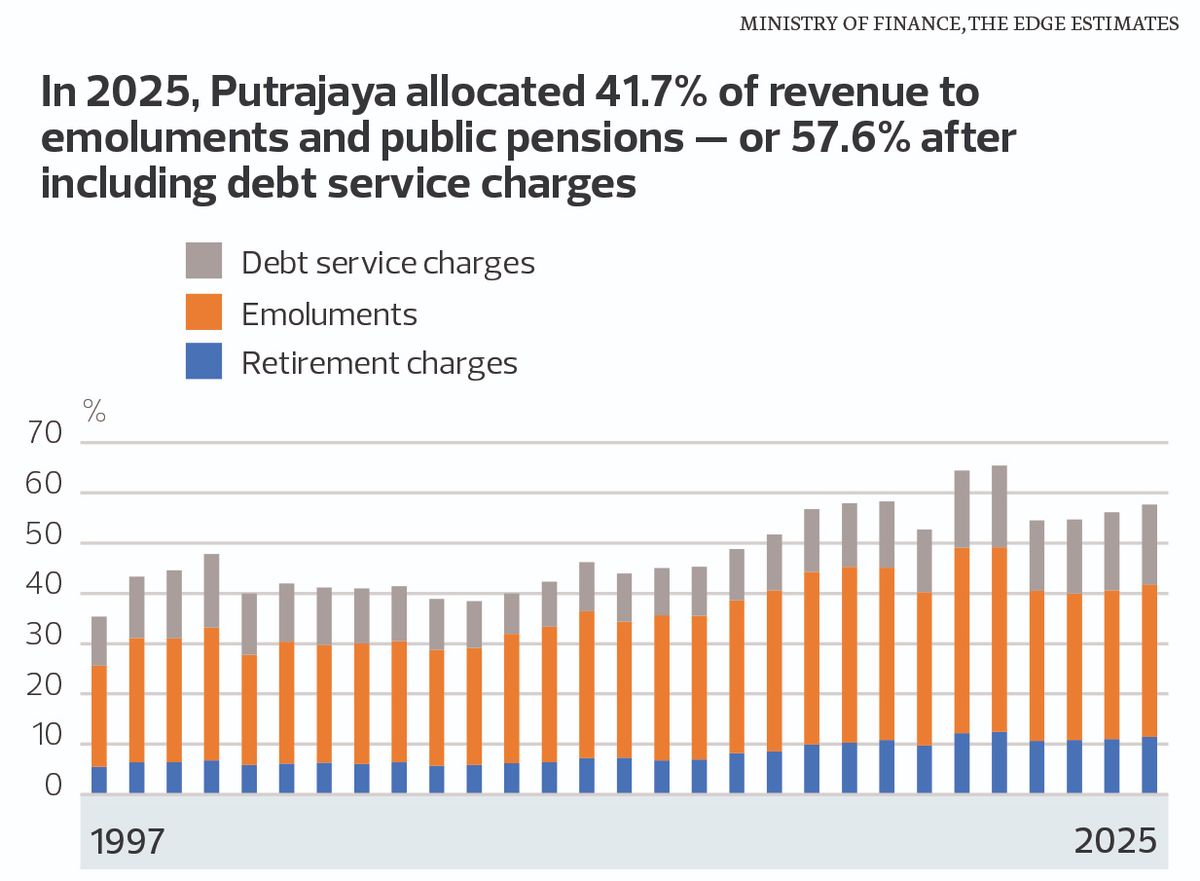
The figure appears somewhat conservative, given that Putrajaya’s retirement charges are projected at RM42.8 billion in 2026, up from RM40.06 billion in 2025 and RM35.9 billion in 2024.
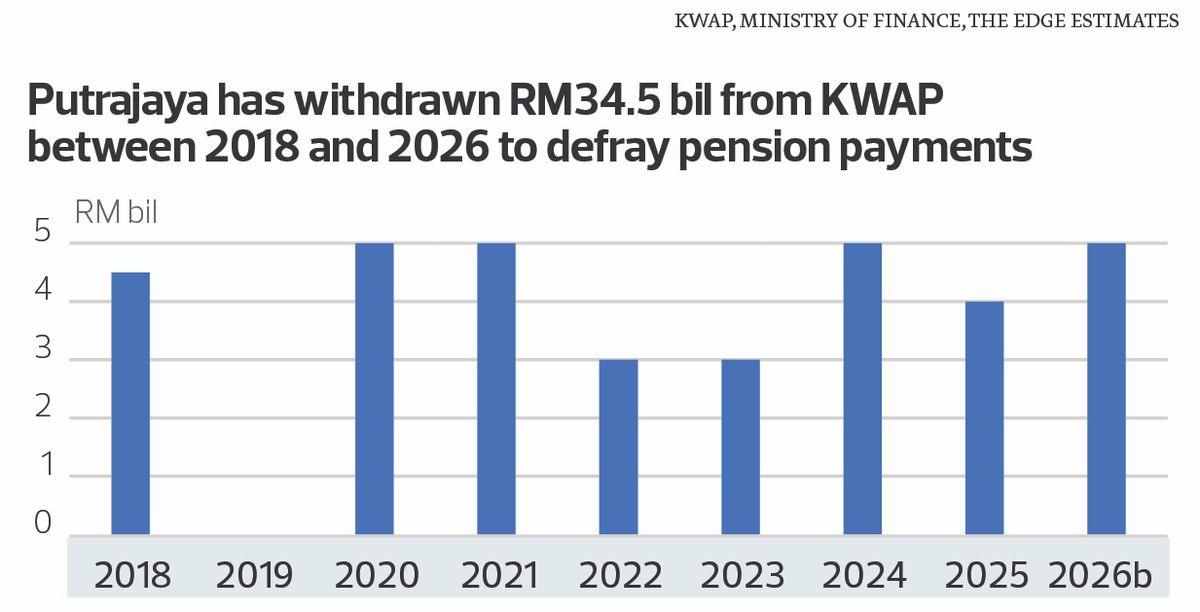
With sizeable subsidies and social assistance bills driving up Putrajaya’s operating expenses faster than its revenue can grow, the federal government has since 2018 withdrawn RM29.5 billion from KWAP to help pay 11.9% of its public pension obligation totalling RM247.6 billion between 2018 and 2025. For 2026, KWAP is contributing RM5 billion, or 11.7%, of Putrajaya’s public pension bill of RM42.8 billion to bring the total withdrawn from KWAP to RM34.5 billion.
Amir Hamzah says if the burden can be lightened, the surplus can be channelled towards education, facility improvements and other areas important to the country and its people.
Save by subscribing to us for your print and/or digital copy.
P/S: The Edge is also available on Apple's App Store and Android's Google Play.