

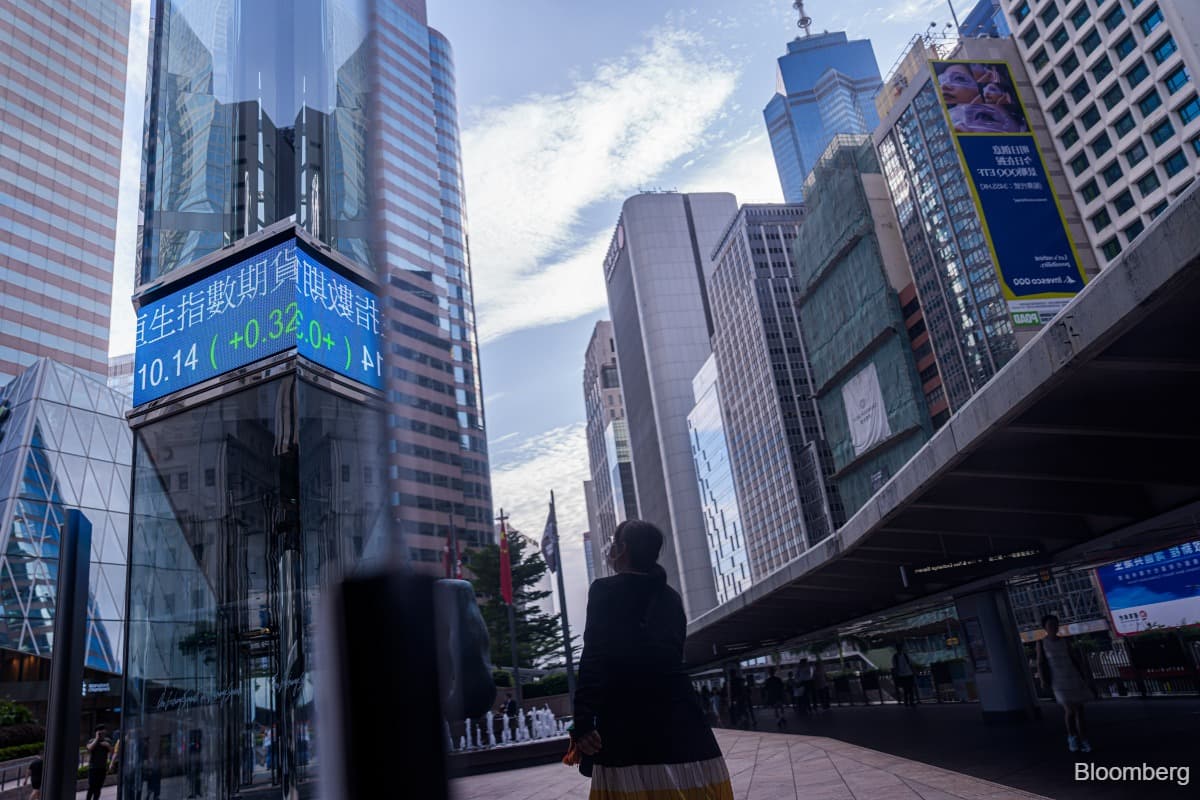
(July 7): China’s central bank announced a slew of measures aimed at enhancing Hong Kong’s role in promoting overseas use of the yuan as well as boosting the city’s financial connectivity with the mainland.
The total size of the so-called RMB Business Facility will more than double to 500 billion yuan (US$74 billion or RM300 billion), giving local banks greater access to the Chinese currency in the form of loans from the Hong Kong Monetary Authority, according to Pan Gongsheng, governor of the People’s Bank of China (PBOC).
Regulators are also raising the quota of another programme, called the Southbound Bond Connect, which allows mainland institutional investors to buy offshore bonds through Hong Kong. Its annual limit will increase to 800 billion yuan from 500 billion yuan, Pan said in a speech Tuesday at the Hong Kong FIC & Bond Connect Summit.
The new policies are emblematic of the ambitions to strengthen Hong Kong’s status as the biggest offshore yuan market in the world, at a time when rising geopolitical tensions call into question the dollar’s status and spur enthusiasm for China’s currency. The city has long been a bridge between global and mainland markets, facilitating the two-way flow of capital between them.
“As the global monetary system accelerates its evolution toward a multi-polar one, international demand for yuan is extending beyond trade settlement to broader areas including investment, financing, pricing and reserves,” said Pan. “Hong Kong’s role as the global offshore yuan hub will certainly be enhanced.”
The upgraded RMB Business Facility will be available from July 10, and tenors of yuan loans available to banks will be extended to include nine-month, and two- and three-year terms, according to an HKMA statement.
The HKMA is also exploring the introduction of a tendering mechanism for seven-day offshore yuan liquidity as an additional channel to support short-term needs for the currency. It is also studying the issuance of short-term yuan debt to support the building of an offshore yield curve, it said in the statement.
Separately, Pan said that the PBOC will support the launch of more commodity products priced in yuan, as Hong Kong begins a trial operation of a new gold clearing system backed by several major banks. China’s central bank will keep increasing the allocation of national foreign reserves to Hong Kong, he added.
“Hong Kong’s advantage lies in possessing simultaneously an offshore renminbi liquidity pool, an international investor base, a mature regulatory system, and a rich financial-product platform,” said Jane Cai, deputy chief executive officer and head of fixed income at China Asset Management (Hong Kong) Ltd.
Still, Cai warned of several headwinds facing efforts to give the yuan greater prominence around the world. It will take time for yuan products to improve in terms of liquidity, hedging instruments, and price transparency, she said.
Pan offered relatively sparse remarks on China’s monetary policy, saying the central bank will maintain its supportive stance.
China’s economy has slowed significantly since April, with retail sales and fixed-asset investment falling at a pace unseen since the pandemic.
While the slowdown is adding urgency for policymakers to step up support, the central bank has acted with restraint in easing monetary policy. It hasn’t cut the policy interest rate or banks’ required reserves since May 2025, at the height of the US-China trade war.
Policymakers last week quietly set the rate of a new overnight liquidity tool at a level lower than expected, potentially a sign they want borrowing costs to fall while reserving outright rate cuts for emergency situations.
Uploaded by Chng Shear Lane