

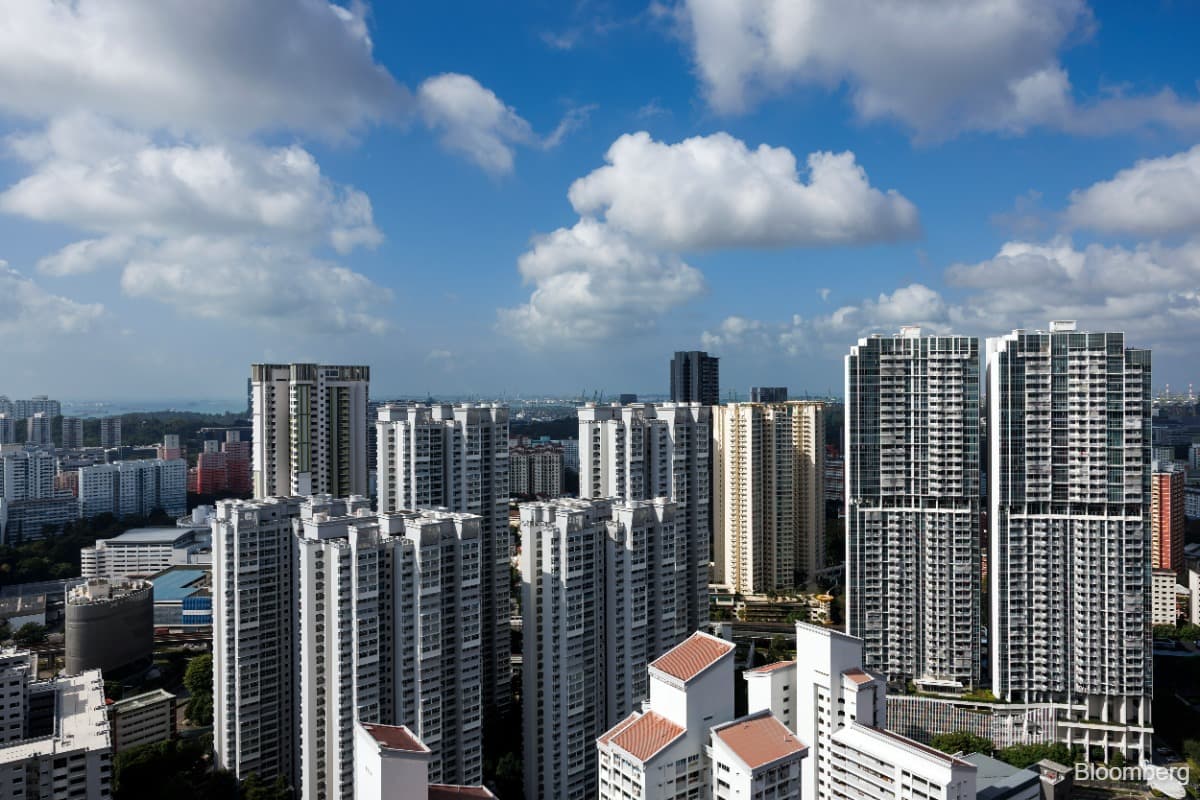
(July 1): Singapore private home prices rose for a seventh straight quarter as strong demand for new units cushioned the market from the effects of the Iran war.
Prices climbed 0.5% in the second quarter from the previous three months, according to a preliminary estimate published Wednesday by the Urban Redevelopment Authority. That’s the slowest pace of increase since 2024 and compares with a 0.9% jump in the previous quarter.
The city-state has seen buoyant interest in new private homes despite repeated pushes by the government in recent years to dampen speculation. The trade-reliant economy boasts some of the most expensive real estate in the world but has managed to avoid the worst of the economic fallout of the Middle East conflict so far.
“This is characteristic of the transition from the rapid post-pandemic expansion towards a more sustainable and balanced phase of growth,” Leonard Tay, head of research for property consultancy Knight Frank Singapore, said in a note.

But Tay expects moderate price growth in the second half when developers release new projects being built on sites awarded by the government at higher average land rates than in the first half of 2025. He stuck with his forecast for price growth of 3%-5% this year.
Wealthy locals and immigrants have swarmed showrooms for newly built condominiums in recent months, with more than 1,500 units sold in April alone, the most in half a year. Buyers have also been attracted by low domestic borrowing costs, thanks to a record divergence between Singapore and US swap rates.
Most residents live in government-built housing units, which are sold at cheaper valuations. Prices of second-hand public housing have been declining recently, with separate estimates released Wednesday showing they fell 0.3%, a second straight decline.
In a sign of authorities’ concerns about housing affordability, curbs were introduced in May on a form of quasi-public residences known as Executive Condominiums to discourage flipping them for profits. Analysts have suggested it may drive more buyers to the private market.
The second quarter is typically a quieter period for home sales due to its overlap with school holidays, when developers avoid releasing new projects, although the pace of overall sales has yet to slow. There were 5,420 units transacted in the second quarter, according to data up to mid-June, compared with 5,413 in the first.
Uploaded by Arion Yeow