

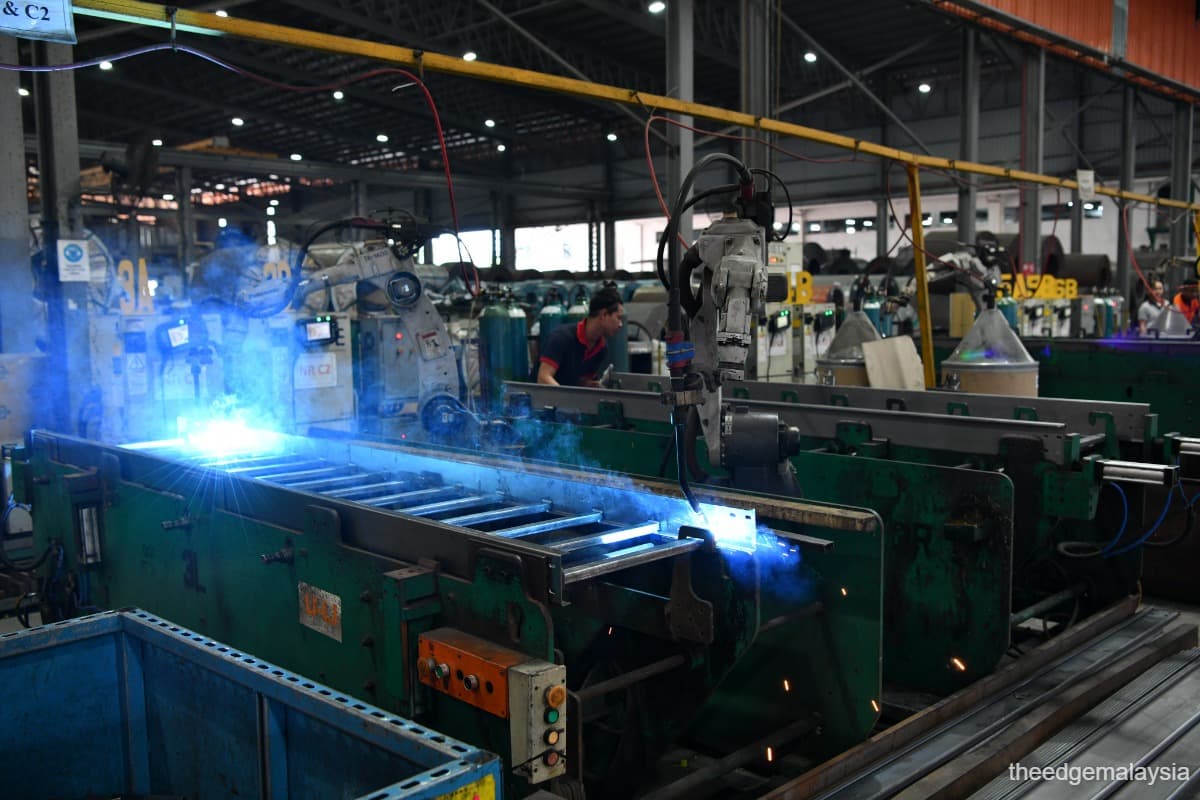
KUALA LUMPUR (July 1): The latest PMI data for Malaysia's goods-producing sector pointed to a renewed improvement in business conditions during June, with the headline index climbing back above the neutral 50 threshold.
The seasonally adjusted S&P Global Malaysia manufacturing purchasing managers index (PMI) rose to 50.7 from 49.9 in May, marking the third time in the past four months that the sector has registered expansion.
"The historical relationship between the PMI and official data suggests that growth rates of both GDP and official manufacturing production should trend higher in the second quarter of 2026," said S&P Global in a statement on Wednesday.
Behind the headline figure, the two largest sub-components — new orders and output — recorded fresh expansions during the latest survey period, reversing slight moderations seen in May.
Survey respondents attributed the uptick in new orders to stronger underlying demand trends, which in turn prompted manufacturers to raise production levels.
Despite this, purchasing activity was held unchanged at the end of the first half of the year, following marginal increases in the prior two months.
While some firms boosted their purchases of inputs and raw materials in response to new order growth, others felt that demand remained insufficient to justify higher buying activity. Consequently, stocks of purchases remained broadly stable during June.
On the supply side, firms that did purchase inputs encountered longer delivery times from suppliers, with vendor performance deteriorating more sharply than in May and at a solid overall pace.
Malaysian companies linked these delays to material shortages and the ongoing geopolitical situation. Sourcing difficulties also contributed to a fresh but marginal rise in outstanding business volumes during the month.
Meanwhile, cost pressures continued to be a prominent theme, as companies again cited the war in the Middle East as a key factor pushing up fuel and raw material prices.
Although input cost inflation eased to its slowest pace in three months, the rate remained sharp and above the long-run average.
In terms of pricing, manufacturers raised their selling charges to a greater extent than in May, with the pace of charge inflation also exceeding the long-run average and outpacing the increase in costs.
On the employment front, some firms added staff in response to higher new orders, but these gains were offset by job shedding elsewhere, leaving overall staffing levels unchanged from the previous month.
Maryam Baluch, economist at S&P Global Market Intelligence, said: "June’s PMI data for Malaysia’s manufacturing sector points to a wait-and-see approach among firms. While new orders and production showed signs of encouraging revival, buying and hiring activity were kept unchanged".
"Overall, firms appear to be focusing on rebuilding margins, which came under pressure due to the fallout from the war in the Middle East," Baluch added.
Looking ahead, Malaysian manufacturers maintained a positive outlook for output over the coming year, underpinned by expectations that demand conditions will continue to improve and drive higher production volumes going forward.