

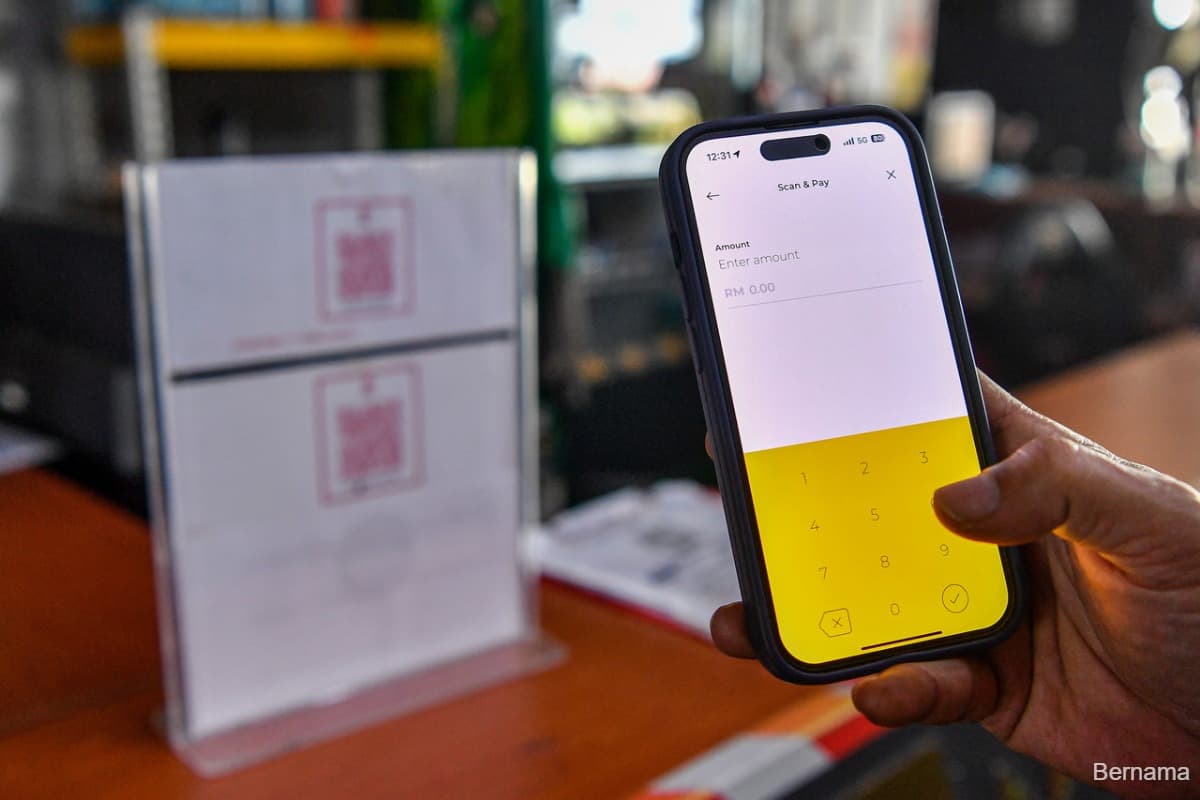
KUALA LUMPUR (June 30): Malaysia’s central bank is phasing out proprietary QR payment networks within two years as part of a push towards a single interoperable system.
Under the Interoperable Fund Transfer Framework policy document issued on Tuesday, existing proprietary QR networks must be discontinued by June 30, 2028 while affected institutions are barred from onboarding new merchants onto their networks during the transition period.
The move is aimed at ensuring that consumers can use any participating bank or e-wallet application to make payments through the same interoperable QR network, instead of relying on separate closed systems operated by individual providers.
Banks offering QR payments must participate in the shared payment infrastructure and allow their customers to pay merchants served by any participating acquirer. Merchant-acquirers must similarly allow their merchants to accept payments from customers of any participating financial institution.
The shared payment infrastructure refers to the Real-time Retail Payments Platform — which supports services such as DuitNow Transfer and DuitNow QR — operated by Payments Network Malaysia Sdn Bhd.
The company, also known as Paynet, is 35.5%-owned by Bank Negara Malaysia (BNM). Apart from the central bank, 11 Malaysian financial institutions are shareholders in PayNet, including the country’s largest bank by assets Malayan Banking Bhd (KL:MAYBANK).
The move comes at a time of greater use of fund transfer services, with mobile banking emerging as the preferred channel, driving sustained adoption of electronic payments. Every Malaysian now makes at least 1.5 electronic payment transactions per day, according to BNM.
“Central to this achievement is the shared payment infrastructure that serves as an interoperable network connecting bank accounts and non-bank electronic money accounts for both account-to-account fund transfers as well as payments to merchants,” the central bank noted.
BNM said most respondents to its earlier consultation did not object to the prohibition on proprietary QR schemes, recognising that it would prevent market fragmentation and improve the payment experience.
Some, however, have raised concerns that migrating fully to the national interoperable QR system could involve substantial costs and limit their ability to offer customised loyalty and marketing programmes.
“BNM remains steadfast in our vision to move towards an environment in which all QR payments in Malaysia are interoperable, enabling a seamless user experience,” the central bank stressed.
A two-year transition period will allow those affected to adjust their systems and operating models while PayNet has assured full flexibility to design and implement loyalty and marketing programmes or other value-added services within the shared payment network.