

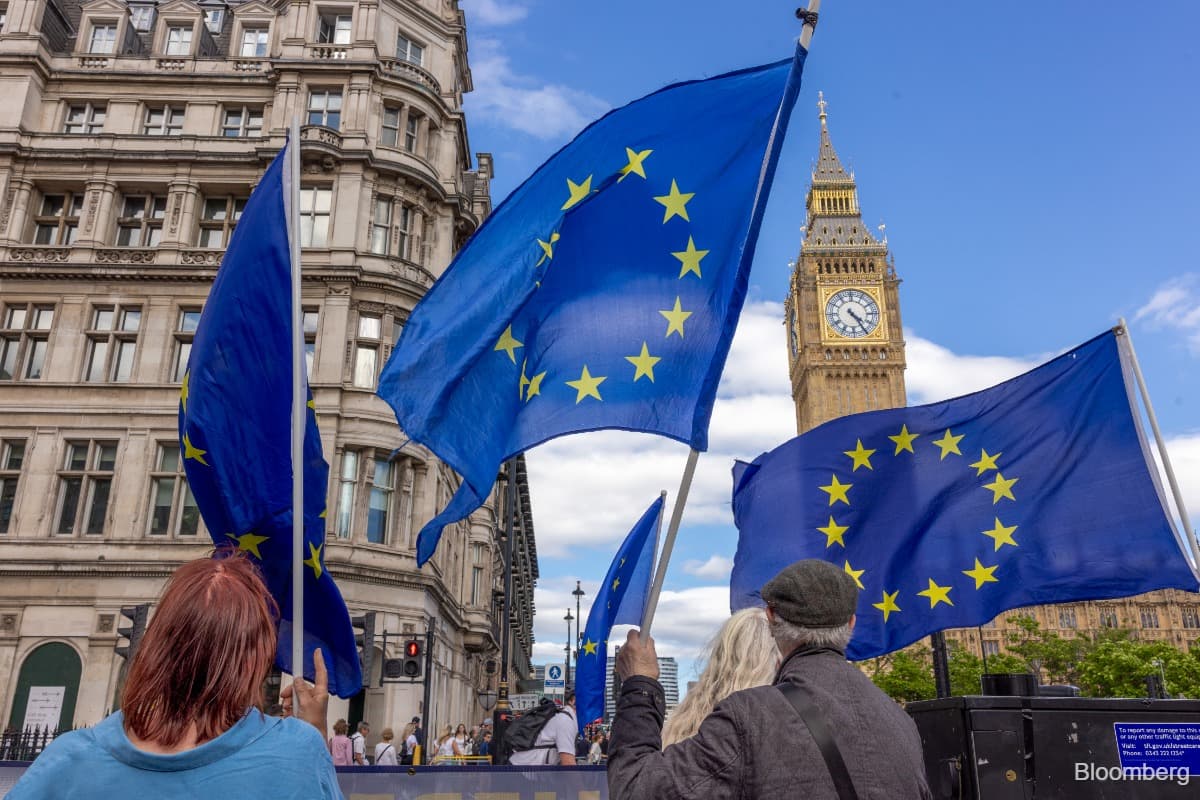
(June 29): Britain’s efforts to control inflation are being made harder by the country’s exit from the European Union, the Bank of England’s chief economist warned.
Huw Pill said Monday that structural changes to the economy since Brexit have made the UK more prone to “self-sustaining momentum” in price pressures.
A decade on from the 2016 EU referendum, a consensus among economists is forming that Brexit has resulted in some permanent damage to the UK economy by weakening ties with the bloc. Polling also suggests that voters are dissatisfied with how Britain’s exit has gone and the Labour government is seeking to move closer to the EU.
Pill pointed to the effect of post-Brexit trade barriers and changes to the labour market since the end of free movement between the UK and the EU.
“The structural changes to our labour (and) goods markets wrought by Brexit, for example, are things we’re still learning about, we’re still digesting,” he said at an event in Tashkent, Uzbekistan. “My own view is that those changes have led us to a structure which is more prone to this sort of self-sustaining momentum in pricing, which can lead to greater inflation persistence.”
It is the latest criticism of Brexit by BOE rate-setters who have struggled to keep inflation near their 2% target in recent years amid a series of supply shocks. While the central bank can influence demand to contain inflation, the economy’s supply side is important for prices and may have been damaged by the decision to leave the EU.
There is a still a wide array of estimates on the size of the economic impact of Brexit with the UK economy buffeted by a number of other subsequent shocks such as the pandemic and energy crisis.
Analysis by Bloomberg Economics earlier this month suggested that Brexit has already cost the British economy between 2% and 4% of gross domestic product — in line with official estimates. The report said the impact was not as big as estimated by some other studies such as one last year warning of a 6% to 8% hit to GDP per capita.
BOE Governor Andrew Bailey has pointed to the economic effect from Brexit and called for closer ties with the EU.
A summit between the UK and EU aimed at revising the Brexit deal has been postponed amid political turmoil in the UK. With Prime Minister Keir Starmer announcing his resignation earlier this month, uncertainty remains over how his successor — likely to be former Greater Manchester mayor Andy Burnham — will tackle the issue.
Uploaded by Arion Yeow