This article first appeared in The Edge Malaysia Weekly on June 22, 2026 - June 28, 2026
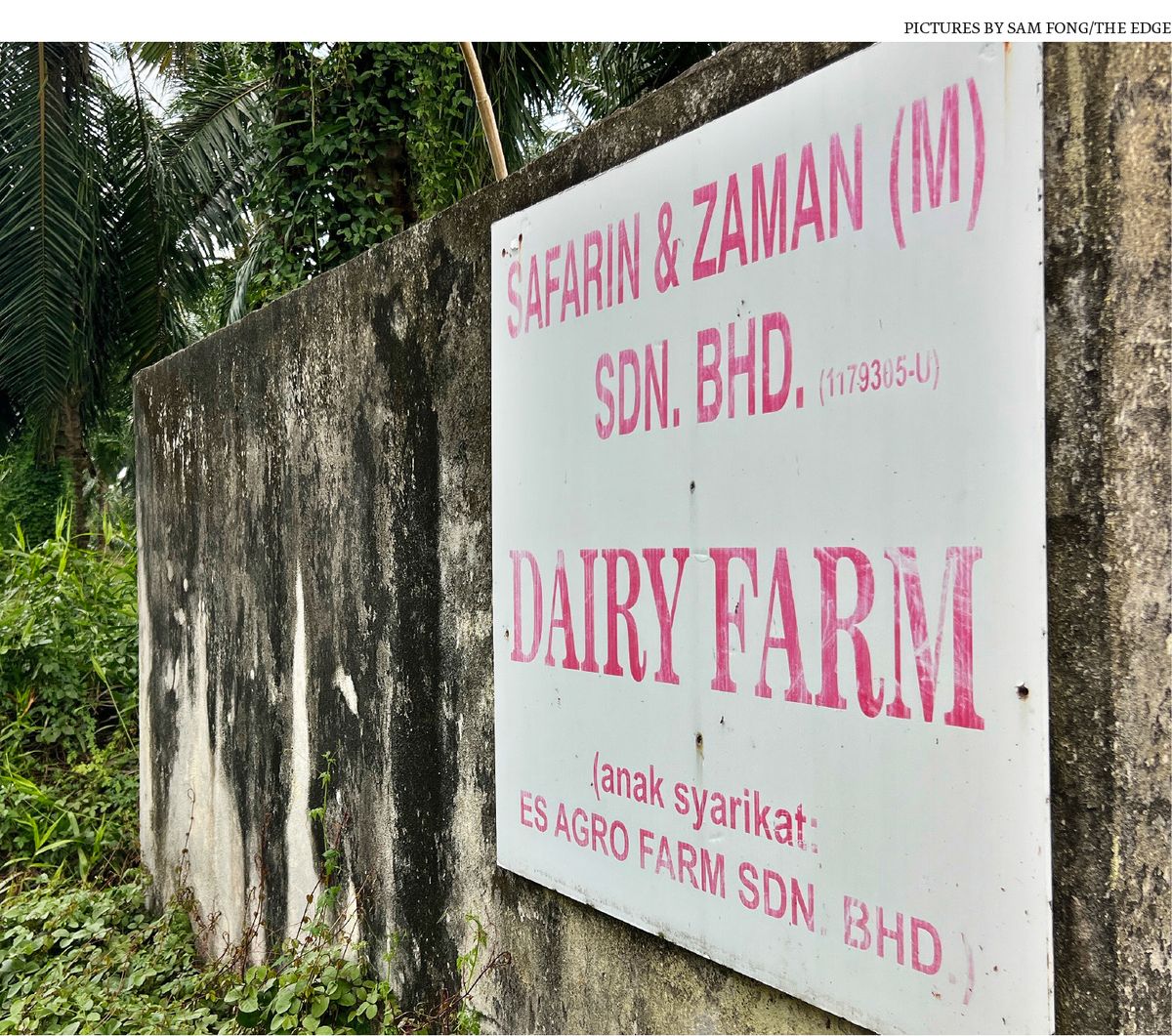
A gravel road leads to SZ Agri Venture Sdn Bhd’s livestock farm in Bukit Rotan, cutting through plantations of mostly young oil palms. The route sees little traffic and is generally quiet.
Located in the Kuala Selangor district, the five-acre farm houses about 120 cows, including 72 purchased from FGV Dairy Farm Sdn Bhd for RM355,550 on June 13, 2025.
SZ Agri Venture had planned to supply fresh milk from the livestock to FGV Dairy Industries Sdn Bhd (formerly Bright Cow Industries Sdn Bhd), a unit of FGV Dairy Farm.
FGV Dairy Farm is 60%-owned by FGV Holdings Bhd, once a public-listed entity, and 40%-owned by RedAgri Group Sdn Bhd. The Federal Land Development Authority (Felda) holds a 90% stake in FGV Holdings.
Barely three months after SZ Agri Venture acquired the 72 cows, however, FGV Dairy Industries informed the company that it was looking to cease its milk-processing operations.
In a letter dated Sept 10, 2025, which was acknowledged by SZ Agri Venture and sighted by The Edge, FGV Dairy Industries states: “Accordingly, FGV Dairy Industries will no longer be able to receive raw milk supplies from your farm effective Sept 12, 2025.”
Speaking to The Edge at a roadside eatery near the farm, SZ Agri Venture managing director Shahmi Ismail says: “They tricked us into believing that they were only shutting down the farm [but would continue buying milk from us].”
Asked whether the dairy farm had signed a milk supply agreement with FGV Dairy Industries after purchasing the livestock, Shahmi says: “No, but I’ll say this. This is the perception of all livestock farmers. Whether they’re dealing with FGV [group] in milk, crude palm oil, rubber, whatever, with their eyes closed, they [farmers and vendors] will go and dump their products there [with FGV group even without legal documentation] because they know they’re going to get paid. That’s the perception.”
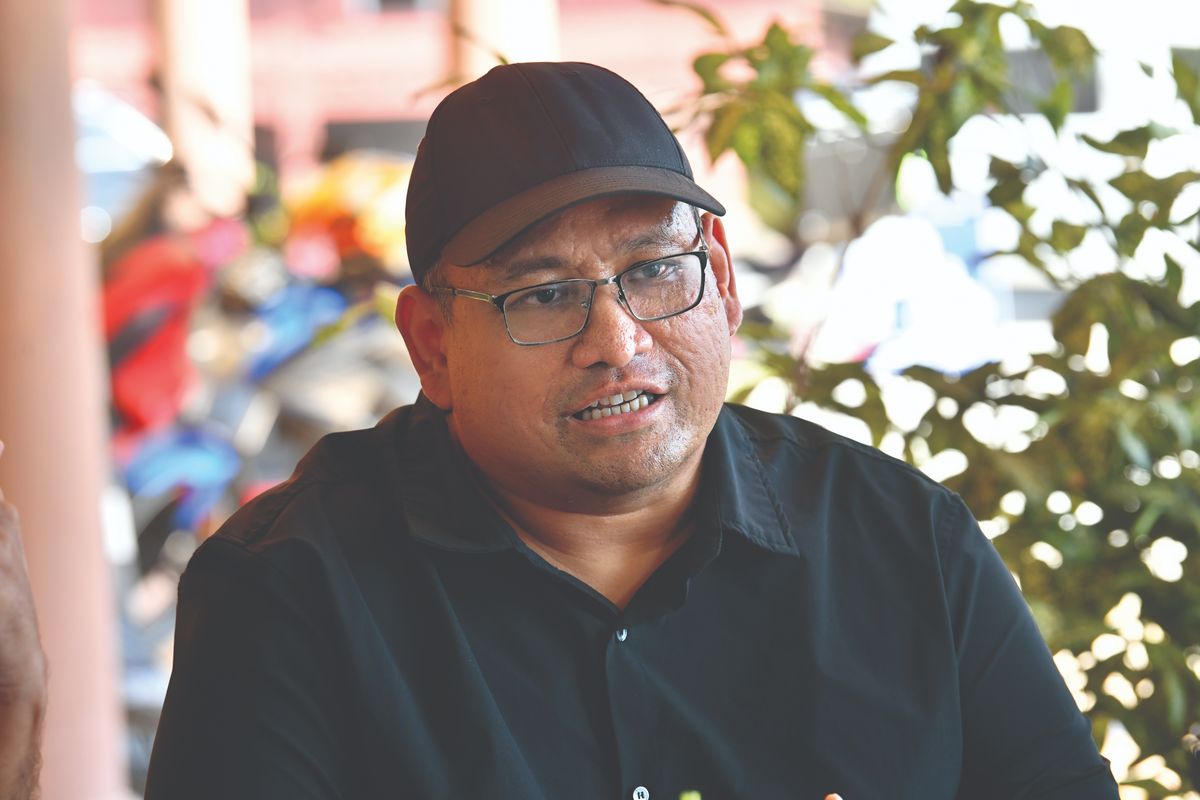
Shahmi: We went through a lot because of FGV [Dairy Industries and FGV Dairy Farm]. We tend to believe that government-linked companies sometimes pay late, but you are pretty sure they will pay. And for FGV, RM51,000 is nothing — celah gigi [pocket change] only.”
The reality, however, proved somewhat different for Shahmi, an engineer by training, who learnt it the hard way. After earning an engineering degree in the US, he returned to Malaysia and ventured into business.
In 2025, he was in a celebratory mood when the prospect of doing business with FGV Dairy Industries on a larger scale emerged, following his purchase of the livestock.
Now, a year after drawing down RM355,550 from its reserves to purchase dairy cows from FGV Dairy Farm, SZ Agri Venture is struggling to recover RM50,613.92 owed by FGV Dairy Industries for fresh milk supplied.
“We are surviving but struggling. We used our reserves and bought the cows ... After three months, they shut down their operation. They could have at least sold us the cows at beef price — about half of the price of dairy cattle — as I believe they would have known they were not going to honour the promise to buy milk from us,” says a visibly frustrated Shahmi.
“We went through a lot because of FGV [Dairy Industries and FGV Dairy Farm]. We tend to believe that government-linked companies sometimes pay late, but you are pretty sure they will pay. And for FGV, RM51,000 is nothing — celah gigi [pocket change] only.”
Another party claiming to have been wronged is Koperasi Pekebun Kecil Wilayah Johor Selatan Bhd (Kopris), which says it is owed RM58,662.01 by FGV Dairy Industries.
Kopris was established by the Rubber Industry Smallholders Development Authority (Risda) in July 1981. Online checks indicate that it has about 2,500 members comprising smallholders in Johor Bahru, Kulaijaya and Kota Tinggi. Risda is a federal government agency under the Ministry of Rural and Regional Development.
A Kopris spokesperson says in an email response to The Edge: “We did not expect an issue like this to happen, considering FGV Dairy Industries is a big name. We expected standard corporate payment practices to be followed by a company of this kind.
“This situation is somewhat beyond our expectations, but we still hope it can be resolved professionally … We feel quite disappointed that a company as big as FGV Dairy Industries has failed to settle the outstanding amount of RM58,662.01 since 2025 because, for our cooperative, this is quite a significant sum for us to sustain our operations and business activities. We hope this matter can be resolved amicably and as soon as reasonably possible.”
Not only farmers but AgroBank, too
According to sources, more than 100 vendors and farmers are owed a total of less than RM4 million by FGV Dairy Industries.
While the sum may be modest in corporate terms — in a sector where transactions run into the hundreds of millions or even billions of ringgit — it is far from insignificant for the farmers involved.
The largest creditor is Pan Asia Dairies, which accounts for about half of the outstanding amount. Pan Asia Dairies is wholly owned by Yatha International Sdn Bhd, a company controlled by the Thabet family, which has business interests in the UK and Yemen. Pan Asia Dairies is also seeking to wind up FGV Dairy Industries over an outstanding debt of RM1.99 million.
Several farmers have sought legal recourse in an attempt to recover the unpaid sums, but the reality is that the cost of pursuing legal action may exceed the amount owed. For instance, FGV Dairy Industries owes Ethel Trading RM92,080.20; Combi-Pack Sdn Bhd, RM98,174; and LR Event & Management Sdn Bhd, RM89,595.18.
Kopris says it has sent a letter of demand but is not yet seeking legal redress.
Even Bank Pertanian Malaysia Bhd (Agrobank) is taking action against FGV Dairy Farms. A check on the Companies Commission of Malaysia (SSM) shows that FGV Dairy Farm has RM18.7 million in outstanding charges from Agrobank.
A letter dated November 2025 that was sighted by The Edge indicates that FGV Dairy Farm took a commercial loan facility of RM14.5 million from Agrobank and had yet to pay the commitment fee from July to October 2025. It also shows RM10.3 million remained outstanding to the development financial institution (DFI).
The Agrobank letter states that FGV Dairy Farm had until Nov 17, 2025, to submit a settlement plan or fully repay the debt. It is not known whether the company had since contacted Agrobank officials, but the DFI appointed Lim E @ Lim Hoon Nam of Guan Corporate Advisory as receiver on March 18, 2026.
Given FGV Holdings’ stature as a plantation giant, it is surprising that it has not settled payments owed to 100-odd farmers and vendors.
“If they had just been honest with us, we would have been okay with it. Just say ‘we are closing down’. Then we could have decided on another course of action,” says Shahmi at the roadside eatery. “Our funds are limited, you know. We only want to produce milk that we can sell; [so, we thought] we had a buyer [in FGV Dairy Industries].”
Over time, the FGV Dairy Industries executives whom Shahmi had been dealing with left the company, making it increasingly difficult to contact the company regarding payments.
SZ Agri Venture also found it challenging to supply fresh milk to other buyers, as it was required to have its own lorries for transport.
“That would involve additional costs, and we had already spent our reserves on the cows,” Shahmi says.
SZ Agri Venture’s financial statements were not available on SSM, but the company has a paid-up capital of RM10,000. It is 50%-owned by Shahmi, with the remaining 50% held by Safarin & Zaman (M) Sdn Bhd.
According to FGV Dairy Farm’s latest publicly available financial statements, it recorded an after-tax loss of RM2.06 million on revenue of RM1.38 million in FY2024. It also reported accumulated losses of RM32.24 million.
As at end-2024, FGV Dairy Farm had total assets of RM8.22 million against total liabilities of RM20.12 million.
Felda a political powerhouse
Ironically, in April last year, Felda submitted its strategic plan and road map 2025-2030 to Prime Minister Datuk Seri Anwar Ibrahim, saying, “Felda group management is committed to ensuring this plan is implemented with full dedication to form an ecosystem beneficial to all stakeholders.
“This duty requires continued effort and full support from all parties to ensure the development and prosperity of the Felda group.”
Anwar had on March 26, 2025, given Felda a month to submit a new strategic plan and road map to ensure a better future for its settlers.
The political focus on Felda, an agency under the Prime Minister’s Department, is understandable, given its significance, with 57 (54 in the peninsula, three in Sabah) of the 222 parliamentary constituencies containing Felda settlements, making it a substantial voting bloc.
A former high-level executive of FGV Holdings points out that Felda is not focused on the company’s bottom line but sees it more as a vehicle for fulfilling social obligations, such as organising numerous events and activities, and is not concerned about the associated costs.
Felda and Deputy Prime Minister Datuk Seri Ahmad Zahid Hamidi, who doubles as minister of Rural and Regional Development, did not reply to questions sent by The Edge for this article.
With the 16th general election widely expected to be around the corner, could that political backdrop act as a tailwind for farmers and vendors seeking to recover outstanding payments?
Will FGV Dairy Industries, FGV Dairy Farm or its parent FGV Holdings move to settle what is owed?
Milk investment that turned sour
FGV Holdings ventured into the dairy farming business in February 2020, when it acquired a 60% stake in Red Agri Sdn Bhd, which owned the Bright Cow brand of dairy products, for RM10 million. In its 2020 annual report, FGV Holdings says, “The purchase of a majority stake would enable the group to create more value from its existing resources and tap into synergies within the palm-based circular economy. At present, we are building a fresh milk factory with a capacity of 30,000 litres per day.”
In a press release dated April 2020, FGV Holdings group CEO at the time, Datuk Haris Fadzilah Hassan, said of the venture into milk production: “We are currently in the process of expanding, with the construction of an integrated factory for the production of fresh milk-based products at the Linggi farm, which is expected to be completed within six months.
“When ready, FGV Dairy Farm will contribute to the national food supply security’s agenda by supplying 10 million litres of fresh milk annually. Freshness [is] guaranteed to consumers, as milk produced in the morning can be enjoyed on the same day.”
Now, FGV Dairy Farm’s dairy operation in Linggi, Negeri Sembilan, is likely to be auctioned off by Agrobank, following the shutdown of the farm.
In a reply to queries from The Edge, FGV Holdings says the decision to cease the business was made after a comprehensive review of its operations and financial considerations, in line with prudent business management and capital allocation principles. It stresses that the move does not affect its core operations, which remain stable.
“FGV continuously reviews its business structure and portfolio as part of its ongoing business transformation initiatives as guided by the strategic direction of the Felda group.
“Such reviews are undertaken to ensure alignment with its strategic priorities, operational requirements and long-term objectives,” the group says, noting that this may lead to adjustments or rationalisation to improve efficiency across the group.
FGV says it remains “fully committed to supporting an orderly conclusion of the business” and will continue working with all stakeholders throughout the process.
The man behind FGV Dairy Farm
Red Agri founder Zakaria Abdul Rahman was appointed chief operating officer of FGV Dairy Industries when FGV Holdings acquired the 60% stake in Red Agri in 2020.
According to FGV Dairy Farm’s website, Zakaria has experience in commercial dairy farming projects and planning since 2003, and was a research partner of the International Farm Comparison Network (IFCN) in Kiel, Germany, from 2009 to 2016. IFCN is the world’s largest dairy industry network, covering about 98% of global milk production.
When contacted by The Edge, Zakaria declined to comment on the issues involving FGV Dairy Industries and FGV Dairy Farm, noting there were ongoing court cases and that it would be improper for him to say anything further.
A source familiar with FGV Dairy Industries and FGV Dairy Farm says Zakaria should have structured the sale of his 60% stake in Red Agri to FGV Holdings differently, instead of selling it to a single investor.
“Maybe he should have broken down the sale of 60% equity in Red Agri into two tranches of 30% each and retained 40%, which would have given him control. Once you lose control of a company, it’s very difficult to steer its direction. Maybe he should have maintained control to better chart the direction,” the source says.
“I think Felda had a change of heart with regard to the dairy business — that is the problem. If Zakaria had been in control, he could have salvaged the business; but, in this case, Felda was in control, with 60% shareholding.”
A potential stumbling block, however, is that a company the size of FGV Holdings would typically seek a controlling stake and not accept anything less than 51%.
According to correspondence between Zakaria and board members of FGV Holdings last year sighted by The Edge, the former suggested a cash injection in which Red Agri group owned by him would pump in RM1.6 million, while FGV Holdings injects RM2.4 million to sustain the business until December 2025.
A second plan that Zakaria mooted to salvage FGV Dairy Farm was to secure a RM4 million working capital loan.
His letter reads: “We also have contractual obligations to supply Mydin, Giant, Lotus’s, AEON, TF Value, Econsave, other major retailers and nationwide distributors.”
Zakaria, who is said to have had a first right of refusal to acquire FGV Holdings’ 60% stake in Red Agri, may have been hinting at a potential buyout of the group when he wrote: “Nobody in his right mind would want this maturing business to ‘fully collapse’ — not in the best interest of all stakeholders and the government.
“We shall manage the existing loans and the intent of full or partial exit of FGV Holdings from FGV Dairy Farm once the fundraising is completed, most probably with a higher valuation — greater return for Felda and the government.”
Some of the attachments to the letter were not available, leaving Zakaria’s funding and potential buyout plan for FGV Holdings unclear. It is also understood that he may be in a difficult position, as he may have provided a personal guarantee for a number of FGV Dairy Farm’s loans.
The reality is that FGV Holdings’ foray into the fresh milk business has been fraught with problems.
In August 2021, it announced that its wholly-owned unit FGV Integrated Farming Sdn Bhd had entered into a memorandum of collaboration with the Minister of Finance’s (Inc) Federal Land Consolidation and Rehabilitation Authority Bhd (Felcra) and Qatar’s Baladna Food Industries Co WLL (the emirate’s largest food and dairy producer) potentially to co-invest in an integrated dairy farm business on 8,053 acres in Chuping, Perlis, with 10,000 cows.
Felcra later withdrew from the deal and was replaced by Touch Group Holdings Sdn Bhd, linked to the Pahang royal family. The revised structure saw Touch Group holding 20%, FGV Holdings 40% and Baladna the remaining 40%, with the investment pegged at RM4.5 billion. Felcra is understood to have been the main driver of the proposal, with FGV Holdings playing a secondary role.
In December 2024, FGV Holdings announced it was calling off the Chuping plan after the timeframe to meet the terms of the agreement expired.
Details of the collapse were not disclosed, although some sources say Baladna was unhappy with the loose definition of “fresh milk” in Malaysia.
FGV Holdings currently does not have a CEO, following the resignation of Datuk Fakhrunniam Othman three months ago.
Its board now comprises only non-executive directors, raising questions over who is effectively running the company and whether the outstanding RM4 million will eventually be settled.
Years of costly missteps at Felda and FGV Holdings
FGV Dairy Farm Sdn Bhd, the vehicle for FGV Holdings Bhd’s planned dairy venture, was wound up five years after the investment. The group had invested about RM10 million into the company.
FGV Dairy Farm and its wholly-owned subsidiary, FGV Dairy Industries Sdn Bhd, now owe about RM4 million to more than 100 vendors and farmers.
Relatively modest in scale, the episode may be viewed as a minor misstep in contrast to FGV Holdings’ much larger, multibillion-ringgit acquisitions.
A businessman, who declined to be named, says: “I don’t understand what’s going on. In the past, Felda and FGV [Holdings] couldn’t seem to get their act together doing big deals and business. Now, even small ventures such as dairy farming are proving to be challenging. What’s going on?”
In the broader scheme of things, however, the following instances are among the investments that failed to bear fruit and, in some cases, resulted in losses.
FGV Holdings acquisitions
In August 2014, FGV Holdings, which has since been taken private by the Federal Land Development Authority (Felda), announced plans to acquire Asian Plantation Ltd (APL) via a voluntary conditional cash offer at £2.20 per share.
The offer represented a 295% premium over APL’s net asset value per share as at Dec 31, 2013. FGV Holdings also assumed APL’s RM517 million in debt, bringing the total acquisition price to RM1.1 billion.
APL was then listed on the Alternative Investments Market of the London Stock Exchange and delisted after the voluntary general offer.
There were murmurs that FGV Holdings might have paid too much for APL, which owned 24,622ha of oil palm plantations across five wholly-owned estates in Miri and Bintulu, Sarawak.
According to news reports, as much as 40% of APL’s land, or about 7,300ha, was unplantable and close to 2,600ha was encumbered by Native Customary Rights claims, meaning that as much as 9,900ha, or 40%, of APL’s 24,622ha cannot be developed for planting.
A forensic investigation, which commenced in January 2018, confirmed the high price tag. FGV Holdings subsequently initiated legal proceedings in the Kuala Lumpur High Court against 14 defendants, comprising former directors and employees of FGV Holdings.
FGV Holdings sought damages totalling RM514 million for losses arising from the acquisition of APL, among others, on the grounds that the directors failed to discharge their fiduciary duties, duties of fidelity and duties to exercise reasonable care, skill and diligence in relation to the 2014 purchase of APL.
It is almost ironic that FGV Holdings’ initial public offering in June 2012 was the second largest in the world after Meta Platforms Inc. The flotation boosted its cash pile of RM5.09 billion. Since 2015, however, it has fallen into a net debt position.
Shipping venture
In 1999, Felda set up Sutrajaya Shipping Sdn Bhd to transport its own crude palm oil (CPO) cargo. The move into shipping initially appeared strategic, with plans to charter vessels from owners to better manage costs and mitigate risks.
A shift in the business model a few months later, however, saw Sutrajaya acquiring its own tankers. In mid-2002, it purchased two vessels — the 7,800-deadweight tonne Hosho, built in 1994 for US$6.2 million, and the 8,400dwt Oshamu, built in 1996 for US$9.2 million — and rapidly expanded its fleet to five ships within a short span of time.
At one point Sutrajaya was reportedly operating an additional 15 chartered vessels over and above the five it owned.
By June 2006, international shipping publications reported Oslo-listed Camillo Eitzen & Co acquiring Sutra Empat, a 7,800dwt chemical tanker built in 1994, for US$10.25 million, and in August that year, Sutrajaya disposed of the 8,400dwt Sutra Satu, built in 1990, to a South Korean shipping outfit, and buyers were being sought for MT Sutra Tiga and MT Sutra Lima, with Felda looking to exit the shipping business.
Since a ship’s value typically declines with age, Sutrajaya is likely to have sold its vessels at a loss.
There are few public reports on this venture and little explanation as to whether it succeeded or what led Felda to exit the shipping business after such a short period. It remains unclear whether there was a lack of planning or what challenges prompted the decision to abandon the initiative.
Nonetheless, the episode has drawn attention as another instance where aspects of Felda’s investments and missteps appear to have been swept under the carpet.
Eagle High saga
Perhaps Felda’s most publicised blunder is its acquisition of a 37% stake in plantation outfit PT Eagle High Plantations Tbk from Tan Sri Peter Sondakh’s Rajawali group for US$505.4 million in late 2016.
Felda’s wholly-owned property arm, FIC Properties, executed the acquisition, paying IDR775 per share — or a 95.86% premium over Eagle High’s prevailing market value.
In a press release on Christmas day 2016 defending the acquisition, Felda said: “This is the last opportunity for Felda/Malaysia or any other foreign parties to acquire an Indonesian company with a massive land bank. The Indonesian government agrees to a one-time exception to this deal.”
So far, there has been no evident benefit to Felda from the acquisition of the 37% stake, and many have questioned the merits of the investment.
It is also noteworthy that Peter Sondakh was a close associate of former prime minister Datuk Seri Najib Razak, and that the acquisition by FIC Properties was undertaken during Najib’s tenure as prime minister.
FGV Holdings was in fact the first party to be approached to seize what was described as “the last opportunity to buy plantation estates in Indonesia”. It ultimately avoided the deal after plans changed as concerns grew that minority shareholders were unlikely to approve the acquisition at such a high price for a non-controlling stake and given that FGV Holdings would not have control of Eagle High after such an expensive acquisition.
Peter Sondakh retained a 37.7% stake via PT Rajawali Capital International, and Felda secured no board representation on Eagle High.
To enable the acquisition of Eagle High, FIC Properties secured a RM2.77 billion loan from GovCo Holdings Bhd and is still servicing it under a 20-year Tawarruq financing agreement, scheduled to mature in 2043.
Last Thursday, Eagle High was trading at IDR78, almost 90% lower than the IDR775 paid in late 2016. Its market capitalisation stood at US$137.73 million (RM567.11 million), implying Felda’s 37% stake had a market value of US$50.96 million, or just 10.08% of the amount paid in late 2016.
Interestingly, there was a put option that was part of the agreement between FIC Properties and Rajawali for the former to sell its 37% stake in Eagle High back to Rajawali group at US$505.4 million, with an additional 6% interest a year. Felda has yet to enforce an arbitration award in its favour, as the Rajawali group filed a petition to block its enforcement in the Indonesian courts.
How Felda hopes to enforce the put option against the Rajawali group in Indonesia is anyone’s guess.
Encorp and Barakah
In June 2014, FIC Properties acquired a 72.27% stake in developer Encorp Bhd (KL:ENCORP) from Tan Sri Mohd Effendi Norwawi at RM1.55 per share, 55 sen per warrant and RM1.55 for Encorp’s redeemable convertible unsecured loan stocks, forking out a total of RM306.11 million. Mohd Effendi was a known associate of former premier Najib.
Last Thursday, Encorp ended trading at 11.5 sen and had a market capitalisation of RM36.4 million, which means Felda’s 67.13% stake in the company today is worth only RM22.66 million (less than 10% of the sum it invested), and the development authority is sitting on a hefty paper loss.
Encorp has not been performing well financially. The company has suffered six consecutive quarters of losses. For its first financial quarter ended March, it recorded a net loss of RM5.24 million on revenue of RM13.99 million. In the corresponding quarter a year earlier, the property developer posted a net loss of RM2.96 million on revenue of RM18.75 million.
As at end-March this year, Encorp had other investments of RM180.98 million and its cash balance was at RM3.33 million. Its long-term debt commitments amounted to RM193.17 million and short-term borrowings were at RM175.09 million.
On Nov 21, 2014, Felda Investment Corp Sdn Bhd acquired 73.5 million shares, or 9.73%, in Barakah Offshore Petroleum Bhd for RM99.96 million, or RM1.36 apiece.
Nearly four years later in June 2018, Felda Investment Corp started selling its Barakah shares and ceased to be a substantial shareholder on June 20. The shares were trading at below 20 sen then, meaning Felda Investment Corp’s 73.5 million shares would have fetched about RM14.7 million (at 20 sen each) — a loss of RM85 million on back-of-the-envelope calculations.
Felda’s investment in Barakah was intended to serve as a launching pad for the development authority to tap the growth of the domestic oil and gas industry. The move raised questions over its diversification from palm oil into fossil fuels.
Other missteps
In July 2013, Felda and South Korea-based MMC Hassed Co Ltd announced the construction of a RM120 million sturgeon farm to produce caviar, in either Jerantut or Jengka in Pahang, as part of the East Coast Economic Region (ECER) project.
According to an ECER statement, the project was expected to help boost the income of about 1,300 Felda settlers and generate a monthly income of roughly RM10,000 for them.
“At full production capacity, the farm can produce up to 30 tonnes of caviar per year with a potential revenue of nearly RM100 million,” the statement said.
Roughly three years later, the Auditor-General’s (AG) Report 2015, tabled in the Dewan Rakyat, disclosed that Felda had yet to obtain returns, assets or technology transfer from the project. Worse, the sturgeon could not be sent to Pahang, as the aquaculture farm had yet to be built, as the Pahang Department of Environment had withdrawn its approval for the project site.
The AG’s report stated that the contract signed by Felda for the sturgeon business was lopsided and unfavourable to Felda.
In January 2017, the Malaysian Anti-Corruption Commission detained three serving and two former staff of Felda over suspected corruption linked to the sturgeon farming project. A month later, two were charged with four counts of criminal breach of trust involving RM47.6 million, though the charges ultimately did not hold.
Several transactions at Felda raised eyebrows, including Felda Investment Corp’s acquisition of The Merdeka Palace Hotel and Suites in Kuching, Sarawak, for RM160 million between late 2014 and early 2015 — despite professional valuers CH Williams Talhar Wong & Yeo Sdn Bhd estimating its value at only RM80 million.
Another initiative involved Savaro, a concept store venture established through a joint venture with Schneeballen Korea Co Ltd, to produce and distribute schneeballen pastries. Savaro began operations in July 2013 but went into liquidation in April 2016, resulting in losses of RM2.24 million — a relatively modest sum compared with other failed ventures. Questions were raised, however, over irregularities, including rental payments being directed to the outlet manager’s account rather than the building owner’s designated bank account.
Against this backdrop of repeated setbacks and blunders, the latest dairy farm fiasco — which has left more than 100 farmers and vendors out of pocket — is unlikely to prove the catalyst for any meaningful change at the agency.
How secure is Malaysia’s food supply?
THE Ministry of Agriculture and Food Security has set an ambitious target — a self-sufficiency ratio (SSR) of 100% for fresh milk production by 2028. To achieve this target, the ministry has allocated RM30 million to expand the livestock population and provide modern equipment.
FGV Holdings Bhd, a 90%-owned unit of the Federal Land Development Authority (Felda), invested in a dairy farm in 2020, a move that appeared to be in line with the ministry’s ambition. However, the dairy business turned sour after five years.
The operation housed under FGV Dairy Farm Sdn Bhd was shut down and the outstanding sums owed to more than 100 vendors and farmers have yet to be settled. Bank Pertanian Malaysia Bhd (Agrobank) wants to auction off the farms to recover the outstanding loans (see “Bitter lessons from dairy venture with Felda” on Page 54).
The SSR for fresh milk production stood at 66.7% in 2024, with the country still dependent on imports to meet domestic needs. It is encouraging that the SSR has increased over the years, from 57.3% in 2022, as local production grew.
In tandem with this, the import dependency ratio (IDR) — which measures the level of the nation’s exposure to risks associated with global supply chain disruptions — declined to 57.9% in 2024 from 63.6% in 2022.
The SSR, according to chief statistician Datuk Seri Dr Mohd Uzir Mahidin, functions as a key indicator in measuring the nation’s food supply security. A high SSR value signifies that local production is able to meet domestic demand, which reduces reliance on imports.
Nevertheless, a high SSR does not necessarily reduce imports or result in a falling IDR. This is because food producers may also export more, particularly when they can fetch higher prices elsewhere.
Concerns about food security have reignited again following the war in the Middle East. The recent reopening of the Strait of Hormuz has brought relief to economies globally, but uncertainties still linger given the fragile state of geopolitics in the current environment.
While shelves are stocked and there is no shortage of essential items, the worry now is that the blockage over the last few months, which has driven the prices of items such as animal feed and fertiliser higher, could potentially impact the production of food supply.
The last time the topic of food security raised such concerns was during the Covid-19 pandemic, when delayed shipments and the corresponding higher prices of food items exposed just how much Malaysia relies on imported food supply.
The country’s food import bill is huge. In 2024, it stood at RM93.8 billion, according to the Department of Statistics Malaysia (DOSM). This was an increase of 19.1% over the previous year, reflecting the continued reliance on external sources for several essential commodities.The amount was RM55.5 billion in 2020 and RM42.64 billion in 2014.
While one of the main reasons for the high import bill in 2024 could be the foreign exchange rate — the US dollar strengthened significantly against the ringgit then — the fact is that Malaysia still depends heavily on imports for food.
“Malaysia is considerably reliant on external sources to supplement its food supply across most key food commodities. Should input supply run low or a partner country tightens supply, Malaysia can face compounding risks to both domestic production capacity and external supply continuity,” said Khazanah Research Institute (KRI) in a recent discussion paper titled “The Geoeconomics of Food Dependencies in Malaysia/Southeast Asia”.
In terms of SSR, Malaysia is moderately self-sufficient in fish, fruits and milk, with ratios of between 70% and 80%, but still relies on a significant portion from imports to feed domestic demand.
One example is cuttlefish, for which Malaysia has an SSR of 75.1% but also an IDR of 73.1%, according to DOSM’s latest Supply and Utilisation Accounts Selected Agricultural Commodities, 2020-2024 report.
However, if we look at a Malaysian household’s pantry staples, there is a stark reminder of why the country needs to pay more attention to food security.
Rice, for which consumption per capita stands at 75.7kg per year, had an SSR of 52.9% in 2024, lower than the 62.1% in 2020. This comes as rice production fell by 5% to 1.36 million tonnes in 2024 from 1.43 million tonnes in 2023. Correspondingly, the country’s rice imports increased by 17% to 1.5 million tonnes in 2024.
Notably, paddy production fell in 2024 by 5.3% to 2.06 million tonnes, from 2.18 million tonnes in 2023, according to data from DOSM.
Domestic rice production has actually declined from its peak in 2018, which can be attributed to the shrinking paddy areas in Malaysia and the loss of paddy productivity. Changing weather patterns have also affected production, while overworked fields may have caused soil to be infertile.
The concentration of Malaysia’s rice production in the northern states has been highlighted as a risk for the country — if disease were to strike or adverse climate change were to hit, production would be badly affected.
Staples of Malaysian cooking such as garlic, shallots and onions are fully imported. Beef has an IDR of 83.5% and mutton 92.1%. Meanwhile, mangoes had an IDR of 116.7% and an SSR of 20.6% in 2024.
Notably, there are ongoing initiatives by local farmers, with the support of the government, to reduce dependence on imports of onions. The target is to reduce imports by up to 30% by 2030.
By the Food and Agriculture Organization’s definition, food security has four dimensions — food availability (supply), food access (access to adequate resources), utilisation (obtaining sufficient nutrition) and stability (access to sufficient food at all times).
A researcher points out that the increase in food imports can be a means of ensuring that food is always available and affordable for most consumers. He says if food is economically inaccessible to certain segments of the population because of price, despite a high SSR, it will not mean strong food security.
While import dependency is not necessarily “bad” in itself, KRI says import sources need to be diversified.
“Import dependency is not inherently a weakness if import sources are adequately diversified, such that no single supplier can significantly disrupt supply continuity,” it adds.
One often-cited example is Singapore, which imports more than 90% of its food. However, its imports are diversified, from more than 180 countries in 2025, as part of its food resilience strategy.
KRI says Malaysia’s imports of rice, chicken, beef and milk are concentrated in four or fewer suppliers. Notably, nearly three-quarters of beef supply comes from India and two-thirds of vegetable supply is from China, indicating single-country dependency.
Sourcing from fewer suppliers offers operational efficiencies and cost advantages, but exposes the country to immediate supply or price shocks in the event of supply cut-offs, price control by the main supplier or changes in the import partner’s national policies due to geopolitical dynamics, says KRI.
As Malaysia has an ambitious vision under its National Food Security Policy 2030 to transform its agrofood system into one that is efficient, resilient, sustainable and inclusive by 2030, continuous efforts need to be made to ensure the country’s food security.
Save by subscribing to us for
your print and/or
digital copy.
P/S: The Edge is also available on
Apple's App Store and
Android's Google Play.