


This article first appeared in The Edge Malaysia Weekly on June 22, 2026 - June 28, 2026
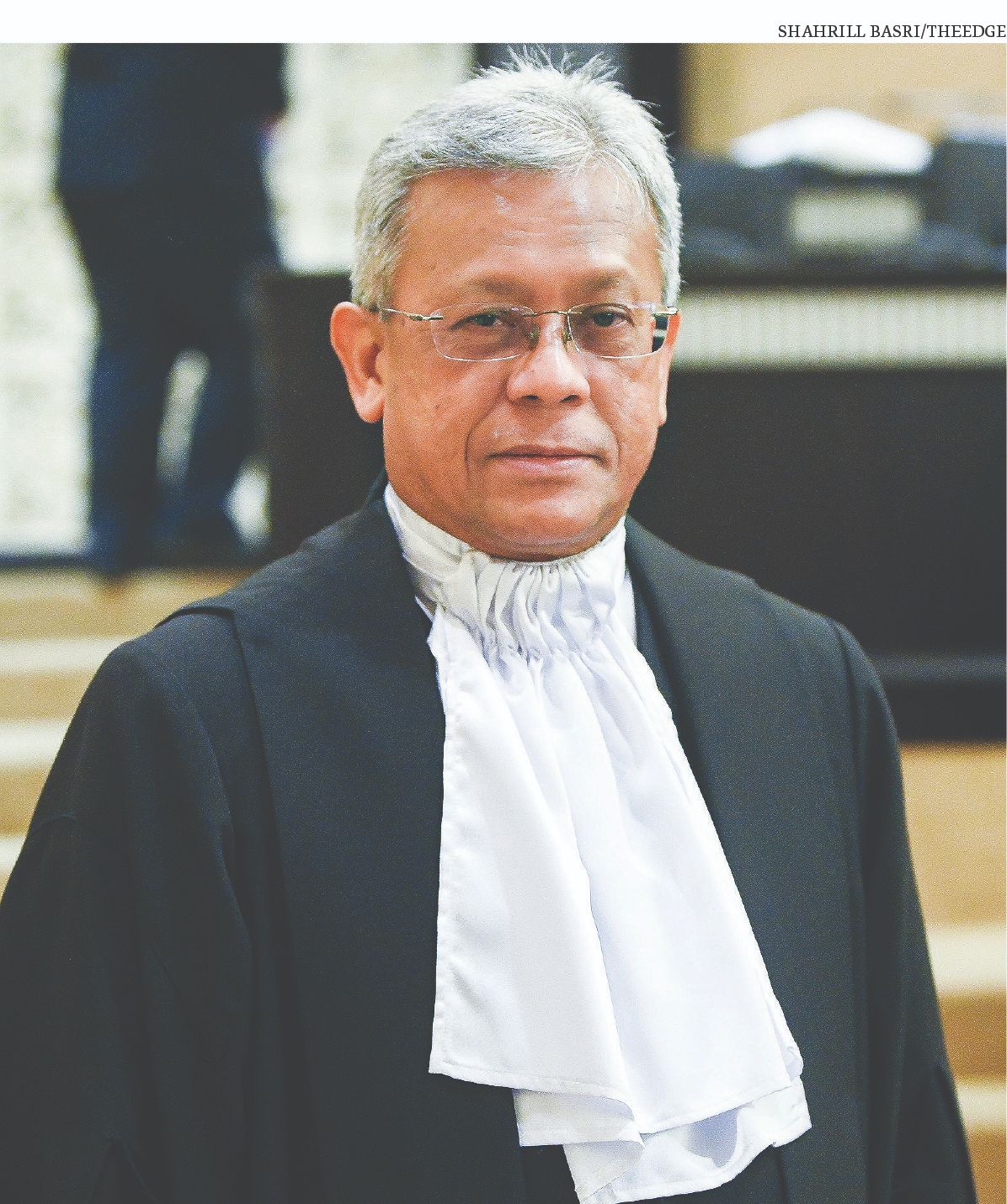
FEDERAL Court judge Datuk Collin Lawrence Sequerah described former prime minister Datuk Seri Najib Razak’s plundering of state-owned 1Malaysia Development Bhd (1MDB) as graver than acts by Atilla the Hun, as his role in one of the world’s greatest financial scandals resulted in humongous debts of tens of billions of ringgit that will have to be borne by generations of Malaysians.
Najib had leveraged the vast powers bestowed upon him by virtue of his “exalted positions” as prime minister, finance minister, and chairman of the board of advisers of 1MDB to enable the audacious theft at the strategic investment company, said Sequerah, the presiding judge over his criminal trial, in an 810-page written judgment released last week
Six months earlier, Sequerah had found Najib guilty of four counts of abuse of power and 21 counts of money laundering, sentencing him to 15 years in prison and imposing a whopping RM11.38 billion fine.
In a previous criminal case involving Najib and 1MDB subsidiary SRC International Sdn Bhd, trial judge Datuk Mohd Nazlan Mohd Ghazali, in his more than 500-page judgment, described the theft of SRC funds — RM42 million of which was deposited into Najib’s personal bank accounts — as “the worst case of abuse of position and betrayal of trust in public funds”.
In his judgment, Sequerah said the “sheer scale of the plunder that took place (financially speaking) made Attila the Hun look like a choirboy in comparison”.
“At the heart of this scandal, he is not a humble employee of an organisation which saw an opportunity to exploit a flaw in the system, but a man exalted who held the highest reins of power.
“This was someone who held simultaneously the offices of the positions of PM, minister of finance, and chairman of the board of advisers of 1MDB who used and exploited that position in order to carry certain acts and to exert influence over the 1MDB board to carry out certain abnormal transactions with unholy haste.
“The abuse and betrayal of trust while in those exalted positions must be taken into account as a major consideration in the sentencing process,” Sequerah said of Najib’s sentence and hefty fine, which if he is in default of, would incur another 30 months jail.
Financial scandal left staggering debt
Sequerah pointed to the “staggering RM50 billion” debt, the result of the heist of 1MDB funds, of which about RM42 billion had already been paid by the government.
This, he added, is inclusive of principal and interest, and despite recovery efforts yielding RM29 billion, a substantial debt of about RM13 billion remained outstanding.
“The repercussions and consequences arising from the fallout of the scandal are still ongoing and there are current financial obligations that still need to be fulfilled.
“This will impact future generations of Malaysians as well,” the judge said, adding another relevant factor to take into consideration is the damage this scandal has caused to Malaysia’s reputation.
“It is no secret that the reverberations of the financial scandal had echoed throughout the globe. The web of financial transactions was made deliberately complex by multiple layering in order to obscure the origin of the funds. The crimes involved sophisticated cross-border transactions, which resulted in financial losses of a colossal nature, and resulted in severely enduring financial consequences for the nation.
“It was described internationally as being ‘kleptocracy at its worst’, an unwanted blemish on the record of our beloved country’s otherwise sterling reputation on the world stage.”
The judge noted Najib’s lack of remorse.
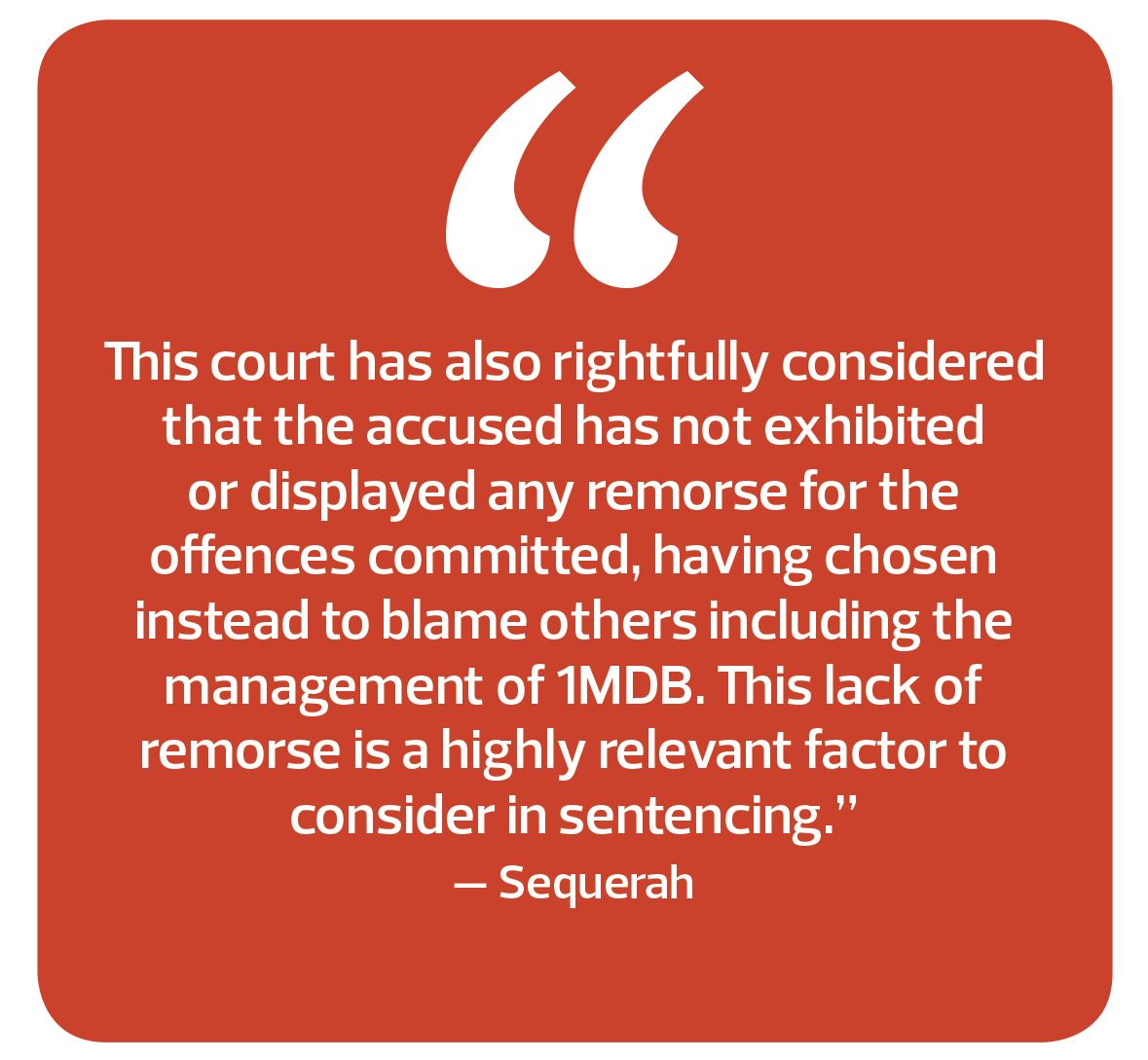
“This court has also rightfully considered that the accused has not exhibited or displayed any remorse for the offences committed, having chosen instead to blame others including the management of 1MDB. This lack of remorse is a highly relevant factor to consider in sentencing.
“The evidence adduced and determined to be admissible and relevant by this court clearly demonstrated that the accused had orchestrated the financial siphoning of funds through the wiles and deception of his proxy, Jho Low,” he said.
The cold hard facts, Sequerah added, are that, given the presence of involvement of Jho Low —otherwise known as Low Taek Jho — at critical phases of transactions and dealings involving 1MDB and his obvious proximity and relationship with the accused, the fact that no action was taken against Jho Low even after the wrongdoings surfaced was puzzling.
“This leads to the only reasonable inference which is that Jho Low operated and functioned as the proxy, the conduit, the intermediary and the facilitator of the accused in the affairs of 1MDB,” he said.
Sequerah pointed that for the four abuse of power charges under Section 23 of the MACC Act, Jho Low was at the heart of the nefarious scheme which took place over four phases: PetroSaudi International Ltd stage or what is known as the Good Star Phase (2009-2011), the Aabar-BVI Phase (2012), the Tanore Phase (2013-2014) where the bulk of money had entered into Najib’s bank accounts, and The Options Buy Back Phase (2014).
Judge questions Najib’s purported courtesy to Tong but not the Arabs
The Edge Media Group Chairman Tan Sri Tong Kooi Ong, a prosecution witness in the trial, had testified that he met Najib in March 2015, a few months before the scandal came out in the open in July of that year, to discuss or show Jho Low’s wrongdoing in the PetroSaudi phase.
The meeting took place at Najib’s Jalan Duta home, where, after Tong suggested that action be taken against Jho Low, he was shown the door.
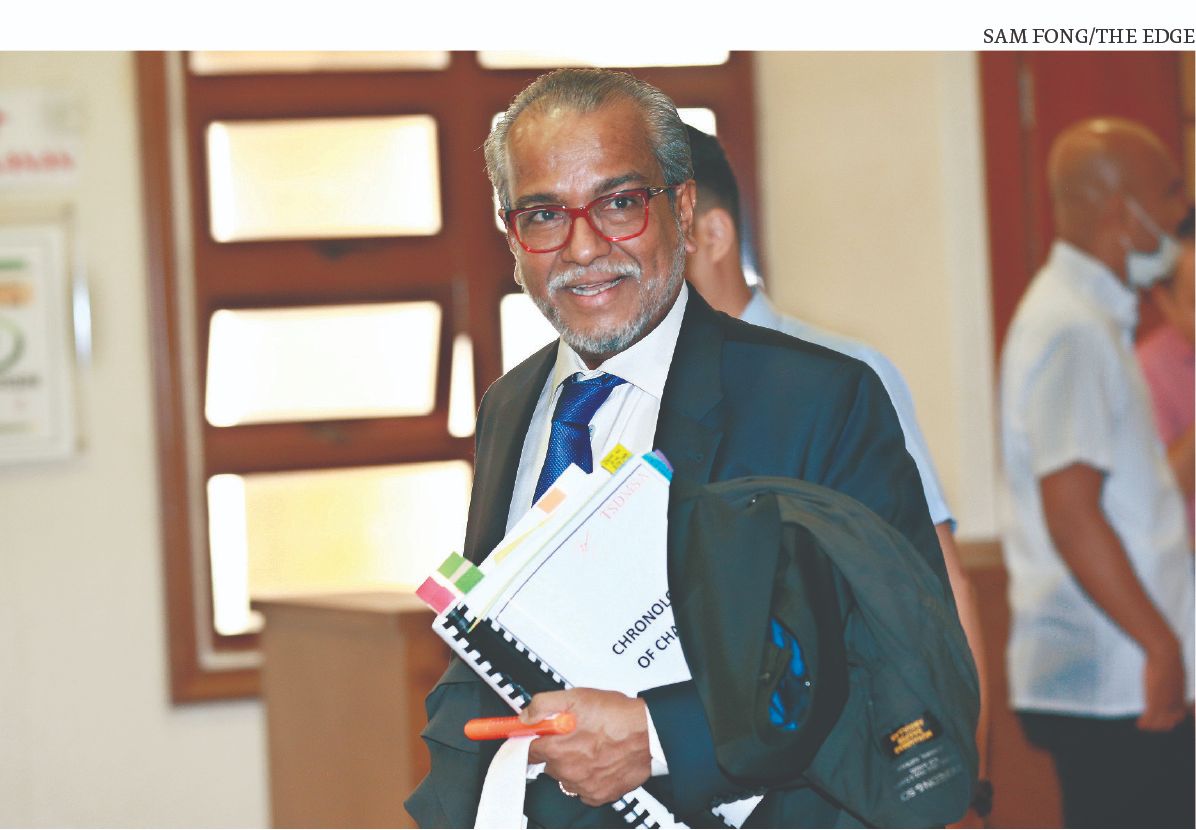
The defence led by Tan Sri Muhammad Shafee Abdullah had suggested that Najib was only being courteous and adhering to the Malay custom of escorting Tong out.
However, Sequerah was not convinced, noting that Najib had not shown the same courtesy as he had not officially thanked the purported “Arab donors” whom he claimed had made the generous deposits into his bank accounts for him to use as he saw fit.
“By way of contrast, the accused also said that since the contribution was a personal donation to him, it therefore should not be managed through official government channels … The conduct of the accused was not in keeping with the usual norm of human behaviour, especially given the enormous sum received.”
Najib’s failure to acknowledge the four (donation) letters, whether on a formal or informal basis, the judge added, places into question the credibility of his testimony, especially when he said the matter was sensitive and so must proceed through proper channels like the Foreign Ministry.
“Be that as it may, although the accused’s position was that the matter was so sensitive and so gratitude had to be conveyed through diplomatic channels, there is no evidence (no written appreciation) that this was done.
“The contents of the Arab donation letters make no reference whatsoever to the meeting which took place. The evidence when taken cumulatively cannot but tend to the conclusion that the four ‘Arab letters’ were in fact forgeries,” Sequerah said.
Najib’s defence in the 1MDB trial as in the SRC International case was that he thought the huge sums of money that were deposited into his accounts were “Arab donations”.
This defence in the SRC case had been rejected by the High Court all the way up to the Federal Court as far-fetched. In the 1MDB trial, Sequerah ruled that he was bound by res judicata (a matter already adjudged) in not accepting such a defence.
Monies for Najib’s benefit, none accrued to Malaysia
Sequerah, in focusing on Najib’s testimony, said the former prime minister admitted to receiving funds into his accounts and personally issuing cheques to various parties.
Najib, he pointed out, had admitted that pursuant to the “peristiwa 916” (Sept 16, 2008), that there was a need for him to find political funding to avoid any Barisan Nasional lawmakers from jumping ship to another party and thus causing him to lose political power.
“This admission by the accused lent credence to the evidence from former chief secretary to the government Tan Sri Sidek Hassan who testified that 1MDB was initiated as a political fund for BN.
“Amhari Efendi Nazaruddin (Najib’s former special officer) also reiterated the fact 1MDB was used as a fund for the accused’s political purposes. The evidence has shown that the accused could not have obtained the funds were it not for his positive action with regard to 1MDB in which he had vested interests.
“The accused … was also well cognisant of the power he wielded under Article 117 of the 1MDB’s memorandum of articles. The accused further in his statement alluded to the role played by Jho Low in relation to all fundraising mentioned in the four MACC charges.”
Apart from Amhari and Sidek, former 1MDB CEO Hazem Abdul Rahman also testified that Jho Low had told him that 1MDB’s true purpose was to serve Najib’s political and financial interests and all decisions were subject to Jho Low’s clearance.
The judge said evidence presented by the prosecution through the money trail displayed that considerable sums of monies generated from the 1MDB transactions (from the four phases) found their way into Najib’s personal AmBank accounts and that these sums were used by Najib on matters for his own benefit.
Sequerah said the prosecution’s evidence showed that the government had incurred further costs and expenses to pay back bonds and loans taken up by the company.
“Ultimately, there were no benefits that the actions of the accused had brought to the government of Malaysia and no interest or advantage had accrued to the government,” the judge stressed.
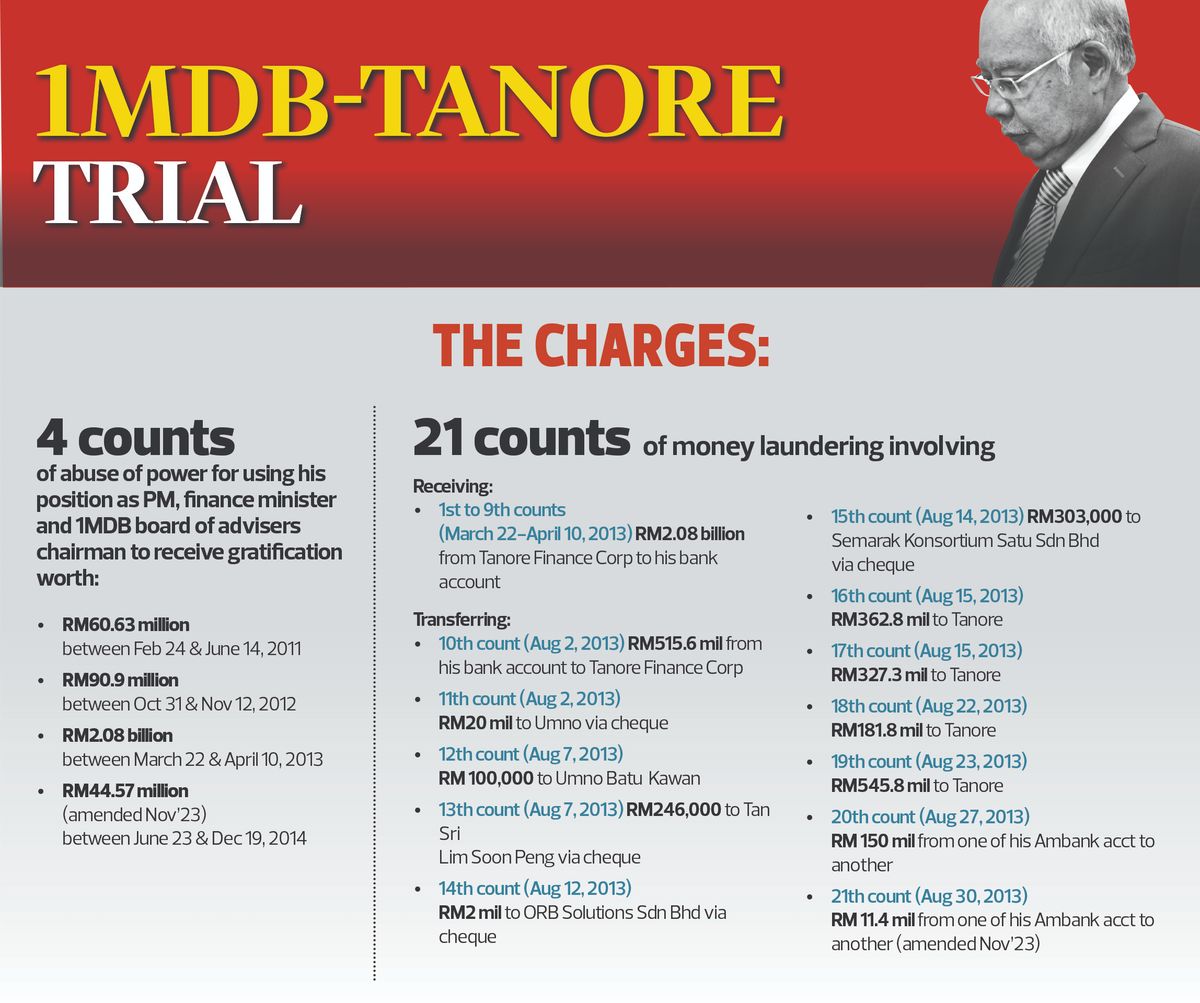
Evidence from Najib’s money-laundering charges showed that on Aug 2, 2013, Umno received RM20 million from Najib, and another RM100,000 cheque was sent by the former party president to Umno Batu Kawan on Aug 7, 2013 — where the funds were traced from the Tanore phase.
Then Umno treasurer, Datuk Ahmad Husni Hanadzlah, who was also former second finance minister, testified and confirmed that the party received RM20 million from Najib, and the Batu Kawan Umno division chief Datuk Mohd Noor Ahmad, who was also a prosecution witness, acknowledged receiving a cheque from Najib to that sum.
Flimsy defence of ‘Arab donation’
Sequerah said Najib’s opening of the private AmBank account which does not reveal his name, indicated that he was expecting to receive funds in an account which was not readily discernible as being identified as belonging to him.
“The evidence (money trail and the impossibility of huge donation), when viewed as a whole, show that there is no credible, contemporaneous, or reliable documentary evidence that directly connects the large sums deposited in Najib’s personal accounts to King Abdullah or any member of the Saudi family.
“Although the accused, given his position at the time, had all the necessary resources and machinery at his disposal to verify the authenticity and legitimacy of the source of the funds and for that matter, the said (Arab) letters, he deliberately chose not to do so.”
This deliberate omission, the judge reasoned, translates into wilful blindness on the part of the accused in that because he deliberately refused to inquire into matters which aroused suspicion, Najib was taken to know and to possess a guilty mind or have mens rea pertaining to the origin of the questionable funds.
“The ultimate finding of this court therefore, and the irresistible conclusion is that the Arab donation narrative is not meritorious, the Arab donation letters were forgeries and that the evidence pointed unmistakably to the fact that the monies were in fact derived from 1MDB,” he stressed.
While Najib claimed the funds were Arab donations for political purposes, the judge said there were no receipts issued by the government or political party acknowledging the receipt of the monies into their accounts as the funds were transferred directly into Najib’s personal account.
“There was no evidence of any acknowledgment by the government or any political party to the purported donor, and for that matter by the accused himself and the alleged [fourth] donation letter addressed to the accused’s private residence than to any official or party address.
“There was further no minute or official record by the accused in relation to the alleged donation letter up to now, there is no original copy of the alleged donation letter tendered before court. There is also no evidence of confirmation or verification from the purported royal family donor that any political donation was made to the accused,” Sequerah added.
The judge said it defied logic or reasonable belief that the colossal amount remitted to Najib’s account in the form of political donations that there was no evidence of proper and transparent accounting as the political party he headed was not some fly-by-night rookie political entity.
Sequerah said Umno was at the time Malaysia’s largest political party having its roots established in 1946.
“It is inconceivable that a person in the position of the PM of the ruling political party at the time, would not have any accounting records kept by the organisation who was supposed to be the beneficiary of the monies not of an insignificant amount.
“Finally, even if these funds were meant for political donation, which in any event is found to be without merit, this does not in any way serve to legitimise the use of the funds if they originated from illegal sources as the purpose for which the funds were utilised would not be relevant. In light of this, the accused’s contention that the monies received were meant for political donations is untenable,” the judge said.
Najib is currently in Kajang prison serving time for his SRC convictions.
Sentenced in 2022 to 12 years’ jail and a RM210 million fine, the pardons board in 2024 cut his prison time by half and the fine to RM50 million.
Apart from his criminal convictions, another High Court judge, Datuk Ahmad Fairoz Zainol Abidin, earlier this year found Najib liable to pay back US$1.3 billion to SRC from a RM4 billion loan lent to the company by Retirement Fund Inc (KWAP) in two tranches over 2010-12
In addition, Najib and several former 1MDB officers and directors are facing a US$8 billion lawsuit by the company with the commercial trial slated to begin in two months (August) before Judicial Commissioner Mohamed Redzuan Idrus. The suit was filed in 2021.
Save by subscribing to us for your print and/or digital copy.
P/S: The Edge is also available on Apple's App Store and Android's Google Play.