


This article first appeared in The Edge Malaysia Weekly on June 22, 2026 - June 28, 2026
MORE than a year ago, Vienna-listed AT&S Austria Technologie & Systemtechnik AG was going through a difficult period.
At the end of February 2025, the share price of the global manufacturer of integrated circuit (IC) substrates and high-end printed circuit boards (PCBs) was below €13, valuing the company at about €500 million — a fraction of what investors once thought it could be worth.
Around the same time, there was a significant change in management, with German technology industry veteran Michael Mertin taking over as CEO on May 1.
Fast forward to today, and the company’s fortunes have changed dramatically. AT&S shares are now trading near their all-time high of €200 each, lifting its market capitalisation to about €7.58 billion (RM35.78 billion).
Of course, the 15.4-fold jump cannot be attributed entirely to Mertin. After all, the broader global semiconductor sector has been buoyed by an artificial intelligence (AI)-driven rally amid a memory chip shortage, as demand for advanced computing infrastructure lifted sentiment across the chip supply chain.
Nevertheless, the scale of AT&S’ strong rebound suggests investors are also buying into Mertin’s turnaround strategy as well as the group’s improved financial performance.
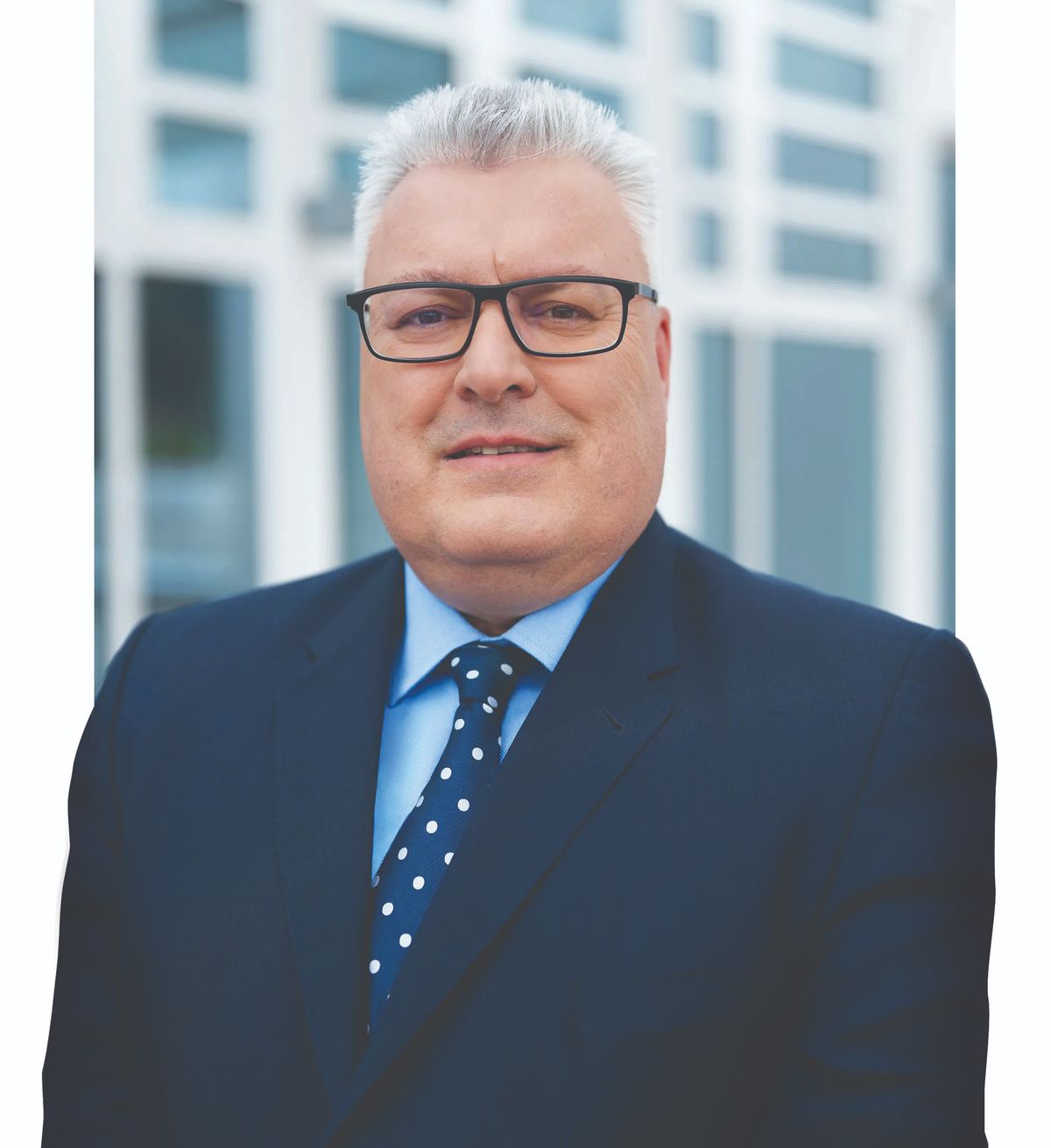
In an exclusive interview with The Edge, Mertin outlines how AT&S tightened financial discipline and repositioned itself as a strategic innovation partner to some of the world’s largest semiconductor companies, from being merely a supplier.
He recalls that after taking the reins at AT&S from Andreas Gerstenmayer, he engaged in extensive discussions with the supervisory board.
Mertin points out that his perspective was shaped by his time as chief executive of Frankfurt-listed integrated photonics company Jenoptik AG from 2007 to 2017, as well as by years of working closely with private equity and hedge funds.
“Back in May last year, it was clear that several things needed to change. Governance was one of them — particularly around decision-making, which had to become clearer and faster,” he says.
“The industry itself is undergoing significant transformation. It is increasingly dependent on close collaboration between customers and suppliers, where both sides work as integrated partners on product development and strategic decisions. The traditional model of a supplier simply delivering pre-produced goods is no longer sufficient.”
These deep collaborations — such as the relationship between Dutch firm ASML Holding NV and German firm Carl Zeiss AG, where Mertin previously worked — demonstrate how innovation emerges from tightly integrated ecosystems.
Today, Carl Zeiss remains ASML’s critical strategic partner, designing and manufacturing high-precision optical systems and components required for ASML’s photolithography machines, which are used to produce ICs.
“The semiconductor industry is moving towards shared road maps and a common understanding of technology and value creation with top-tier global customers. This requires a mindset shift and a leadership transformation within the company,” says Mertin.
“We restructured the executive board, reducing its size to improve focus and integration — with a chief financial officer, a highly experienced chief technology officer and myself. We integrated operational responsibility under one leadership structure to eliminate silos and better leverage internal knowledge.”
Founded in 1987, AT&S develops and produces leading-edge interconnect technologies for key digital industries such as mobile devices, automotive and aerospace, industrial, medical and high-performance computing for AI applications.
With production sites in Austria (Leoben, Fehring), China (Shanghai, Chongqing), Malaysia (Kulim) and India (Nanjangud), as well as a European competence centre for research and development (R&D), AT&S currently employs around 14,000 people worldwide.
It is worth noting that each AT&S plant is focused on a dedicated technology portfolio. The Austrian plants primarily supply to the European market, but increasingly also to the American market. Essentially, short lead times, special applications and customer proximity are particularly important in Europe.
The plants in Austria and India focus on small and medium series, whereas high-volume production for customers in the IC substrate and mobile device segments is based in China and Malaysia.
Mertin stresses that AT&S needs to be seen as a reliable partner to create future value together with its clients, given that trust is crucial in the semiconductor industry.
“We initiated innovation workshops with customers, giving them deeper insight into our capabilities and enabling closer cooperation. We also leveraged our headquarters in Leoben, which is a relatively high-cost location but offers a strong, secure and trusted environment for innovation work,” he elaborates.
“We established a dedicated R&D innovation line and opened it for joint development with customers. This approach helped increase utilisation of our HQ over the past 13 months.”
Moreover, AT&S has identified product areas where the group has unique competencies globally, allowing it to act as a sole supplier in certain niches and better leverage Austrian production capabilities.
Mertin sees market demand as a key growth driver for the company.
“We are now considering capacity expansion in close cooperation with customers, whom we increasingly regard as partners. Together, we are defining what next-generation products should look like and how production technologies must evolve.”
He also acknowledges that customer engagement has changed significantly, with relationships increasingly centred on the co-creation model.
“Previously, we were more of a supplier working on demand. Today, we are increasingly an innovation partner. The key difference is co-creation — working together on future products, sharing risks and sharing gains. In this model, success is shared. Customers also invest alongside us, and both sides benefit from improved profitability,” he says.
“We are dealing with extremely large customers — multi-hundred-billion-dollar and even trillion-dollar companies — but our contribution is critical in the value chain due to specialised knowledge and capabilities.”
Second building in Kulim on the cards
Five years ago, AT&S chose Malaysia for the group’s first facility in Southeast Asia. Construction work on the plant started in November 2021 and commercial operations came on stream in 2025.
Early last year, AT&S started high-volume manufacturing (HVM) of high-end IC substrates for American fabless semiconductor giant Advanced Micro Devices Inc (AMD) in Kulim, Kedah. The serial production of AT&S’ cutting-edge IC substrates caters almost exclusively to AMD for incorporation into its high-performance and energy-efficient data centre processors.
IC substrates are used to connect highly complex microchips to the PCBs on which the memory, power supply and other important system components are mounted.
In tandem with the demand in the semiconductor industry to build ever smaller, more efficient and more economical microchips, PCBs have also become progressively miniaturised, until the tens of thousands of chip contacts in the smallest possible space made it necessary to develop IC substrates with build-up layers of the highest electrical wiring density.
Mertin highlights that Malaysia, particularly Kulim, is part of AT&S’ long-term manufacturing footprint. The investment is larger than initially planned and is approaching €2 billion, including expansion and related infrastructure.
“In Kulim, we have already fully utilised the first facility. Our second building is ready, but it is currently vacant, and we are in discussions to fully equip it when the time is right,” he says.
“Further expansion, including a second plant, will depend on full customer commitments. These will be announced when the agreements are finalised.”
The Kulim plant currently has about 2,500 employees at the site, and this is expected to increase to around 3,000 by year end.
Mertin reiterates that Kulim, alongside China, is strategically important in the group’s global manufacturing footprint.
“In Kulim, we currently have major engagement primarily with AMD, while broader customer diversification is underway. The target is to expand to five to seven customers as additional capacity comes online,” he says.
Optical and quantum communications
In layman’s terms, IC substrates are effectively the communication and energy backbone between semiconductor chips — akin to the nervous system and blood circulation combined.
And here’s the thing: As systems integrate more chips on a single substrate, communication density and efficiency have become the bottleneck. Power delivery is also growing increasingly complex, with future systems requiring more power. Therefore, IC substrates are gaining in importance not just for connectivity, but also for energy distribution.
The next evolution is in optical communication, says Mertin.
“We are already in early trials and conceptual discussions, working with customers on standards and potential architectures. This is still in a very early stage and will take years before commercial realisation,” he reveals.
Nevertheless, Mertin points out that the integration of optical components into PCBs already exists in early forms. In some implementations, fibre-optic signals are received and converted by optical couplers into electrical signals, before being transmitted to central processing units (CPUs) and graphics processing units (GPUs). “The next step is to move optical transmission closer to the processor,” he says.
In addition, quantum communication concepts, particularly quantum encryption using entangled photons, are being explored. In principle, this allows absolutely secure communication that cannot be broken, even with unlimited computational power.
Mertin says these technologies, including quantum-secure communication lines between cities and satellites, are already being tested in parts of Europe. He believes the implications for chip architecture and substrates could be significant in the long term.
“From my background in optics, including work at Carl Zeiss and Jenoptik, as well as involvement in extreme ultraviolet (EUV) lithography development, I bring a strong perspective on this convergence between optics and semiconductors. I also chair a board at an institute working on these communication technologies for government applications in Germany. The industry is collectively moving towards optical communication and higher integration, driven by performance and energy-efficiency needs.”
Mertin predicts that the first applications will likely be the integration of optical couplers in IC substrates and high-end PCBs. From there, integration will move closer to chips over time. “There are a few big firms involved in either IC substrates or high-end PCBs, but we are probably the only one that is heavily involved in both segments,” he says.
Dörflinger Private Foundation and Androsch Private Foundation are AT&S’ two largest shareholders, with stakes of 18% and 17.5% respectively. In the financial year ended March 31, 2026 (FY2026), AT&S reported a net loss of €26 million on revenue of €1.79 billion.
“For the current fiscal year, FY2027, we expect organic revenue growth of between 30% and 35%, which is significant and must be executed carefully by the organisation. Alongside that, our bottom line will also improve meaningfully, supported by higher utilisation of existing assets and targeted strategic investments to fill capacity gaps. The worst is definitely over, and we will return to profit in FY2027,” says Mertin.
He adds that AT&S emphasises financial discipline, particularly cash flow. “Ultimately, what matters is liquidity — whether you still have cash in your bank accounts at the end of the month.”
Previously, AT&S heavily emphasised earnings before interest, taxes, depreciation and amortisation (Ebitda).
“When you focus too much on Ebitda and not enough on cash flow, you risk overinvesting without sufficient returns. The result was a large balance sheet, with significant investments, but weak profitability and low shareholder return — an unstable situation that needed to be corrected,” he explains.
Today, AT&S focuses on disciplined investment, only deploying capital where it is necessary to execute controlled ramp-ups at its facilities, while improving the utilisation of existing assets, says Mertin.
“As a result, we have significantly improved cash flow and rebuilt trust — both with shareholders and customers. Financially, this translated into a meaningful turnaround,” he adds.
“In the last two quarters, we returned to net profitability on a sustained growth trajectory. We achieved strong operational organic growth, driven not only by cost reduction but also by better yields, improved quality, procurement efficiencies and higher productivity.”
Overall, AT&S remains confident of the long-term demand outlook, particularly driven by AI and data centre expansion, says Mertin. He believes that AI is not only a computing trend, but also a broader industrial transformation affecting robotics, autonomous systems, logistics and services. “This is structurally changing business models across industries and increasing demand for high-performance computing infrastructure,” he observes.
From a financial perspective, the company’s valuation is supported by three factors — overall market sentiment, regained trust in execution and improved operational performance, says Mertin.
“Historically, the market significantly underestimated our ability to utilise existing assets. Today, we are demonstrating strong execution, improved profitability and sustained cash flow generation. We believe this will continue to translate into improved valuation over time, supported by sustained operational performance and investor confidence,” he adds.
Save by subscribing to us for your print and/or digital copy.
P/S: The Edge is also available on Apple's App Store and Android's Google Play.