

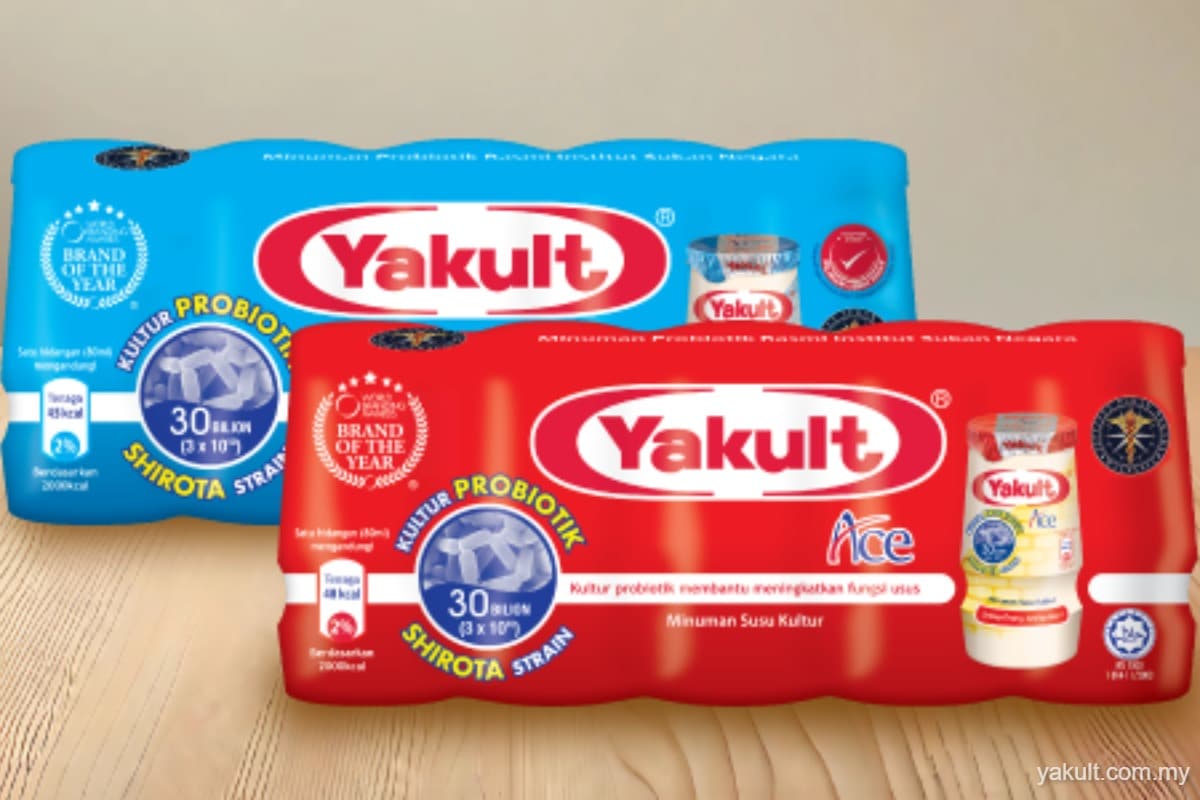
SHAH ALAM (June 23): The High Court on Friday has allowed a judicial review by Yakult (M) Sdn Bhd against the Royal Malaysian Customs Department, which had on March 4 last year removed the classification of two drinks, namely Yakult Ace and Yakult Ace Light, and had then listed them as “beverages” when the products had originally been classified as “fermented milk” in the imposition of tariffs.
Different rates of tariffs are applied between beverages and fermented milk, as beverages are imposed a higher rate of sales tax at 10% and an import duty of 20%, as compared to 5% of sales tax on fermented milk and 0% for import duty.
The two drinks were initially classified under tariff code 0403.90.9000 but on March 4 last year, this had changed to the tariff code of 2202.99.5000.
High Court judge Wan Fadhillah Nor Wan Idris in her oral decision said that Yakult had a strong basis to say the two drinks are fermented milk rather than beverages.
She said the heading of 04.03.90.9000 that formed the basis of Yakult is that it is based on fermented milk that contains live bacteria, skimmed milk, sugar, and flavour.
“The main characteristic of Yakult is that it is based on ‘fermented milk’ — not a beverage to quench thirst, but to bring benefit and create a healthy intestine. The common perception when we mention Yakult is that it is fermented milk for a healthy intestine and not just any recreational drink.
“Although the drink is mixed with water, it does not change the essential character of the product, that it is fermented milk. For these reasons, this court allows the judicial review sought by Yakult in quashing the Custom’s decision on March 4 last year.”
Wan Fadhillah also allowed a declaration that the two products classification should be under 0403.90.9000 and not 2202.99.5000.
The court also ordered Customs to pay RM5,000 costs to Yakult.
Yakult was represented by Datuk S Saravana Kumar, Dharshini Sharma, and Rita Song from Messrs Rosli Dahlan Saravana Partnership, while Federal Counsel Mohamad Shafiq Mohd Sazalli appeared for Customs.
Saravana confirmed with The Edge the outcome of the Friday afternoon decision.
Yakult (M) is a fully owned subsidiary of Yakult Honsha Co Ltd, a Japanese multinational corporation that manufactures products which contain over 30 billion live Shirota strain bacteria in each 80ml bottle.
It had filed the substantive judicial review application on June 25 last year, after the High Court granted it leave a day earlier on June 24.
In judicial review proceedings, leave (permission) must be obtained from the court first before the merits or substantive application are heard.
While Saravana maintained that the Yakult drinks should be considered fermented milk drinks due to its nature, Customs argued that its decision is not ultra vires (going beyond its powers), illegal, or against the law, or acted in excess of the law.
Saravana, commenting on the decision, said the court recognises that “essential character” remains the governing test in determining tariff classification, particularly in borderline cases such as the determination between dairy-based products and beverages.
“Functional purpose and composition will prevail over form and presentation. Secondly, it underscores that long-standing classification practice cannot be lightly departed from, especially where it has informed regulatory treatment and commercial reliance over an extended period.
“Any departure requires clear and reasoned justification. Absent cogent reasons, such departures may be vulnerable to judicial intervention,” Saravana said when commenting on the decision.