

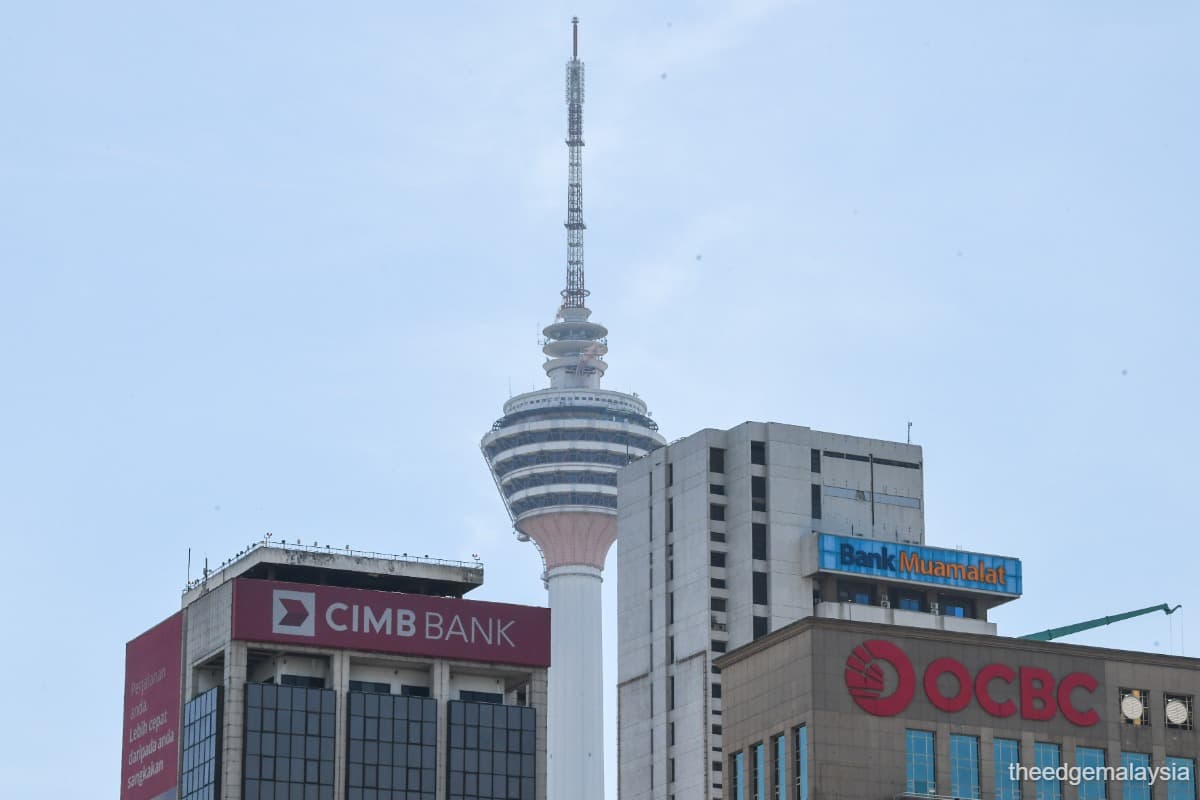
KUALA LUMPUR (June 18): Malaysian banks could still afford to dish out higher dividends even as bad loans may rise to a three-year high, said S&P Global Ratings.
Non-performing loans as a percentage of total debts could rise by 10-20 basis points to a modest 1.6% in the next two years, according to the rating agency’s forecast. Strong corporate and household balance sheets underpin banks' healthy asset quality, the ratings agency said in a report.
“Malaysian banks' stable profitability and moderate growth will allow for higher dividend payouts over the next two years,” S&P Global said.
Banks in Malaysia are set to raise dividends at a time when the volume of loans turning sour could rise from the fallout of the war in the Middle East. Banks are heavily capitalised, which weighs on their returns on equity, while the adoption of Basel 3 reforms in July will add to capital buffers.
Among others, CIMB Group Holdings Bhd (KL:CIMB), the country’s second-largest bank, plans to return up to RM2 billion to shareholders over the next two years while smaller rival Public Bank Bhd (KL:PBBANK) raised its dividend payout ratio guidance to 60% for 2026.
In a scenario of severe shock where non-performing loan ratios jump to 5%, a fall in earnings could erode capitalisation buffers by up to 1.5 percentage point, S&P Global said. However, the highest-grade common equity Tier 1 would remain robust at above 12%, the agency noted.
In such cases, pre-tax profits could fall sharply while two unidentified “mid-size banks” would sink into the red due to higher provisioning requirements and constraining dividend payouts while large banks could still maintain higher dividend payout ratios, S&P said.
A 14-point interim agreement has been signed between the US and Iran, extending a ceasefire announced in April by another 60 days to negotiate a final truce.
S&P said labour market conditions will be key to the quality of bank assets given that 60% of the lending is to households already saddled with high debt levels.
Nevertheless, “we anticipate banks will set aside higher macroeconomic overlays for the rest of 2026 due to heightened global conflict and military posturing”, the agency added.