

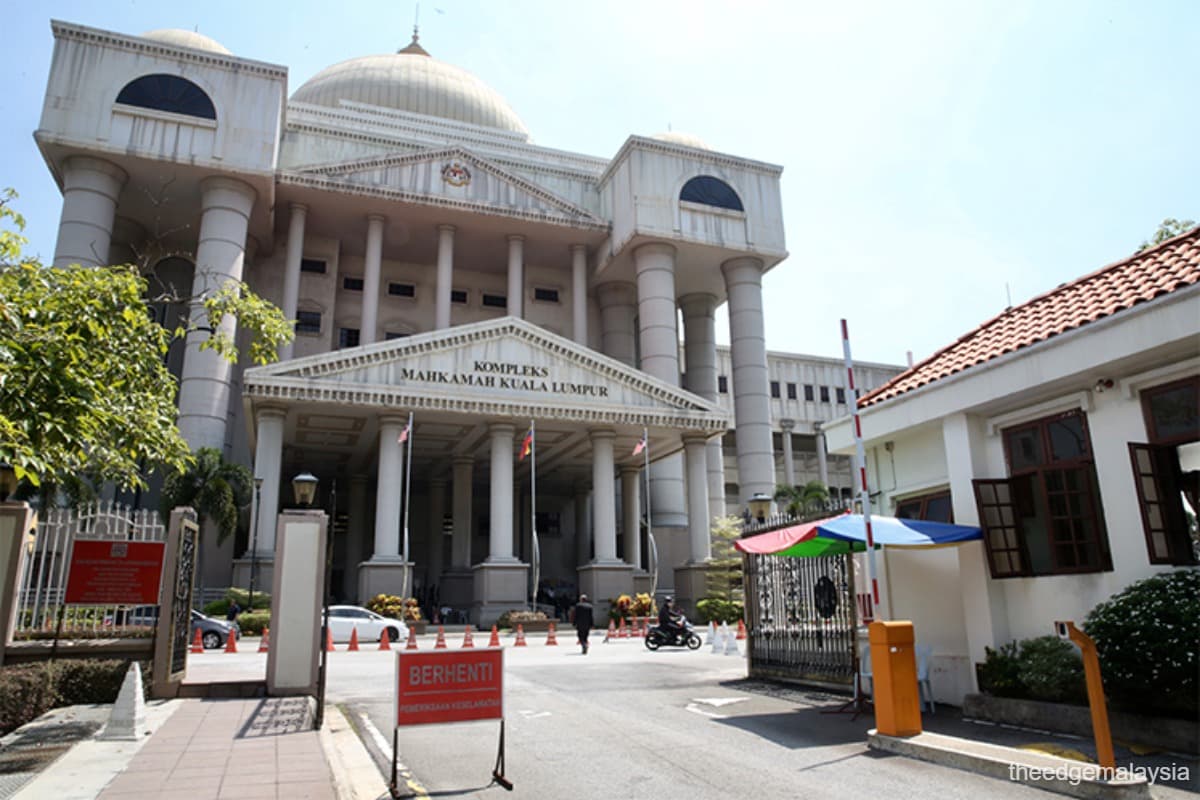
KUALA LUMPUR (June 12): The High Court has dismissed M Indira Gandhi’s and 13 others' legal action challenging the validity of state laws concerning unilateral conversions.
Presiding judge Datuk Aliza Sulaiman, who is now an appellate court judge, said she was of the view that the plaintiffs have not established "a real or genuine interest" in seeking the declarations sought in the case, and in short, had no locus standi to bring the action.
"Even if the bar is lowered and they are taken as simply public-spirited individuals and associations, I am unable to say that they have some interest in the matter.
"The evidence simply does not disclose an actual controversy affecting the rights of the plaintiffs," she said in her decision delivered via Zoom on Friday.
The court made no order as to cost.
Judge Aliza noted that in the single affidavit in support filed, each of the plaintiffs stressed that they had "a sufficient nexus" to the court case based on personal circumstances, being residents in the said states, or by holding positions in organisations to protect and promote community welfare, “particularly members of the Hindu and other non-Muslim communities".
"The plaintiffs are said to have a real and genuine interest in the constitutionality and continued operation of the impugned provisions, which are laws presently enforced and capable of affecting them in the future," she said.
However, in walking through the position of each of the plaintiffs, she said that most of their interest in the case was academic or hypothetical.
Case laws say no need to wait to be adversely impacted, but apex court asserts such cases are rare
Citing case law, Aliza said that although a party need not wait to be adversely impacted by an alleged unconstitutional law to mount a challenge, the apex court had made clear that such cases were "rare and exceptional".
"I do not think that this is such a case," she said.
The judge noted that with the first plaintiff, Indira's grievances had been dealt with "conclusively and fully" in the 2018 landmark apex court decision.
"The first plaintiff's interest in this matter is purely academic in nature," she said, adding that Indira did not file an affidavit in support to show how she was adversely impacted by the states' unilateral conversion laws.
The judge said the there was no evidence before the court that the second to fourth plaintiffs — which included Pertubuhan Hindu Agamam Ani Malaysia — were indeed representatives of the various religious or community groups which they claim to be, or that they have the authority to commence the legal challenge.
As for the fifth to 12th plaintiffs — who were residents in the respective states named as defendants in this suit — she said that there is no evidence that they have any child or children who are minors and may be impacted by the disputed state laws.
As for the 13th and the 14th plaintiffs, the judge noted that although they were unilaterally converted, this was “way before” the Indira Gandhi decision and did not have an interest in this particular legal case.
The two women claimed that they were unilaterally converted in Johor when they were around 10-years-old.
The judge highlighted that the plaintiffs were seeking a consequential declaration that any unilateral conversion of minors which took place after the Indira Gandhi's decision is void — which thus excludes the 13th and 14th plaintiffs.
She added that they were also not challenging their conversion and are now of age and were at liberty to renounce the religion if they so wished.
Case filed in 2023
In March 2023, Indira and the 13 other plaintiffs had filed the originating summons (OS) through Messrs Raj & Sach, seeking to, among others, nullify unilateral conversion in seven states and the Federal Territories.
They claimed that the state enactments contravene Article 12 (4) of the Federal Constitution, as interpreted in Indira's landmark 2018 case on unilateral conversion.
Article 12(4) states that the religion of a person aged under 18 is to be decided by his “parent or guardian". In the landmark decision, the apex court ruled that the word “parent” in said article is to be interpreted as “parents”, if both are still alive. Therefore, both parents’ permission is needed in conversion cases.
The plaintiffs also argued that according to Article 75 of the Federal Constitution, the federal law shall prevail over any state law which is inconsistent with it. Therefore, they say that the state enactments allowing unilateral conversion should be declared void.
The defendants in the suit were the governments of Johor, Perlis, Melaka, Kedah, Negeri Sembilan, Perak and the Federal Territories.
The government of Pahang, which was initially also a defendant, was removed from the suit as it has amended its state laws to prevent unilateral conversion.