

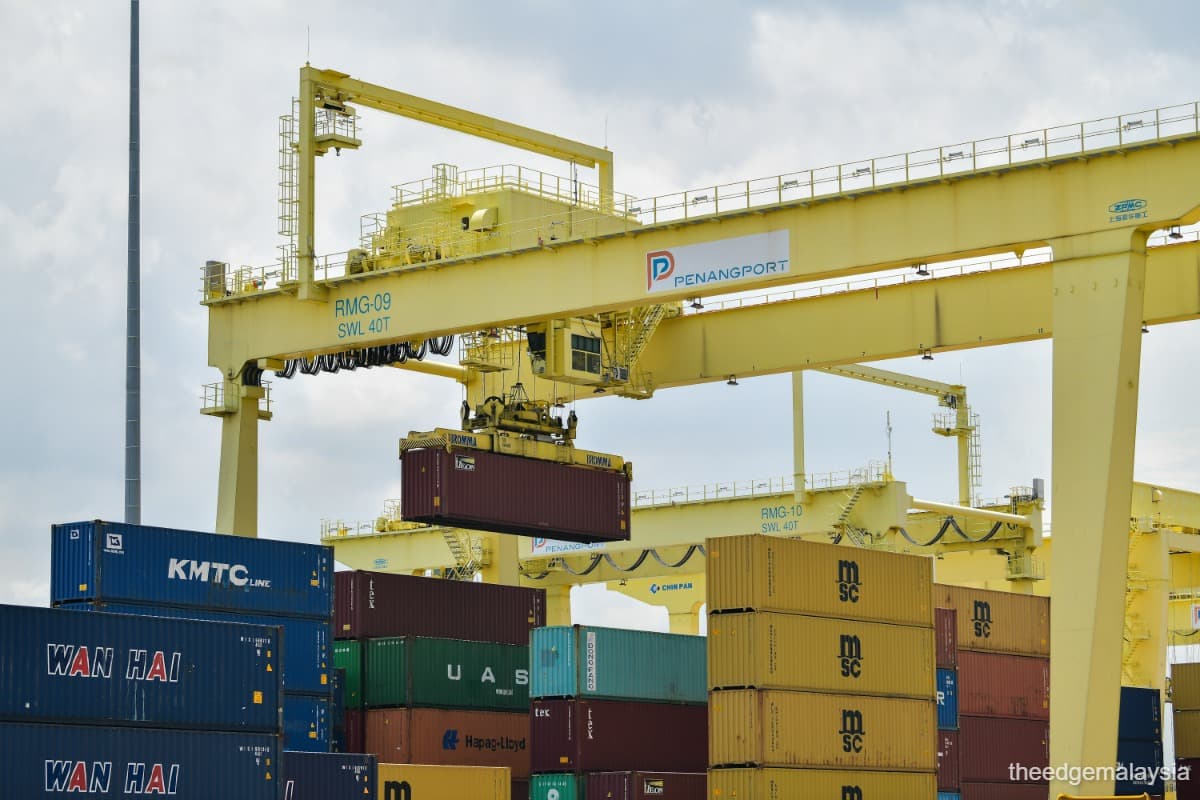
KUALA LUMPUR (June 11): Supply disruption risks remain manageable for now as government measures to safeguard fuel and supply chains should support production activities in the near term, Apex Securities said.
"Our channel checks indicate supply disruption risks remain manageable for now, with no signs of broad-based disruptions across key sectors," the research house said in its note on Thursday.
Meanwhile, it noted that manufacturing purchasing managers index (PMI) surveys point to ongoing inventory accumulation, while Bank Negara Malaysia (BNM) highlighted in its latest first quarter of 2026 (1Q2026) Quarterly Bulletin that businesses are holding an average of three to four months of inventories.
"Firms have also diversified suppliers and export destinations, reducing reliance on any single supply source," said the house.
Apex Securities said its gross domestic product (GDP) growth forecast of 4.7% year-on-year remains achievable given continued supply chain resilience.
"Our expectation remains that the Middle East conflict should gradually ease in 3Q2026, broadly consistent with BNM's baseline scenario of a temporary Hormuz closure through end-August.
"We do not expect the current conflict to materially disrupt domestic production activities or derail the broader growth momentum," it added.
The house said growth should also be supported by resilient exports of electrical and electronics, and information and communication technology-related services, as well as steady domestic demand.
Existing policy support measures, including the continuation of targeted RON95 and diesel subsidies as well as income-related policy support, such as Sumbangan Asas Rahmah (Sara), Sumbangan Tunai Rahmah (STR) and Jualan Rahmah, should continue to underpin household spending.
"Following the stronger-than-expected 1Q2026 GDP print, growth is likely to sustain in the coming quarters. Nonetheless, risks remain tilted to the downside," it added.
In a more adverse scenario where disruptions persist towards the year end, GDP growth could moderate towards 4.0%, the lower end of BNM's official 4.0%-5.0% projection range, said Apex Securities.
Malaysia's fuel subsidy bill peaked at RM7.5 billion in April before moderating to RM3.5 billion in May.
"We do not see material risks to Malaysia's fiscal position, partly supported by the implementation of targeted fuel subsidy reforms over the past few years.
"The government has reaffirmed its commitment to cost rationalisation across ministries," it said.
Even if the fiscal deficit ultimately exceeds the official 2026 target of 3.5% of GDP, a modest overshoot should remain manageable, particularly if it reflects temporary measures aimed at preserving economic stability during a period of heightened geopolitical uncertainty, said the research firm.
Overall, it expects Malaysia's sovereign credit profile to remain intact, with investment-grade ratings of A- (Stable) from S&P Global Ratings, A3 (Stable) from Moody's and BBB+ (Stable) from Fitch Ratings.