

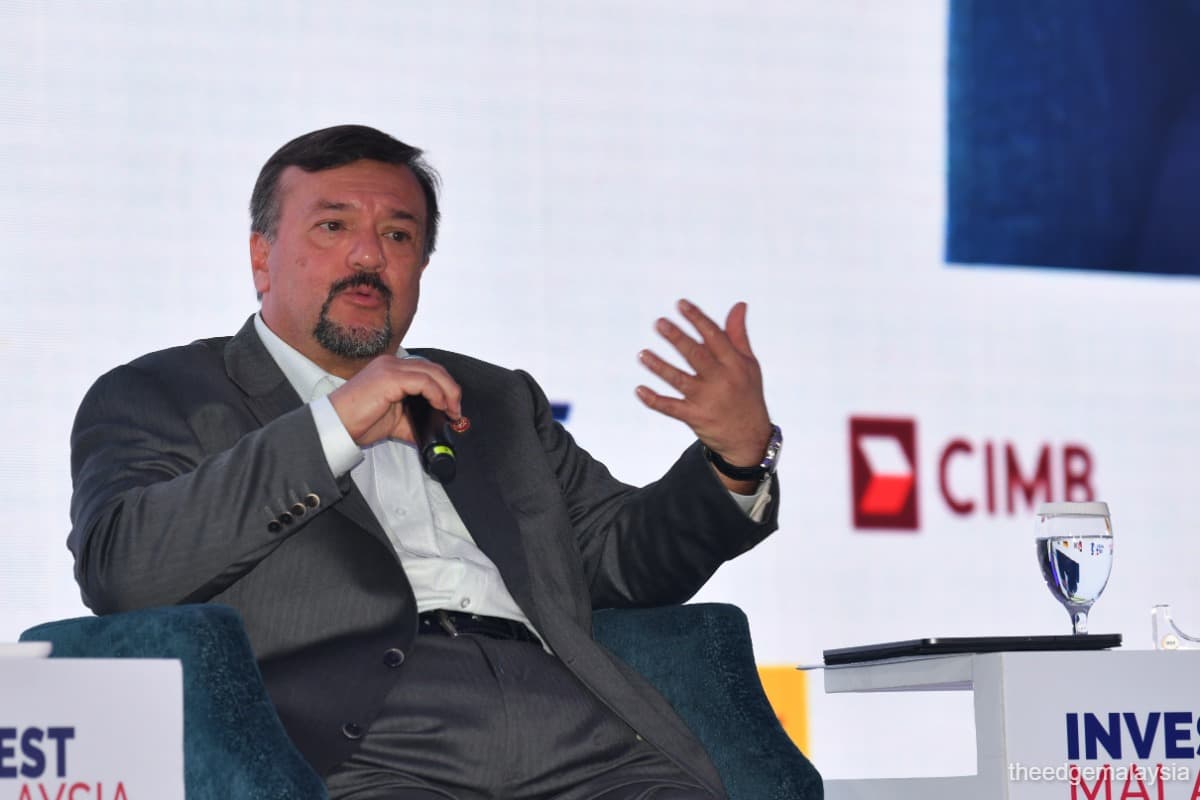
KUALA LUMPUR (June 9): Malaysia will maintain the monthly subsidised fuel quota at 200 litres under the Budi Madani RON95 (Budi95) programme for now, said Finance Minister II Datuk Seri Amir Hamzah Azizan.
He said the government would only consider revising the quota if Brent crude — the global oil benchmark — rises significantly to between US$200 and US$300 per barrel. At the time of writing, Brent was trading at US$92.38 per barrel.
“We reduced the quota from 300 litres to 200 litres, and I think that has helped. If prices were to reach US$200 to US$300 per barrel, then we would have to look again at that time,” Amir Hamzah said at the Invest Malaysia conference on Tuesday.
“As long as the government has the ability to manage the situation, we will continue to mitigate the impact on society,” the minister added.
Commenting on the country’s fuel supply, Amir Hamzah said the government has been securing fuel supply on a rolling basis and plans to continue doing so.
“We have been able to secure supply for up to three months ahead and will continue to do so. What we cannot guarantee is that prices will remain stable, as they must ultimately reflect global market conditions over the longer term,” he added.
The monthly quota under the Budi95 scheme was reduced to 200 litres from 300 litres effective April 1, as the government’s subsidy bill swelled to around RM7 billion per month as the blockade of the Strait of Hormuz caused by the US-Iran conflict has limited crude oil supply.
The Budi95 programme allows eligible Malaysians to pump RON95 petrol at a subsidised rate of RM1.99 per litre.
Malaysia, like many countries, is grappling with the impact of the US-Iran conflict, now in its fourth month. The war has disrupted shipping through the Strait of Hormuz — a key artery for about one-fifth of global oil and gas supply — following attacks on energy infrastructure.
This has pushed Brent crude above the US$100-per-barrel mark, driving up transportation costs and the prices of goods, and reflecting continued volatility in global energy markets amid heightened geopolitical risks.
Against this backdrop, Petroliam Nasional Bhd (PETRONAS), which meets about half of Malaysia’s fuel needs through its listed unit PETRONAS Dagangan Bhd (KL:PETDAG), has reaffirmed its commitment to ensuring supply security through end-July, as announced by Economy Minister Akmal Nasrullah Mohd Nasir in late May.