

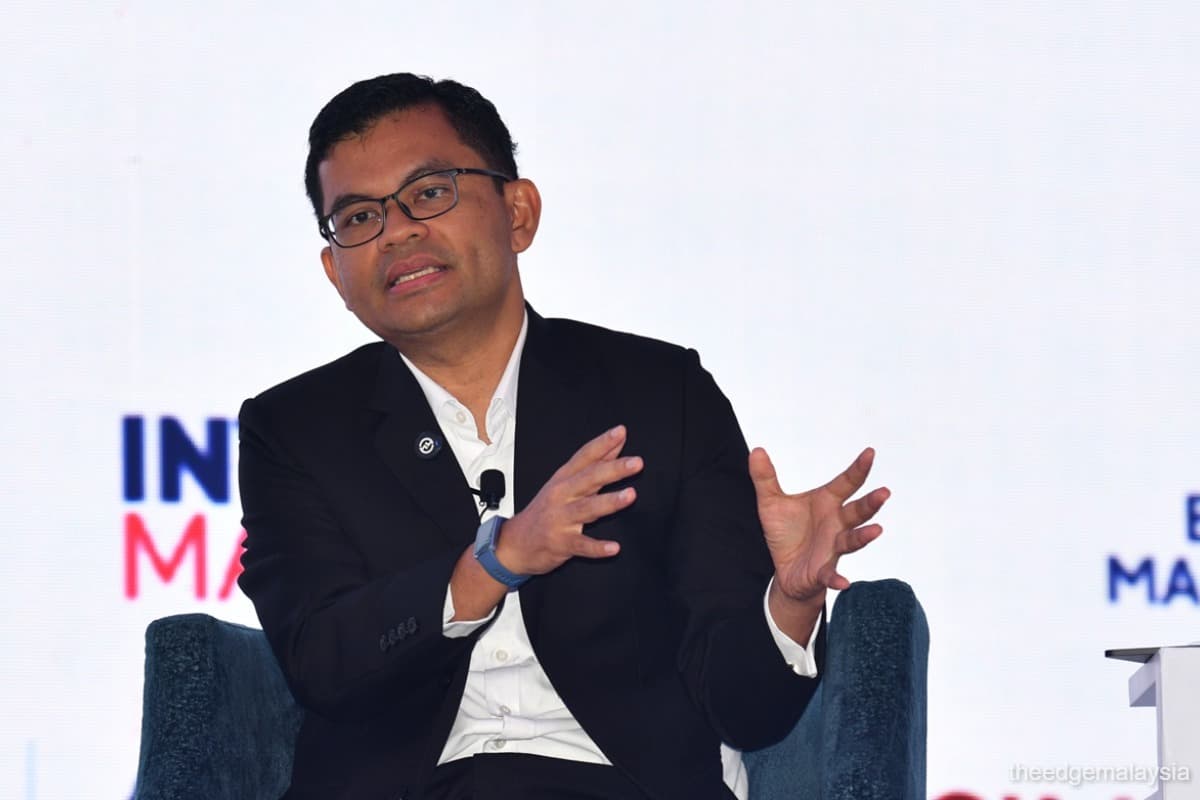
KUALA LUMPUR (June 9): Putrajaya will tighten scrutiny of government spending under the 13th Malaysia Plan (13MP), with ministries required to reassess and reprioritise budget proposals to ensure public funds are channelled into projects that deliver measurable economic impact, Economy Minister Akmal Nasrullah Mohd Nasir said.
The move comes as policymakers seek to strengthen execution of the country's five-year development blueprint amid rising geopolitical tensions, trade protectionism and an increasingly uncertain global economic environment.
"All ministries have been instructed to review their budgets to ensure planned initiatives generate greater impact and can be implemented efficiently," Akmal Nasrullah said during a panel discussion at Invest Malaysia 2026 here on Tuesday.
"Our focus is on projects that can be executed quickly and sustained over the long term."
The 13MP, Malaysia's socioeconomic development roadmap for 2026-2030, envisages investments totalling RM611 billion. Prime Minister Datuk Seri Anwar Ibrahim unveiled the plan in July last year.
Akmal Nasrullah said the Ministry of Economy remains committed to making 2026 a "year of execution" despite external headwinds.
"We are operating in a challenging environment, but our priority is ensuring that planned reforms and development projects are translated into outcomes," he said.
Budget screening for 2027 will be more stringent, with ministries required to justify spending proposals based on impact and deliverability, he added.
To strengthen oversight, the government has launched MyRMK, an integrated digital platform that tracks implementation progress, financial performance and outcomes of initiatives under the 13MP.
"The platform will provide a clearer picture of where we stand in terms of implementation and delivery," Akmal Nasrullah said.
Invest Malaysia, hosted by Bursa Malaysia in collaboration with CIMB Group Holdings Bhd (KL:CIMB) and Malayan Banking Bhd (KL:MAYBANK), focuses on Malaysia's investment outlook amid growing geopolitical fragmentation, supply chain disruptions and efforts to maintain fiscal discipline, while converting investment commitments into actual capital formation.