

This article first appeared in City & Country, The Edge Malaysia Weekly on June 1, 2026 - June 7, 2026
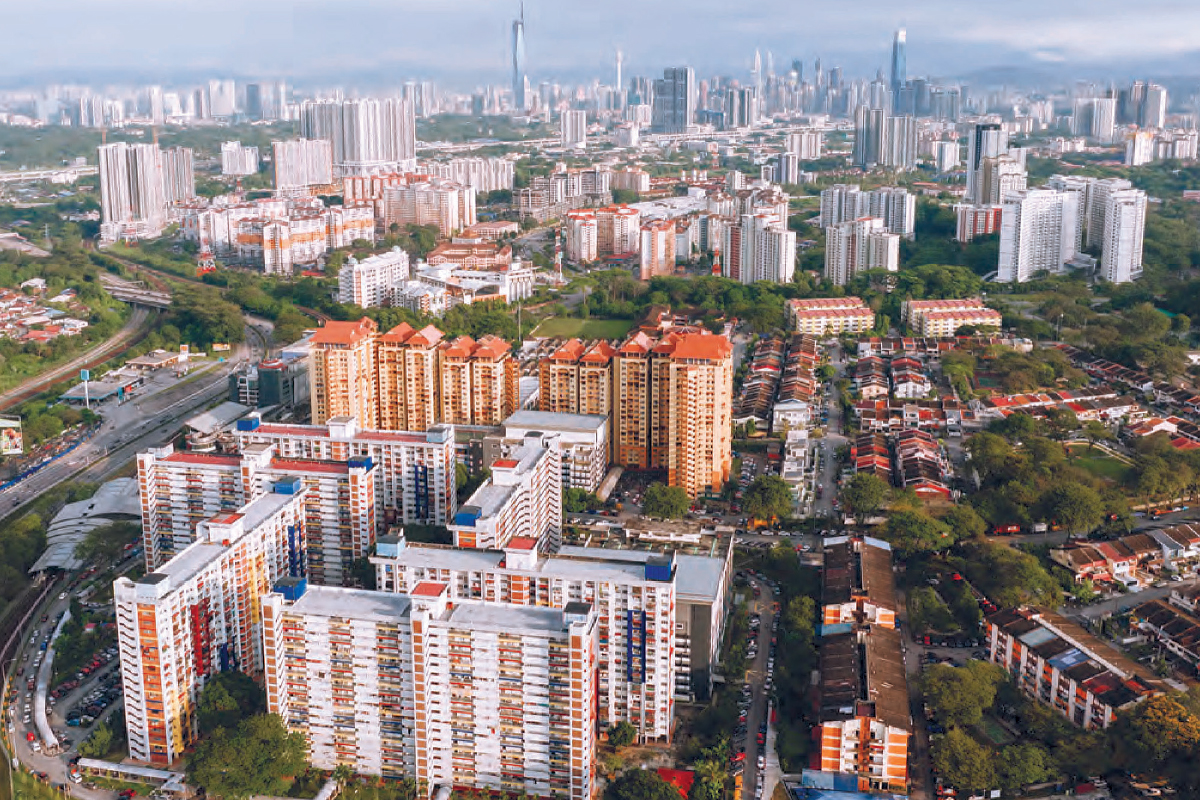
More than half a century ago, Malaysia embarked on an ambitious housing mission to move the urban poor out of squatter settlements and into homes with access to basic necessities such as water, sanitation and proper infrastructure.
The efforts would eventually become one of the country’s development success stories, helping to sharply reduce urban poverty while avoiding the sprawling slums seen in many rapidly urbanising cities around the world.
Think City’s report, From Roof to Resilience: A Social Assessment of Malaysia’s Public Housing, suggests that these public housing schemes are now facing a different kind of crisis. It highlights that parts of Malaysia’s public housing sector are at risk of systemic decline, with some communities showing signs associated with the “ghettoisation” of urban poverty.
Based on surveys involving 2,884 households across 10 public housing sites in the Klang Valley in late 2023, the results show that Malaysia has largely succeeded in solving the problem of physical shelter but now faces a second-generation challenge — ensuring that public housing remains socially sustainable and capable of supporting upward mobility.

More than 60% of surveyed residents said their quality of life had either stagnated or deteriorated since the Covid-19 pandemic. Across the 10 sites studied, violent crime rates were found to be seven times higher than the national average of 3.2 cases per 10,000 people while suicide rates in those areas were reported to be three times the national figure of six cases per 100,000 people.
The survey also found that many public housing residents remain trapped in long-term cycles of economic vulnerability. Although many schemes were originally intended as temporary transit housing lasting around five years, more than 60% of surveyed households had been living in their units for between 10 and 30 years.
The report notes that this reflects a deeper structural problem. “Public housing risks becoming poverty traps as restricted opportunities for upward social mobility result in concentrations of low-income and economically deprived families.”

The risk of ghettoisation
The report points out that some public housing communities are showing signs of deeper social decline, with concentrated poverty, weak governance and deteriorating communal environments gradually creating conditions associated with the “ghettoisation” of urban poverty (refer to table on next page).
Issues confronting public housing are not isolated maintenance problems. Instead, they form part of a broader ecosystem of interconnected social and institutional failures, according to the report.
For instance, broken lifts affect more than mobility. They disproportionately burden the elderly, women and persons with disabilities while increasing living costs when residents must pay more for the transport of goods and services to high-rise blocks. Poor waste management contributes not only to pest infestations and public health concerns but also to the perception of neglect and lack of security.
The report describes this as “broken window syndrome”, in which visible signs of disorder such as vandalism, littering and neglected public spaces gradually normalise anti-social behaviour and deepen distrust in communities. What emerges is a form of urban exclusion that is less visible than traditional squatter settlements but potentially just as damaging.
The study suggests that while Malaysia may have succeeded in clearing slums physically, it risks reproducing social exclusion vertically through ageing high-rise public housing schemes that are under-supported.

A system under strain
One of the report’s central arguments is that the decline in public housing cannot be blamed solely on residents or maintenance shortcomings. Instead, it points to decades of policy ambiguity over the role and purpose of public housing itself.
There remains little consensus on whether public housing should function as short-term welfare housing, long-term affordable housing or a transitional space that leads towards resident ownership and self-management.
Furthermore, different schemes being managed by different entities, including local councils, joint management bodies and state-linked housing corporations, have resulted in uneven standards and fragmented accountability.
The report notes that management systems are chronically underfunded and often trapped in outdated command-and-control models ill-suited to the complex social realities of dense urban communities.
Residents interviewed during the study expressed frustration over poor responsiveness and weak enforcement. “Everyday transgressions such as traffic violations, littering and vandalism occur openly and without consequence, creating an environment of impunity,” says the report.
At the same time, housing managers themselves reportedly felt constrained by a system that undermined their effectiveness and professional authority.
The consequences are increasingly visible in communal spaces. Spatial mapping exercises conducted during the study identified numerous “unsafe zones” in public housing complexes, including poorly lit stairwells, neglected playgrounds and isolated corridors that residents, especially women and children, actively avoided.
Moreover, nearly half of respondents said they never used available public facilities.
Communities under pressure
The report highlights the growing social pressures facing public housing residents.
Many households remain economically fragile, with more than half reporting savings sufficient for only one to three months while 17% have no savings at all. Nearly 40% of families relied on a single breadwinner and many women were unable to enter the workforce because of caregiving responsibilities.
At the same time, the demographic profile of public housing communities is becoming increasingly complex.
More than a third of residents surveyed were school-going children while about 21% were youths aged between 13 and 24. In six of the 10 sites studied, the share of elderly residents exceeded the national average of 7.3%, with one site in Bandar Tun Razak, Kuala Lumpur, constituting 15.3% of the population there.
The report cautions that overcrowded living conditions, weak social cohesion and deteriorating communal environments may have long-term implications for education outcomes, mental health and social mobility.
Despite the challenges outlined, the report captures the determination of residents who continue to improve their surroundings through collective efforts and community-led initiatives. Notable examples include the transformation of lift lobbies at PPR Lembah Subang 1 and PPR Kg Baru Hicom under Think City’s Program Kita-untuk-Kita.
What were once grimy transit spaces became colourful communal hubs after residents were given small grants and encouraged to collectively improve their surroundings. Some organised tuition classes and religious activities in the newly upgraded spaces while others pooled funds to install CCTV cameras and beautify their floors. In some cases, residents reportedly raised up to 20 times the value of the initial seed funding provided.
Rebuilding the social fabric
According to the report, the lesson is that public housing should not be viewed purely through the lens of physical infrastructure. “True resilience emerges from the everyday acts of care, cooperation and adaptation that allow residents to build meaningful lives in shared spaces,” it adds.
This idea underpins the report’s proposed “3R” framework for reform: rebuild the community, reframe the management system and reform the policy framework.
Among its recommendations are the establishment of a high-level task force, clearer governance structures, sustainable maintenance funding and stronger integration between housing policy and broader urban development strategies.
The report notes that public housing policy can no longer focus narrowly on the provision and maintenance of housing units alone. Instead, it calls for a broader shift towards long-term community development and social resilience.
Central to this is the creation of a high-level task force to coordinate reforms across multiple agencies and levels of government. The report notes that fragmented responsibilities among local councils, housing managers and government bodies have contributed to inconsistent standards and weak accountability across public housing schemes.
It advocates stronger resident participation in the management of communal spaces and neighbourhood issues. According to the report, many public housing communities already possess informal social networks and grassroots leadership structures that could be strengthened through more systematic support and engagement.
Equally important is the need to rethink the design and governance of shared spaces in high-rise public housing, the report adds. Rather than treating corridors, lift lobbies and open areas merely as transitional infrastructure, these spaces should be recognised as important social environments that influence safety, trust and community cohesion.
More broadly, the report frames public housing not simply as a welfare issue but part of a wider urban development challenge. It warns that without stronger intervention, the long-term costs of social fragmentation, declining liveability and entrenched urban poverty could become far more difficult and expensive to reverse.
Ultimately, the report argues that public housing must evolve beyond merely providing roofs over people’s heads. “The next chapter lies in transforming housing provision into community resilience to ensure that every roof built also shelters opportunity, dignity and hope,” it says.
Save by subscribing to us for your print and/or digital copy.
P/S: The Edge is also available on Apple's App Store and Android's Google Play.