

This article first appeared in The Edge Malaysia Weekly on June 1, 2026 - June 7, 2026
WHILE its RM1.7 billion debt restructuring has bought Cypark Resources Bhd (KL:CYPARK) breathing room, it still faces a stark reality: it must grow earnings fast enough to outrun the liabilities that continue to languish on its balance sheet.
The restructuring lowered the integrated renewable energy (RE) player’s financing costs and aligned debt maturities more closely with its long-term infrastructure assets. Yet, Cypark remains heavily burdened by finance costs that continue to consume a sizeable portion of revenue.
For the cumulative nine months ended Jan 31, 2026 (9MFY2026), Cypark recorded finance costs of RM38.05 million against revenue of RM131.07 million, meaning nearly 29% of revenue went towards servicing debt. While lower than the RM45.4 million charged a year earlier, the figure still underscores the scale of the challenge.

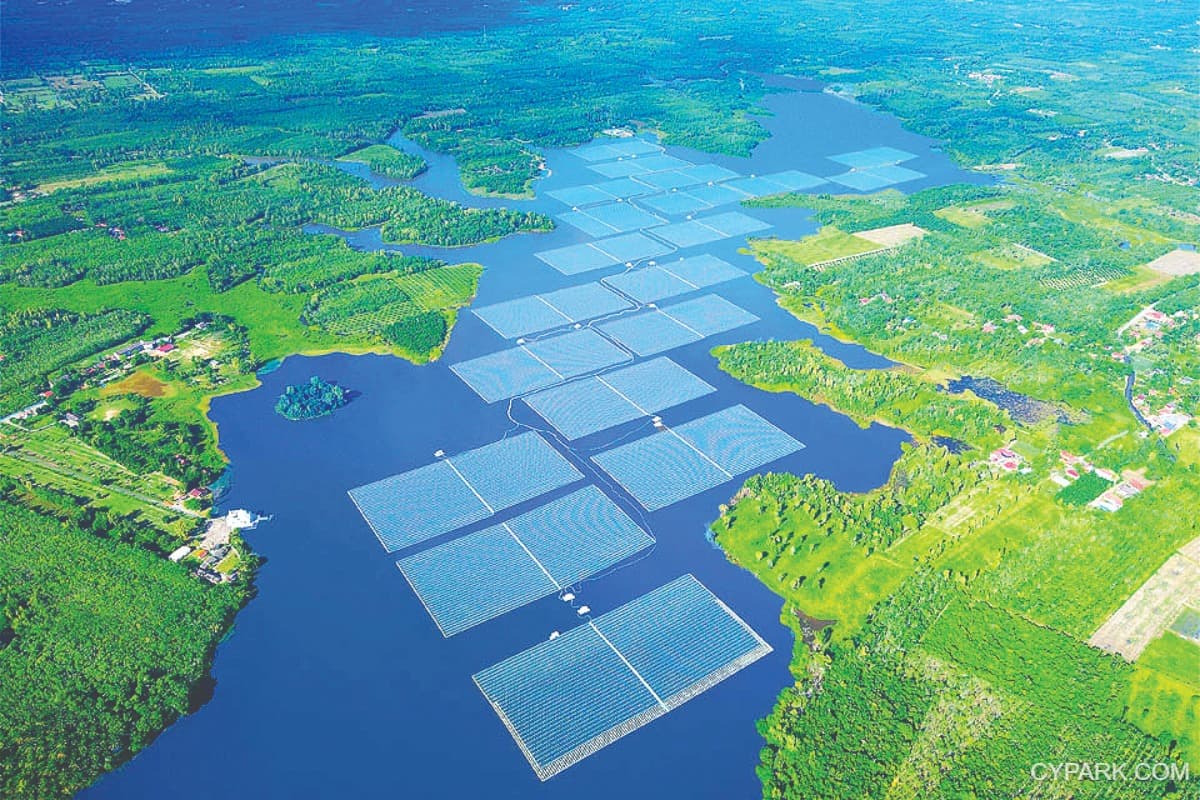
The recurring income generated by Cypark’s concession assets — comprising the Ladang Tanah Merah waste-to-energy (WTE) plant in Siliau, Negeri Sembilan, and solar energy plants in Merchang, Terengganu, and Danau Tok Uban, Kelantan — has yet to offset those financing obligations.
The group posted a wider net loss of RM51.12 million in 9MFY2026 as compared with the previous year’s RM7.04 million, which was mainly attributable to a RM60.31 million reversal of provisions and impairments.

Thus, it was clear that there was only so much that the debt restructuring exercise could do to help Cypark. In view of that, the group is pivoting hard towards engineering, procurement, construction and commissioning (EPCC) jobs.
But this strategic move comes with risks, as Cypark will be dependent on contracts from other asset owners in the renewable energy space. Furthermore, the competition for jobs is intense.
Given the challenges on the horizon, group managing director Datuk Ami Moris has to push the frontiers in the RE space. That is where the Kenyir hybrid hydro floating solar farm with a battery energy storage system comes into the picture. “So, this is where we want to push the frontiers. Kenyir is really important to us because we want this to be our niche,” says Ami, 63, who was redesignated to her current role from executive chair last June. Tan Sri Abdul Wahid Omar, who holds a 1.82% stake, took over the chairmanship.
On April 3, Cypark announced that it — in a consortium with Fabulous Sunview Sdn Bhd — had been awarded an EPCC contract to build a floating solar plant with a battery energy storage system in Kenyir Lake, Terengganu, by TNB Power Generation Sdn Bhd. Cypark holds a 60% share of the consortium while Fabulous Sunview — a subsidiary of Sunview Group Bhd (KL:SUNVIEW) — holds 40%.
The value of the contract, which will commence on June 2, is RM1.96 billion. The solar plant will be able to produce 595mwac, making it the largest floating solar farm in Asean, according to Cypark.
With a 60% stake, Cypark’s effective contract value is estimated at RM1.2 billion, lifting its EPCC order book to roughly RM1.5 billion.
The contract also seeks to integrate the solar farm with TNB Power’s hydro dam so that electricity generated by both systems can be stored in the battery system.
“So, that is why Kenyir is something that we are really excited about. Very challenging, yes, but this is really to push that pioneering spirit, to push the boundaries in a water body, which we then don’t have to sacrifice land.
“To prove also that we are able to execute within a very sensitive area, we really want to be able to hone our engineering and technical skills,” Ami tells The Edge at Cypark’s corporate headquarters in Kuala Lumpur.
The project will have a huge bearing on Cypark. While the group has constructed a floating solar farm before — in Danau Tok Uban, Kelantan — the Kenyir solar farm is around 10 times bigger in generation output.
While there was some excitement among investors regarding the EPCC contract, Cypark’s share price declined by 10.4% to 69 sen on May 28 from 77 sen on April 3.
“The project will only start in early June, so they still have a few quarterly results to go before the contract shows in Cypark’s profit and loss statement,” says BIMB Securities Research analyst Azim Faris Ab Rahim. “I think investors are adopting a wait-and-see attitude before rushing into Cypark. The impact of the contract would only show up in the quarter ending Oct 31, 2026, which will only be released in December, so they can afford to wait,” he tells The Edge.
BIMB Securities Research has a “hold” call on the stock, with a target price of 77 sen.
Dual-engine strategy
Going forward, Cypark will be selective when making investments that require the raising of debt while banking on EPCC jobs to drive up its earnings.
“So, we have the recurring income that is compounding and then we also have our EPCC construction, more technical projects that will take us to faster capital cycles and earnings recognition,” says Ami.
While BIMB’s Azim agrees that the pivot to EPCC is a good strategy, the company continues to face structural challenges, particularly its high leverage and elevated value of asset base following project cost overruns. “With a loss run rate of RM60 million to RM70 million annually from its concession assets, we estimate the group needs to sustain RM600 million to RM700 million in annual EPCC revenue (assuming ~10% margin) just to achieve break-even.”
Nevertheless, he expects the Kenyir project’s multi-year construction timeline to help drive Cypark’s near-term earnings.
As at end-January, Cypark’s total borrowings stood at RM1.7 billion, against shareholders’ equity of RM591.65 million and perpetual sukuk of RM295.63 million. This translates into a net gearing of around three times.

There is also the financial risk of the RM265 million outstanding perpetual sukuk that remains on Cypark’s books, issued as part of the initial RM500 million SRI Sukuk Murabahah programme. The group redeemed RM235 million of the sukuk last December.
The redemption removes the previous 95% cash sweep mechanism imposed on Cypark’s cash flows generated by brownfield assets. But Cypark still has to contend with the profit rate of 6.5% for the remaining outstanding sum, which is callable annually. The next call date is in September. If the sukuk is not redeemed, the profit rate will step up by 1.5% each year, capped at a maximum of 15%.
“While the group’s borrowings are sizeable, these obligations are largely matched against operational assets with recurring income profiles capable of servicing their financial commitments,” says Ami.
However, it is imperative for Cypark to grow the EPCC business fast, as its renewable energy assets will not be able to stop it from bleeding red ink.
“Over the longer term, the group will continue to evaluate selective asset monetisation opportunities as part of its capital recycling strategy.
“Such initiatives could accelerate deleveraging, unlock embedded value from mature operating assets, and potentially support a stronger market re-rating through a more differentiated dividend yield profile,” says Ami.
Seeking partners to deleverage
Cypark’s previous business model — raising debt to invest in long-term assets — has proven to be unsustainable. Therefore, Ami feels that the group would do better without carrying out debt-fuelled expansions.
“We would only want to own assets which make sense, which have long-term growth potential such as WTE plants because Malaysia has to address its waste crisis, and leverage our technical experience and proficiency to be part of large EPCC projects.
“So with these two, we don’t have to take excessive risks on capital deployment,” she explains.
Nevertheless, Ami says Cypark’s capital base is still small compared with its assets. The group will utilise the right to issue up to 10% of its equity base every year to fund its capital needs.
On top of that, Ami plans to bring in strategic partners at the project level to reduce Cypark’s capital needs.
However, this does not mean that the company is raising equity beyond the 10% right to issue new shares, but rather, is searching for a partner anchored on strategic capability. “Any partner must bring demonstrable engineering depth, industrial execution credentials, and the ability to co-develop and deliver complex EPCC projects at scale,” says Ami.
Cypark is partnering with Sunview in the 99.99mwac solar park project in Port Dickson, Negeri Sembilan, through a 49:51 consortium called SunPark (Pasir Panjang) Sdn Bhd.
The company is also embarking on the second phase of the Ladang Tanah Merah WTE plant. Under this phase, the plant will see a 22mwp power generation capacity, compared with 19mwp in the first phase.
Ami says the group will need to invest RM100 million in equity for the project. The current plant processes 1,000 tonnes of municipal solid waste daily, which covers the bulk of the daily waste disposal of the entire Negeri Sembilan.
Cypark was facing hard time to complete phase 1. It was delayed. However, the plant is already profitable at the operational level, generating 15mw of electricity with the waste collected. Power generation contributes 60% of its revenue while tipping fees contribute 40%.
The group is seeing higher waste intake volumes and consistent plant operations. It is now focused on sustaining the operational consistency and reliability over an extended period.
As operating stability is sustainable and efficiency improves, we expect a continued uplift in operating performance, which will flow through to earnings, says Ami.
Against this backdrop, the planned WTE Phase 2 expansion carries strategic significance as it is expected to double processing capacity and strengthen cash flow generation, she adds. “This will allow for better optimisation of existing infrastructure and more efficient value extraction over a longer operating horizon.”
The WTE portfolio is the core asset for Cypark. In fact, during the interview, Ami says by 2030, the group should have already secured a WTE project that is similar to the one in Port Dickson.
The breathing room brought about by the restructuring seems to have enabled Cypark to strategise its moves better.
Will this be a big turning point that brings the company back on the profitable path? The earnings figures in the next financial year ending April 30, 2027 will be the answer.
Save by subscribing to us for your print and/or digital copy.
P/S: The Edge is also available on Apple's App Store and Android's Google Play.