

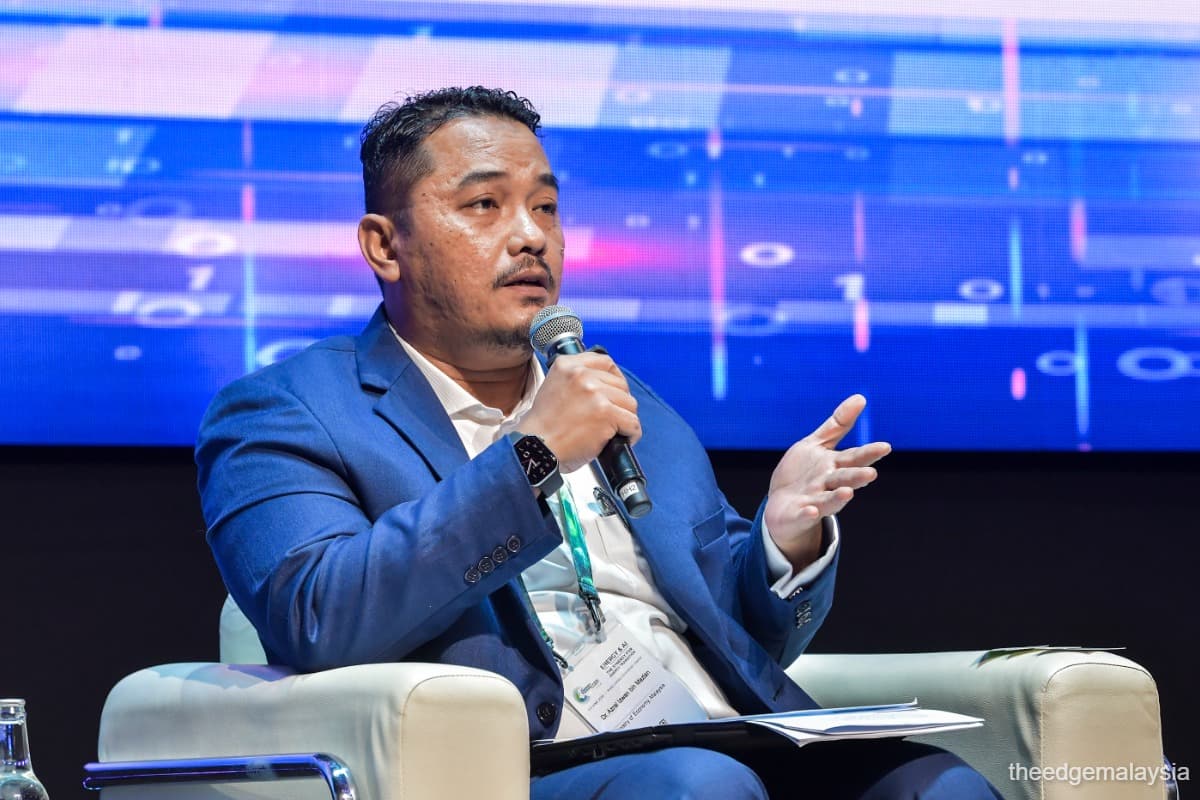
KUALA LUMPUR (June 3): Malaysia is still facing challenges in adopting carbon capture, utilisation and storage (CCUS) because of funding shortages and technology limitations, according to Ministry of Economy deputy director Azral Izwan Mazlan.
Although the government has introduced the CCUS Act 2025 and other supporting measures, the overall CCUS ecosystem is not yet fully developed.
Azral explained that CCUS projects are very large and expensive, requiring significant investment. He said all parts of the ecosystem — including financing, technology, infrastructure, and industry support — must be ready to ensure Malaysia's carbon reduction goals can be achieved.
He was speaking at a panel discussion at the Energy Transition Conference 2026 on Wednesday.
CCUS has been identified by the government as one of the decarbonisation levers towards achieving a net-zero emissions target by 2050. As it stands, the MoE, as the lead ministry of the project, has pushed ahead for bilateral and regional cooperation to accelerate the entire project. This includes partnering with countries like Japan, Singapore and South Korea.

"We can't do this alone. This is a very technology-advanced initiative and collaboration is necessary," Azral added. The government is also currently preparing supporting guidelines to ensure that opportunities created by the CCUS industry are not limited to large corporations and multinational players.
"There are guidelines being prepared to make sure that not only the big companies or giant companies can benefit from CCUS activities but also our SMEs and local companies. That is actually the main target, to make sure the spillover effects of CCUS activities are also being felt by our domestic partners," he said.
Cost remains a major barrier
Separately, Ir Ts Noraziah Muda, head of centre and technical expert for decarbonisation and renewable energy at Tenaga Nasional Bhd (KL:TENAGA) Research, said during the same panel discussion that CCUS currently remains an energy-intensive and costly technology.
Describing carbon dioxide as a "stubborn molecule", she said significant energy is required not only to capture carbon emissions, but also to convert the captured carbon into commercially valuable products.
"The cost of CCU is [definitely] not going to be attractive," she said, while flagging that the commercial success of such projects also depends on whether there is sufficient demand for end products.
"The offtaker is very important at the very first stage. You need to know what product you want to convert your CO₂ into and who is going to buy it," she said. Using methanol as an example, Noraziah said European regulators assess the full lifecycle carbon footprint of products before determining whether they qualify as low-carbon imports.
"If we use CO₂ captured from a power plant and combine it with green hydrogen, your methanol may fail to enter the European market," she added.