

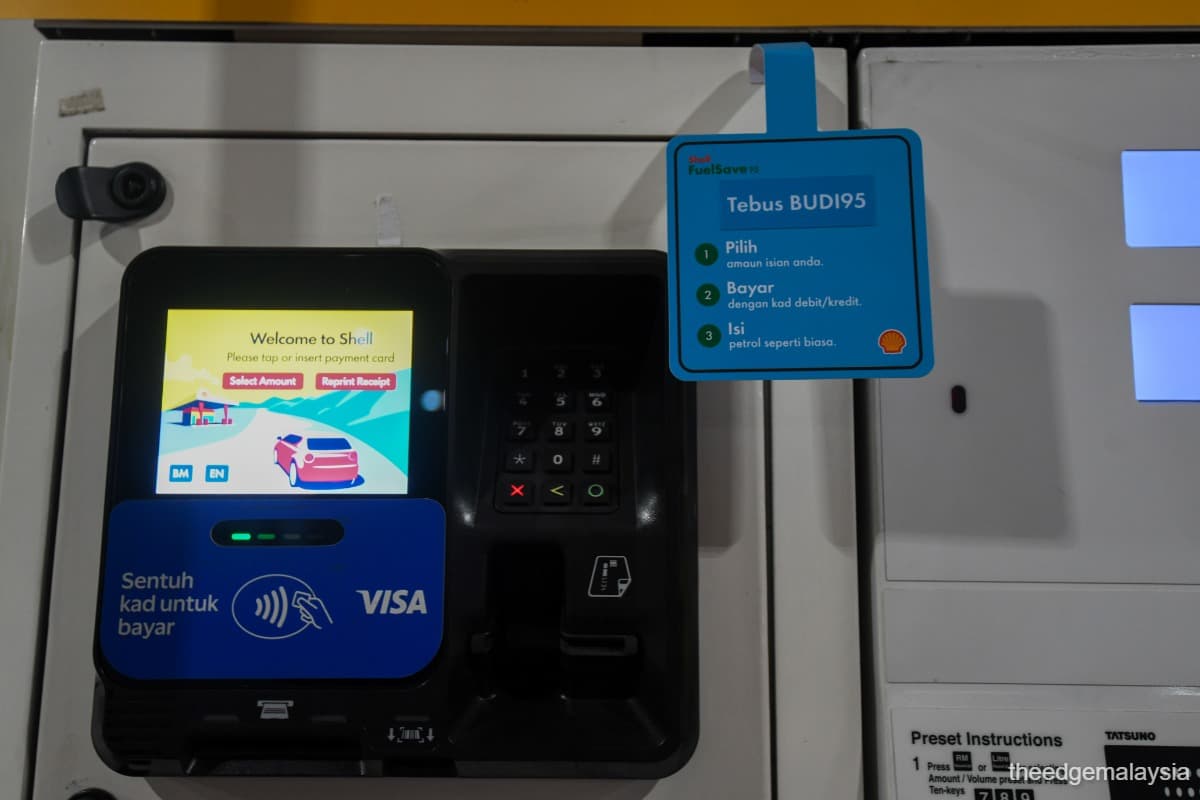
Malaysia's fuel bill has become a practical business issue. In the May 7-13 fuel-price update, unsubsidised RON95 rose to RM4.02 per litre, and diesel in Peninsular Malaysia rose to RM5.17 per litre. Targeted relief remains in place: Budi95 at RM1.99 per litre, diesel in Sabah, Sarawak and Labuan at RM2.15 per litre, and subsidised fuel for eligible commercial users. For companies, that means that the shock is uneven but real.
Truck drivers feel it first. Manufacturers see it in logistics and input costs. Retailers experience it in delivery charges. Families notice it when the monthly budget tightens. A fuel price hike travels quickly through invoices, wages, margins and consumer confidence.
Subsidies are still needed to protect households and essential sectors from high fuel costs. But they are expensive, politically sensitive and vulnerable to global shocks, supply bottlenecks and currency swings. Subsidies ease the pain in the short term; real resilience means using less fuel in the first place. So what should Malaysian businesses actually do? How can they turn this difficult moment into an opportunity to reduce waste, look after people and build a more efficient energy system?
ProSocial AI: Useful technology, not a slogan
ProSocial AI is artificial intelligence (AI) designed and governed to serve human development, social fairness and planetary health. The test in energy terms is straightforward: does it reduce waste, lower costs for small businesses and households, and cut pollution at the same time?
For companies, start with energy intelligence. Most firms already collect data on routes, vehicle use, factory loads, delivery windows, refrigeration, lighting and machine downtime. AI can turn that messy data into better decisions: consolidate deliveries, eliminate empty trips, predict maintenance needs, shift energy-intensive processes away from peak hours and pinpoint where fuel is being burnt without creating any value.
These tools are not futuristic. Fleet-management software, smart meters, building-management systems and AI-assisted energy audits already exist today. The best returns will often come from ordinary changes: fewer idling trucks, better routing, cleaner maintenance schedules, smarter cold-chain planning and more efficient use of solar power where firms already have rooftop panels.
For utilities and large users, AI can improve demand forecasting, grid balancing and the integration of renewables. The International Energy Agency has made the key point clearly: AI increases electricity demand through data centres, but it can also help save energy, improve reliability and accelerate cleaner systems when deployed with discipline. Malaysia should use AI where it reduces system costs and avoids adding digital glamour to old inefficiencies.
For individuals, the same logic applies at a smaller scale. Navigation apps can already factor in fuel efficiency, traffic, road conditions and vehicle type. Used consistently, tools such as Google Maps’ eco-friendly routing can help households save fuel while making better choices easier for people who are busy, tired and watching every ringgit.
The NPHAP connection
Malaysia already has a policy for this. The National Planetary Health Action Plan (NPHAP), launched in November 2025, is built around six key result areas, 53 strategies and 222 action plans. Its goal is a preserved Earth, healthy people and a prosperous Malaysia, with energy transition as a central pillar.
That matters because the fuel-price issue is economic, health-related and ecological at once. Fossil fuel dependence affects the national budget, business competitiveness, air quality, respiratory health, household finances and Malaysia's long-term resilience. The same litre of fuel appears in multiple places simultaneously: the Treasury, the balance sheet, the clinic and the atmosphere.
A ProSocial AI approach would connect those dots. Imagine a public energy-and-health dashboard combining weekly fuel prices, transport data, air-quality readings, hospital trends, public-transport reliability and freight patterns. Built with strong privacy protections it could show where fuel waste is highest, where people are most exposed and where action would bring the fastest benefit.
For Malaysian business, this would turn planetary health from a broad aspiration into a practical operating tool. Industrial parks could benchmark their energy performance against each other. Small and medium enterprises (SMEs) could access simple AI audits. Logistics firms could report fuel efficiency as a competitive advantage. Banks could design green working-capital products more intelligently. Government could see clearly which interventions reduce costs without hurting the most vulnerable.
The A-Frame: Four actions for this quarter
Awareness. Measure the exposure. Businesses should calculate fuel and energy cost per unit sold, per kilometre, per route and per site. Households can track litres per kilometre for one month. Malaysia's OpenDOSM fuel-price dataset makes the national signal visible; each firm still needs its own baseline.
Appreciation. Treat the fuel-price sting as risk information. It reveals exposure to congestion, inefficient fleets, imported price shocks, subsidy pressure and avoidable waste. Good managers do not wait for perfect stability before improving operations.
Acceptance. Several things need to work together. Malaysia needs targeted relief, better public transport, cleaner freight, practical electric vehicle adoption, rooftop solar where viable, flexible work where sensible and AI tools that help people use less energy without losing productivity.
Accountability. Ask for clear targets. The NPHAP energy transition area should include measurable AI-enabled actions by 2027: SME energy-audit support, transparent reporting, public dashboards, stronger data-sharing rules and safeguards to ensure AI reduces energy waste rather than increasing it through careless digital expansion.
May 2026 can be remembered as more than another week of higher pump prices. It can become the moment Malaysia connects relief with resilience. Protect households now. Help businesses cut waste now. Use ProSocial AI to make the economy less fuel-hungry, less polluted and polluting, and less exposed to shocks that arrive from far beyond our shores.
Malaysia has the plan. It has the technology. The next step is to connect the two in ways that citizens and companies can actually use.
Dr Cornelia C Walther is associate professor at Sunway University's Institute for Global Strategy and Competitiveness (IGSC) and senior fellow at the Sunway Centre for Planetary Health (SCPH). She is a senior fellow at Harvard, the Wharton School and an external adviser on hybrid intelligence at UNFPA.