

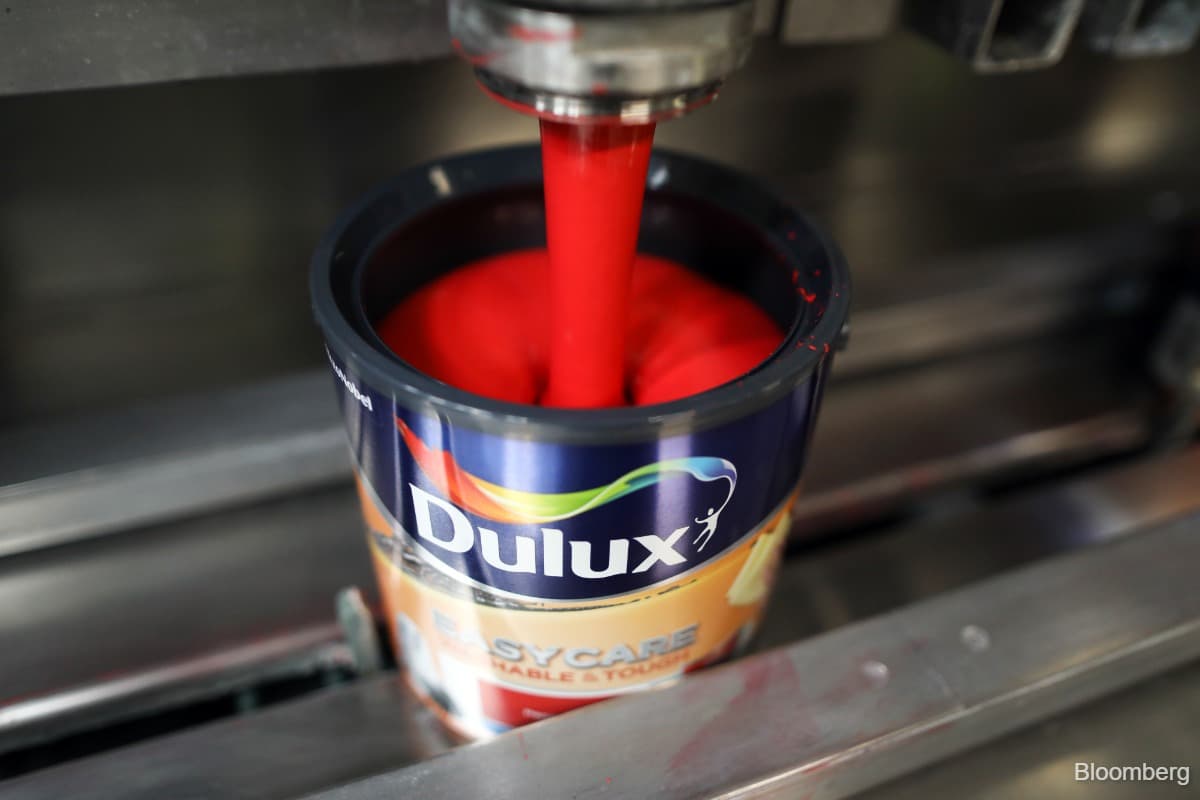
(May 27): Akzo Nobel NV has rejected a cash offer from peers Nippon Paint Holdings Co and Sherwin-Williams Co that would break up the business, and will press on with plans to merge with US firm Axalta Coating Systems Ltd.
The all-cash offer of €73 (US$85 or RM337) a share is 39% higher than Tuesday’s closing price, and would value the maker of Dulux paints at €12.5 billion. Akzo Nobel jumped as much as 21% in Amsterdam trading, the most in more than six years to a market valuation of about €10.8 billion.
Japan’s Nippon Paint and US competitor Sherwin-Williams made the initial approach last month, Akzo said Wednesday, which the company rejected, saying it was uncertain to pass regulator scrutiny. Akzo Nobel’s merger with Axalta, inked in November and set to yield US$600 million in synergies, remained superior, the company said. Shares in Axalta rose as much as 8.3% in pre-market trading on Wednesday.
While there’s “antitrust uncertainty” for the proposal by Nippon Paint and Sherwin-Williams, Akzo’s track record has been “fairly disappointing” and “characterised by volatility and low structural growth” over the past few years, KBC Securities analyst Wim Hoste wrote in a note.
It took Akzo weeks to reveal it had received the offer. The bidders approached Akzo on April 16 with an initial proposal, which the Amsterdam-based company rebuffed a few days later, it said. It then received a more formal offer on April 29, which Akzo also refused on May 1. AFM, the Dutch financial markets regulator, said companies can choose to delay publishing inside information provided they meet certain conditions.
Under the terms, Nippon Paint would buy all of Akzo Nobel’s shares and retain its Decorative Paints and Industrial Coatings businesses. Its Automotive & Specialty Coatings, Marine & Protective Coatings and Powder Coatings businesses would be sold separately to Sherwin-Williams.
“We believe investors had largely discounted the risk of an interloper given the prevailing assumption that any competing bid would need to be a full-company takeover,” said Katie Richards, an analyst at Barclays. The proposal from Nippon and Sherwin-Williams puts forward an alternative to the Axalta deal, with a consortium underwriting a full bid but ultimately allocating assets via a break-up, she wrote.
Global paintmakers have been under mounting pressure as tariffs and geopolitical uncertainty dampen demand among customers in the construction and automotive sectors. Tensions in the Middle East are also set to increase the prices of raw materials needed to make paints. Akzo Nobel recently said it would ramp up its pricing measures to mitigate the rising costs of materials including titanium oxide, used for color pigments.
In November, Akzo Nobel agreed to merge with US rival Axalta to create a US-listed paintmaker with an estimated enterprise value of about US$25 billion. Akzo Nobel would own 55% of the combined entity and move its the share listing to New York, after trading for some three decades in Amsterdam.
Under the terms of the all-stock deal, Axalta shareholders will receive 0.6539 Akzo Nobel shares for each Axalta common share and Akzo Nobel shareholders will get a special cash dividend of €2.5 billion. The combination is expected to drive synergies of around US$600 million, 90% of which are expected to be achieved within the first three years.
The move followed years-long efforts to bring the two firms together and several failed attempts to consolidate across the sector. In 2017, Nippon Paint derailed merger talks between Axalta and Akzo Nobel, before itself failing to reach an agreement to buy Axalta. Akzo Nobel also rebuffed an unsolicited US$29 billion buyout offer from rival PPG Industries in the same year.
Activist investor Cevian Capital became Akzo Nobel’s biggest shareholder last year with a 10% stake. While Cevian has shown support for the Akzo-Axalta deal, Artisan Partners, an Axalta shareholder, opposed it. Artisan Partners recently also took a 5% holding in the Dutch paintmaker. The presence of activists may limit Akzo Nobel’s ability to dismiss alternative proposals, Barclays’ Richards said.
A Cevian spokesperson did not comment directly on the offer but noted Akzo’s board, which includes Cevian Partner Robert Schuchna, unanimously rejected the proposal.
Akzo Nobel has been overhauling its strategy in recent years to cut costs and boost efficiency, closing some European sites and shedding thousands of jobs.
Uploaded by Magessan Varatharaja