

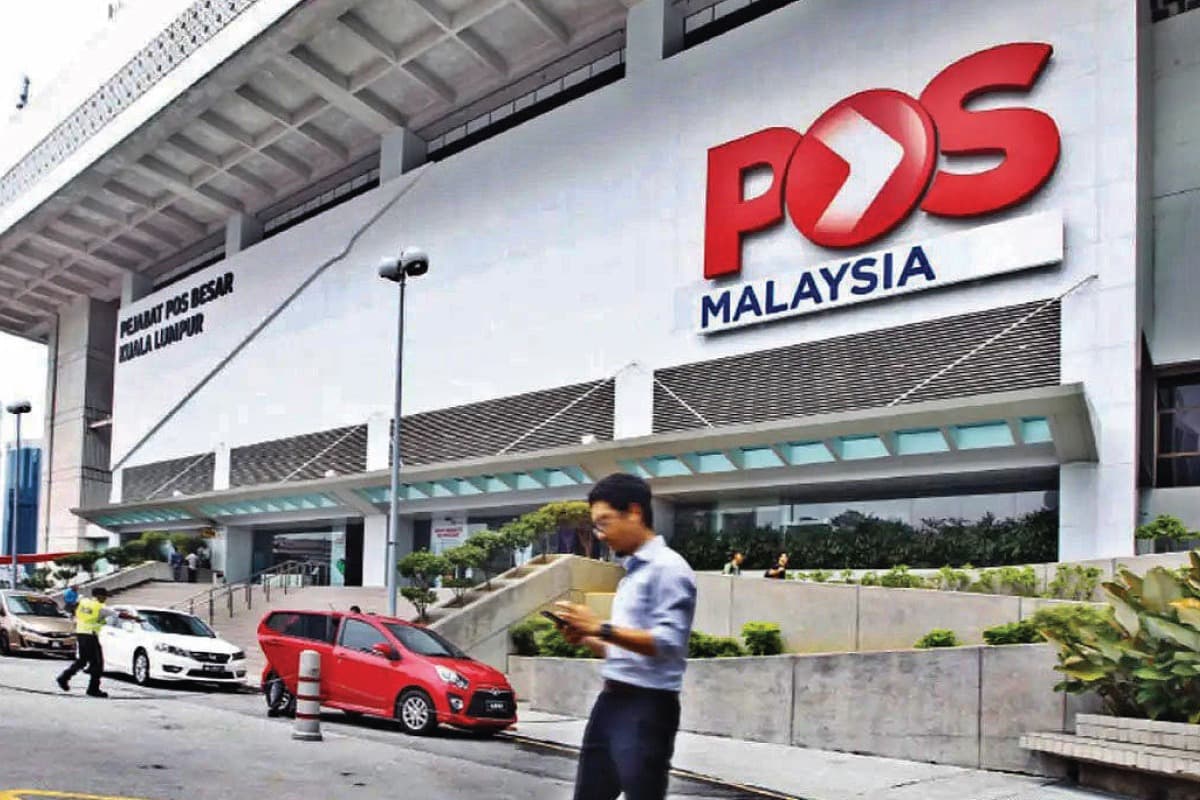
KUALA LUMPUR (May 26): DRB-Hicom Bhd (KL:DRBHCOM) said the turnaround of its 53.5%-owned postal arm Pos Malaysia Bhd (KL:POS) will depend not only on internal transformation efforts, but also on regulatory reforms and government support, as the national postal operator grapples with structural challenges that continue to weigh on profitability.
Pos Malaysia, which contributes about 10% of DRB-Hicom’s total revenue, has remained in the red every quarter since June 2018.
To address the imbalance between commercial realities and regulatory obligations, DRB-Hicom is engaging closely with the government on two key reforms — the establishment of a government-backed universal service obligation fund (USOF) and amendments to the Postal Services Act 2012.
Group managing director Tan Sri Syed Faisal Albar Syed AR Albar said after the group's annual general meeting here on Tuesday that the proposed USOF is critical to ensuring the long-term sustainability of nationwide postal services, particularly as Pos Malaysia continues to shoulder mandatory public service obligations.
He added that the government, including the Malaysian Communications and Multimedia Commission, has already acknowledged the need for such reforms, including reviewing postal regulations to better reflect current operating realities.
Under the proposed reforms, Pos Malaysia hopes the Postal Act can eventually be modernised to provide greater operational flexibility, particularly if mail volumes continue to decline.
Syed Faisal described Pos Malaysia’s transformation as one of the group’s most challenging undertakings, noting that the company is balancing commercial sustainability with its obligations as the country’s designated postal service provider.
He said traditional mail volumes continue to decline sharply as consumers and businesses shift towards digital communications, a trend he expects to persist over time. However, Pos Malaysia remains legally required under the Postal Act to continue delivering mail nationwide on a daily basis despite falling mail volumes.
At the same time, the number of delivery addresses continues to rise as new townships, residential developments and commercial buildings are added across the country, increasing operational obligations despite lower mail traffic.
Syed Faisal also highlighted challenges within the retail segment, saying footfall at post offices has been declining steadily even as Pos Malaysia remains obligated under the Postal Act to maintain at least 1,000 retail touchpoints nationwide.
Meanwhile, Pos Malaysia’s courier and parcel business — historically its most profitable segment — has come under increasing pressure from major e-commerce players that now operate their own in-house logistics networks.
Syed Faisal said platforms such as Shopee and Lazada have secured courier licences and are increasingly handling parcel deliveries internally through Shopee Express and Lazada Express, reducing the market share available to traditional logistics operators.
He noted that the parcel delivery business previously generated annual profits of between RM200 million and RM250 million, helping to subsidise losses arising from universal postal service obligations.
Syed Faisal pointed out that similar government support mechanisms already exist in mature postal markets globally. He cited Italy’s Poste Italiane, which receives about €1 billion (RM4.61 billion) annually in government support for universal service obligations, while France’s La Poste receives roughly €500 million each year despite remaining profitable.
At Tuesday’s midday break, shares of DRB-Hicom fell two sen or 1.8% to RM1.12, valuing the group at RM2.17 billion. Pos Malaysia declined half a sen or 1.6% to 31 sen, giving the company a market capitalisation of RM242.66 million.
According to AskEdge data, DRB-Hicom is trading at 0.3 times book value, while Pos Malaysia trades at 0.7 times book value.