

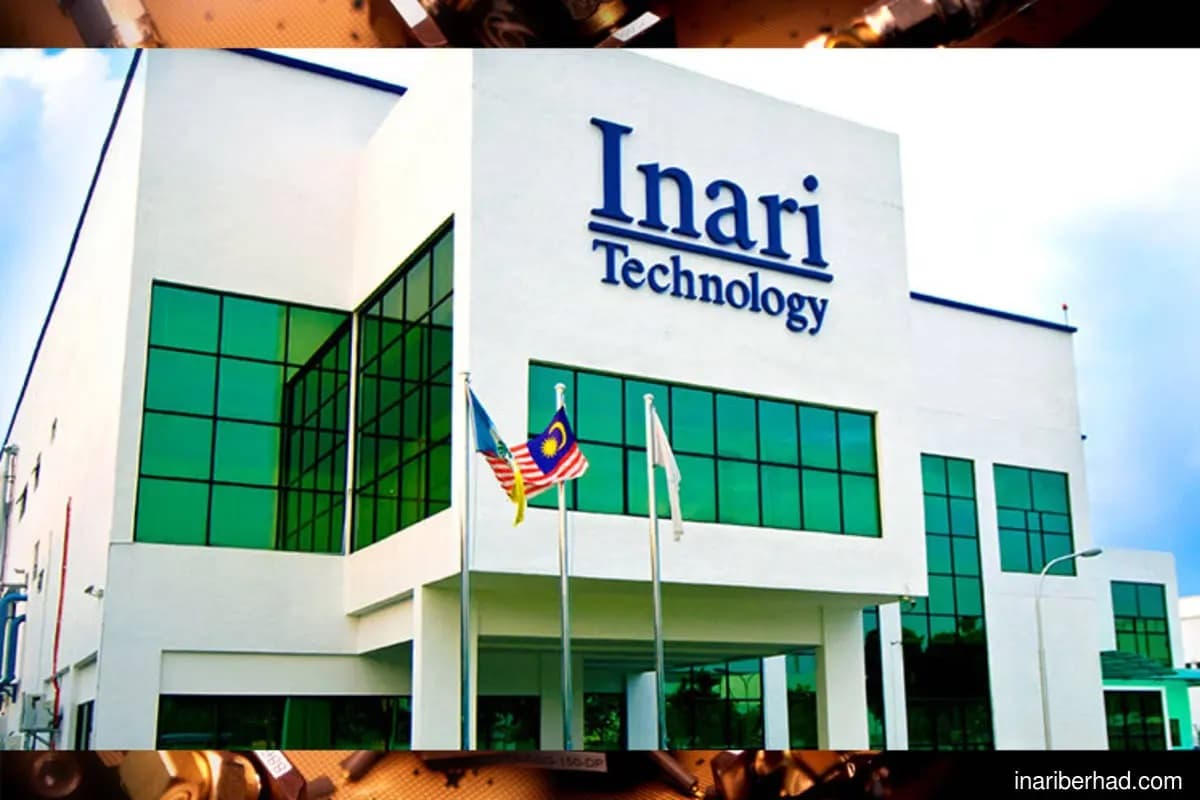
KUALA LUMPUR (May 25): Outsourced semiconductor assembly and test services company Inari Amertron Bhd’s (KL:INARI) third quarter net profit almost halved as the group saw weaker loading volumes in its radio frequency (RF) segment and realised foreign exchange losses.
In the third quarter ended March 31, 2026 (3QFY2026), net profit fell nearly 50% to RM27.98 million from RM55.48 million a year earlier while revenue declined by 13.8% to RM265.73 million from RM308.25 million in the corresponding quarter.
Despite the weaker earnings, the group declared a third interim dividend of one sen per share, payable on July 10.
Inari in its Bursa Malaysia filing said it expects performance to stay positive but mixed due to uneven conditions in the semiconductor sector.
It added that results may be affected by geopolitical tensions in the Middle East, supply chain disruptions, rising raw material and gold costs, and a weaker US dollar.
Inari said it is focusing on strengthening existing partnerships and pursuing new collaborations to support future revenue streams, particularly following the termination of its proposed joint acquisition with China’s Sanan Optoelectronics Co Ltd of Lumileds Holding BV in April.
The group said the termination allows it to redirect management focus and resources back to core operations and longer-term strategic initiatives after several months of attention on the deal process.
For the nine-month period, Inari posted a 28.4% drop in net profit to RM121.35 million from RM169.58 million in the financial year 2025. This was a 14.1% decline in revenue to RM898.31 million, from RM1.05 billion the year before.
Inari’s shares rose 1 sen or 0.5% to RM1.98 on Monday, giving it a market value of RM7.54 billion. Year to date, the stock is up 17.86%, supported by a broader tech rally that has lifted the technology index 29.52% to 72 points.
According to AskEdge data, Inari has the lowest price-earnings ratio among its peers at 37.9 times. Unisem (M) Bhd (KL:UNISEM), in comparison, has a P/E ratio of 107.9 times.