

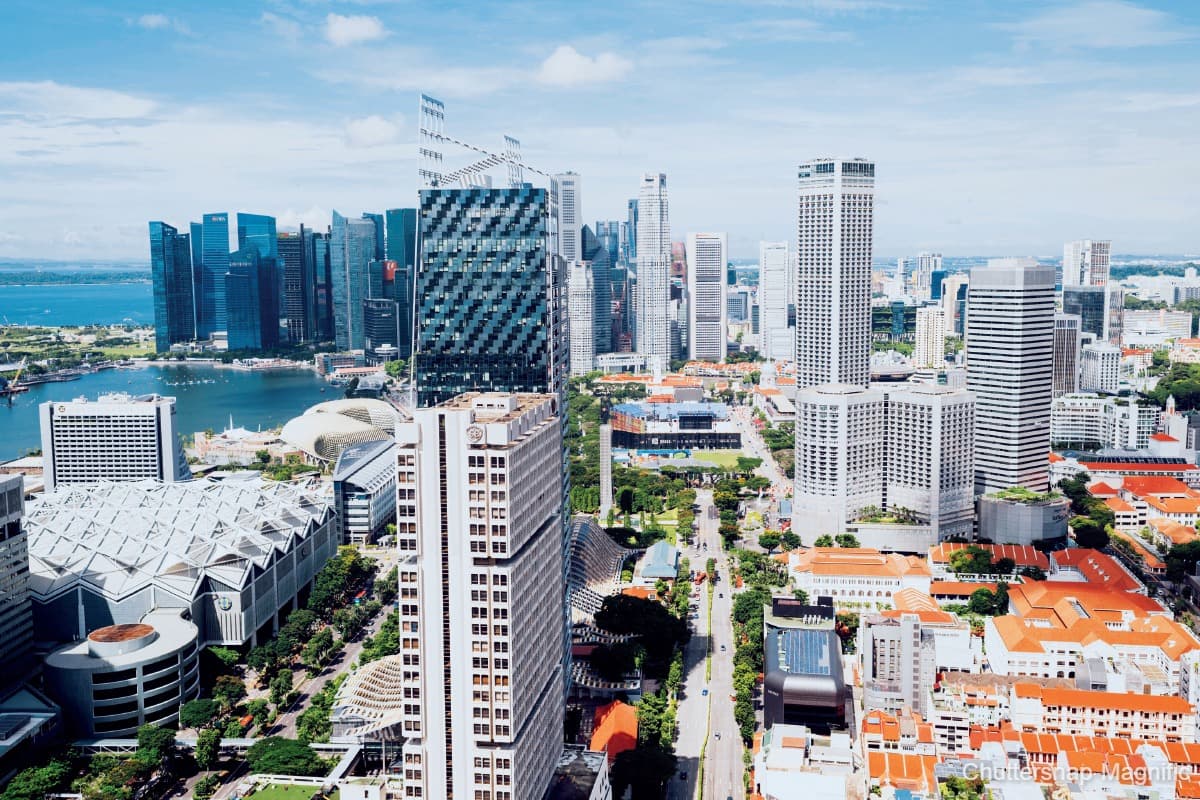
This article first appeared in City & Country, The Edge Malaysia Weekly on May 25, 2026 - May 31, 2026
The 20th edition of real estate consultancy Knight Frank’s The Wealth Report reveals a persistent divergence between mainstream housing and the luxury real estate market. In 2025, global luxury residential property prices appreciated 3.2%, outpacing the 2.9% growth of the broader residential market.
This outperformance is believed to stem from a structural decoupling. Although broader economic challenges affect the mainstream market, the sheer velocity of wealth creation ensures that demand for luxury real estate remains insulated.
The report also shows that global wealth is expanding at an annual rate of 5.3%, which is nearly two percentage points higher than the global gross domestic product (GDP) growth of 3.3%.
This financial cushioning is evident in Asia-Pacific’s performance which saw its prime residential pricing record an average growth of 3.6% while the Middle East dominated global growth at 9.4%, followed by Latin America (4.7%) and Europe (3.3%). North America was the global outlier — the only region where prices fell (-0.9%).
Knight Frank points out that Asia-Pacific’s momentum is largely driven by a fundamental shift in capital mobility. As high-net-worth individuals navigate a rising tax burden and heightening regulatory scrutiny, investment diversification has become their primary objective.
In this environment, prime housing is no longer viewed solely as a lifestyle acquisition but as a sophisticated safe-haven asset for cross-border wealth flows, according to the real estate consultancy.

Luxury residences see slower price growth
In the report, the Prime International Residential Index (PIRI 100), which tracks price changes across leading global housing markets, shows that global luxury residences recorded a 3.2% price increase in 2025, slightly below the 3.6% recorded the previous year.
Of the 100 markets tracked by PIRI, 73 saw price hikes while 24 experienced declines. Despite this positive average, a significant divergence exists. This is illustrated by a 12-month price change of 58.5% in Tokyo, owing to its new-build apartment market being bolstered by scarcity, low interest rates and strong inward demand from Asia-Pacific — in contrast with a 12.2% decline in notable retreats in major Chinese cities such as Guangzhou.
In this global ranking, Asia-Pacific’s luxury property prices saw an average annual increase of 3.7%, making it the third-highest region globally, trailing the 9.4% growth in the Middle East and 4.7% rise in Latin America and the Caribbean.
The index highlights that Asia-Pacific has maintained a steady trajectory with an average annual price change of 3.7% for prime properties, up only 0.1% from 3.6% in 2024.
While Tokyo and Manila (17.5%) were the two leading cities in the Asia-Pacific ranking for 12-month price increases, other top gainers included Seoul (14.75%) and Bengaluru (9.4%). However, the Chinese market declined, specifically Guangzhou (-12.2%) and Shenzhen (-7.2%).

Prime residential properties in demand
According to the report, key property trends that are inflating values across major wealth hubs are a scarcity of move-in-ready inventory, compounded by the burgeoning presence of family office outposts and an intensifying focus on asset diversification. Faced with escalating global construction costs and increasingly protracted development timelines, affluent purchasers are unwilling to navigate the risks and delays inherent in major renovations.
This pivot towards “turnkey” assets has placed a substantial premium on finished homes, sparking intense competition and exceptionally fast transaction speeds in markets where choice is already severely compressed. This trend is further reinforced by the growing trend of family office establishments where the ultra-wealthy are increasingly adopting multi-hub strategies — specifically in Singapore and Hong Kong.
The report highlights a shift beyond traditional roles for family offices, which are operating now as sophisticated global investment platforms that prioritise geographic asset diversification for investors as a means of a hedge against volatility and to secure high-quality holdings across multiple jurisdictions for more resilient portfolios.
Supply constraints act as the primary catalyst for the rapid expansion of the branded residence sector, which the report projects to exceed 1,000 developments worldwide by 2030. Additionally, global buyers’ demands are shifting beyond standard turnkey luxury towards curated communities that deliver top-tier services, convenience, privacy and high-quality amenities.
Asia and the Middle East are currently leading this pipeline of highly personalised residences. Moving forward, Knight Frank expects the branded residence sector to exert increasing influence on the wider luxury market.

Singapore and Hong Kong as complementary nodes
The relationship between Singapore and Hong Kong is undergoing a significant transformation. For many years, the two cities were seen as direct rivals competing for the title of Asia’s top financial destination.
However, the latest data suggests they are now operating as complementary nodes within a multi-hub strategy favoured by modern family offices. Wealthy families and professional investment offices now frequently choose to have a presence in both cities to manage regional risks and tap into different markets.
While Singapore grew quickly after the pandemic because of its reputation for stability, Hong Kong is showing a strong recovery in its super-prime segment, creating a balanced ecosystem for regional wealth, according to Knight Frank.
Singapore continues to set price records for prime residential properties, with some transactions exceeding US$6,000 psf. However, the total sales volume remains constrained by the government’s 60% additional buyer’s stamp duty, which impacts most foreign purchasers.
This tax limitation has changed the market dynamics, with record-breaking sales largely driven by local buyers. The domestic demand has caused buying power in US dollar terms to drop significantly. In 2020, US$1 million could buy 36 sq m of prime property in Singapore but that amount bought only 28 sq m in 2025.
In contrast, Hong Kong is attracting new capital through strategic talent visa schemes and a faster process for setting up investment offices. While general property prices in the city fell 2.1% in 2025, the city has seen one of the strongest upticks in super-prime sales.
In 4Q2025, Hong Kong sold 81 super-prime homes priced above US$10 million, a figure that is only second to Dubai. Unlike Singapore, which saw a 22% decrease in buying power from 2020, Hong Kong’s luxury market has remained more stable with no change over the last five years. Since 2020, US$1 million in Hong Kong has consistently bought 23 sq m of prime property.
This stability, combined with a resurgent initial public offering market and inflows of wealth from mainland China, makes the city an attractive choice for those looking for long-term growth and liquidity.
India’s CRE sector sees rapid financialisation
Knight Frank highlights that India’s commercial real estate (CRE) sector is undergoing rapid financialisation, shifting from a market dominated by purchases of physical properties by wealthy private investors to a highly structured institutional ecosystem.
This transition is driven by a surge in domestic private equity investments, which climbed from 11% before the Covid-19 pandemic to nearly 26% in 2025. The growing domestic participation stepped in at a critical time to counter foreign investor headwinds after the pandemic.
Asset performance across the sector remains resilient. Logistics and office spaces have climbed to new heights, demand for residential properties continues to hold steady and the retail sector has marked a clear comeback.
This broad-based growth is supported by India’s robust macroeconomic framework, characterised by GDP growth of more than 7% in the fourth quarter of 2025, cooling inflation and a turning interest rate cycle.
Consequently, India presents a compelling “relatively de-risked re-entry opportunity” for investors. As the report says: “Re-entry opportunities are relatively derisked particularly for those looking to partner locally and participate early in the next phase of the cycle rather than wait for a full recovery to be priced in.”
Overall, India has seen a GDP growth of 38% in five years, which in turn is fuelling the domestic ultra-luxury market. This is largely attributed to Mumbai. Frequently labelled “India’s New York”, the city’s coastal geography and chronic land scarcity naturally command substantial premiums, making ultra-luxury high-rises the standard for premium housing. Driven by this rapid domestic wealth creation, Mumbai reported a price increase of 8.7% for prime and super-prime homes as demand reached record levels.
In 2025, the city recorded 56 new-build sales in the US$5 million-plus category. This activity was driven by a post-pandemic appetite for lifestyle upgrades, world-class amenities and expansive views, pulling in a new wave of developers to the luxury market.
This intense demand has significantly compressed buying power in Mumbai. By end-2025, US$1 million secured 96 sq m of space in the city — down 9% from 2020.
Because Mumbai can only expand vertically, the lack of land will continue to keep luxury supply tight and prices high, Knight Frank notes.
Energy resilience and infrastructure catalysts
Looking ahead, a focus on infrastructure reliability and resilience will follow the rapid proliferation of data centres as the expansion of AI and data centres places unprecedented strains on power grids.
Citing data from the International Energy Agency (IEA), Knight Frank points out that there will be a 127% surge in data centre electricity consumption by 2030, with demand spiking 152% in Asia-Pacific and 133% in the US.
Consequently, efficient buildings and a secure power supply have become critical to preserving asset value and shielding operational performance. Sophisticated buyers are already prioritising these features to insulate portfolios against future resource constraints, according to the real estate consultancy.
This focus is intensified by the volatile global energy markets. While global prices have dipped over the last five years, despite a historic “2022 peak” triggered by Russia’s invasion of Ukraine, they remain elevated and vulnerable to further escalation due to the ongoing Iran war.
Price volatility and blackouts are now headline risks. World Bank data reveals that 45% of businesses globally have experienced power outages. For the data centre sector, uninterrupted power supply is not an option but an existential need, says the report.
This reality creates a dual requirement for commercial real estate: securing reliable power to mitigate operational risk and investing heavily in energy efficiency and procurement of renewable energy.
According to Knight Frank’s Active Capital Investor Survey 2026, nearly a quarter of respondents anticipated investing in infrastructure by the end of this year — a significant leap from 12% previously.
Simultaneously, energy efficiency is emerging as a key market differentiator. The report says, “While building retrofits may not be glamorous, they deliver meaningful returns through lower operating costs while integrating system flexibility, resilience and overall performance. This regional adaptability is vital, given that buildings already account for nearly 30% of global energy use.”
The IEA forecasts a further 15% rise in global building energy consumption by 2035. However, this growth will be highly uneven as demand is expected to surge 30% in the Middle East and 26% in China, in contrast with a modest 4% increase in Europe and 6% in North America.
Save by subscribing to us for your print and/or digital copy.
P/S: The Edge is also available on Apple's App Store and Android's Google Play.