

This article first appeared in The Edge Malaysia Weekly on May 18, 2026 - May 24, 2026
AS the global semiconductor race enters a more decisive phase, Malaysia’s challenge is no longer one of direction, but of speed.
Supply chains are shifting, capital is being redeployed, and countries are moving quickly to secure higher-value roles. Given the current environment, getting the strategy right is only half the battle; execution at pace is what will determine who remains relevant.
Malaysia’s National Semiconductor Strategy (NSS), introduced in May 2024, aims to push the country beyond its traditional strength in outsourced semiconductor assembly and test (OSAT) into areas such as chip design and advanced packaging.
Under the NSS, a total of RM25 billion fiscal support has been allocated, prioritising front-end activities, namely advanced wafer fabrication and integrated circuit (IC) design, as well as back-end segments such as advanced packaging activities.
While the direction is clear, the real issue is whether progress is happening fast enough.
American global management consulting firm Kearney believes the window is still open — but not for long.
It points out that at a time when Malaysia is trying to move up the value chain while holding on to its existing strengths, there is a growing sense within the industry that the execution of NSS could be faster, given that other countries are also stepping up their efforts.
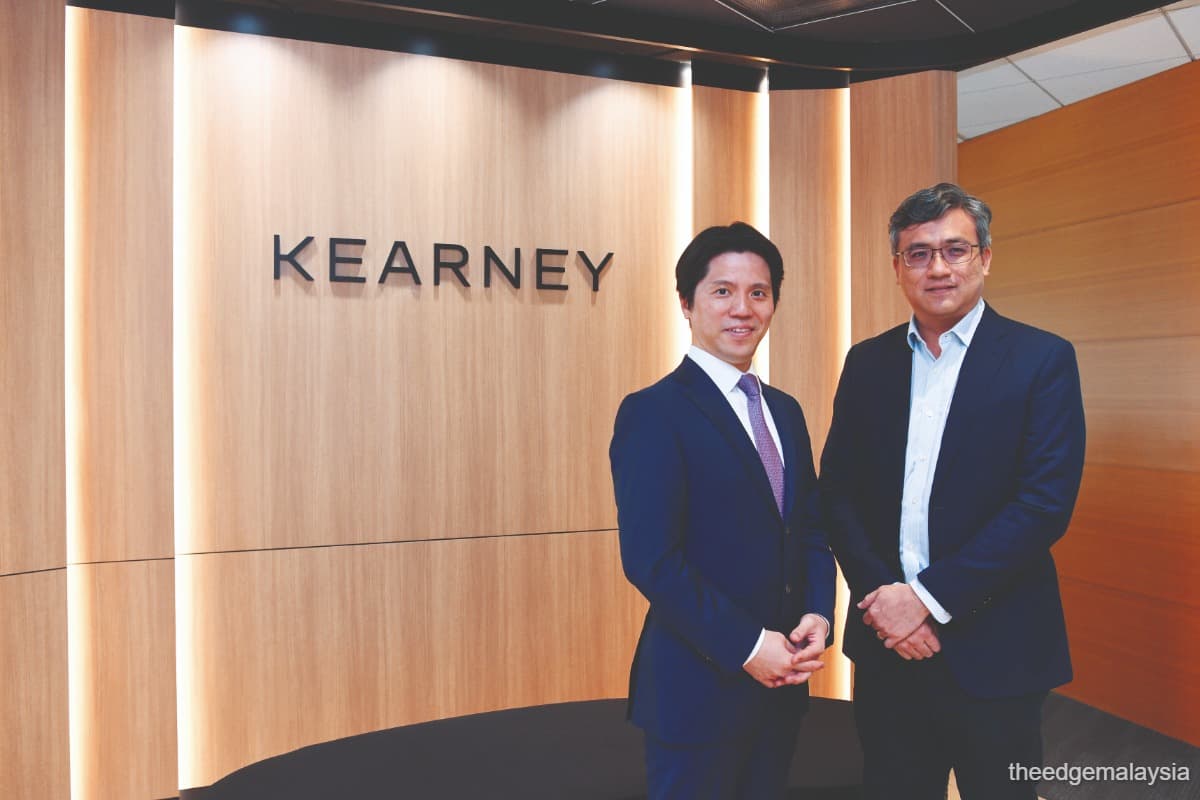
Keat Yap, Malaysia country head, co-founder and Asia-Pacific (Apac) lead of Product Excellence and Renewal Lab (PERLab) at Kearney, is of the view that Malaysia has the right strategy in NSS, and the country has made certain progress in execution.
“Two years [since the launch of NSS] is not too short, not too long. Could we have done better? Could we have moved faster? Absolutely. But is it too late for Malaysia? No, it’s not. I see this as still a golden opportunity for us,” he tells The Edge in an exclusive interview.
Yap stresses that the government needs to promote the right environment, provide the necessary incentives and be supportive, as the semiconductor race is all about ecosystem play.
“When I think about what more we could do, it’s clear that it’s not something that a single party can fix. The private sector and academia have to step up. Everyone has a role in making this work.
“Purely relying on incentives is not enough — it has to be tied to outcomes and milestones so that it promotes the right behaviour and attracts investors who are willing to stay long term,” he elaborates.
Yap acknowledges that incentives remain a recurring point of debate, with some local players perceiving that foreign investors receive greater support, while domestic firms risk being left behind.
“That may be partly perception, but there is truth in the fact that some programmes do exist for local players. For example, in advanced packaging, there’s a fund as part of NSS that provides significant support.
“But if local ATE (automated test equipment) suppliers aren’t tapping into it, then the benefits are not felt. So, awareness and proper channelling are just as important as the incentives themselves,” he says.
Another critical area is human talent, says Yap. He admits that Malaysia naturally faces disadvantages because many of the country’s high-skilled engineers choose to work overseas — in the US, Singapore, Taiwan or South Korea — often for financial reasons, but also for the ecosystem and career prospects.
“The reality is that total compensation has to be competitive. That’s the baseline. But it’s not just about money. The environment matters too.
“Would an engineer designing advanced silicon for artificial intelligence (AI) want to join a small start-up with limited prospects, or stay at a place like Taiwan Semiconductor Manufacturing Co Ltd (TSMC) with exposure to cutting-edge design?” he asks.
He describes it as a classic chicken-and-egg problem, arguing that progress depends on building a stronger ecosystem where talent can see real opportunities, not just financial incentives.
‘Decent progress’ seen in nurturing semiconductor talent
Yap notes that Malaysia is making “decent progress” in nurturing 60,000 engineers under the NSS, as industry-based training has improved significantly, while universities are starting to produce engineers who can start designing chips.
“The tools are different, and exposure has been limited historically, so the gap for fresh graduates has been significant. While the gap is narrowing, the pace of talent development has yet to fully match the growing needs of businesses,” he says.
He observes that among the region, Singapore is the most attractive in terms of drawing high-skilled talent and foreign investment, whereas Vietnam continues to attract manufacturing investments, but mostly in the assembly and test capacity rather than cutting-edge design.
“Malaysia still has a strong position in assembly and test, and we remain competitive in parts of the semiconductor supply chain,” says Yap.
He reiterates that consistency and long-term commitment are what make the difference. “You can have the best strategy on paper, but if execution falters, it doesn’t translate into results. Look at Silicon Penang — it wasn’t built in two years; it took decades. You need a multi-decade perspective to see real transformation.”
Yap adds that a favourable business environment is essential for the smooth operation and protection of a semiconductor company’s assets and innovations.
This includes legal and regulatory framework, intellectual property (IP) protection measures, overall outlook towards innovation, and the availability of skilled talent.
In particular, Malaysia’s policy environment has shifted from being manufacturing-centric to upstream-oriented, as the country pivoted from a “volume-based” model towards a “value-based” strategy, says Yap.
“Semiconductors are now formally designated as a national strategic industry, with policy scope expanded beyond assembly and testing to include chip design, applied research and development (R&D), advanced packaging, and selective front-end manufacturing.
“Governance has become more coordinated, while the focus for innovation has moved from volume manufacturing to value creation,” he explains.
Governments and companies need to align
Kearney region chair for Apac and chairman for Japan, Shigeru Sekinada, believes Japan could provide a useful comparison for Malaysia.
“The [Japanese] government decided to invest in the semiconductor sector over the long term, partly for economic and strategic security. They didn’t just focus on manufacturing, they also invested in talent development and innovation,” he tells The Edge.
Despite slower economic growth in Japan, the consistent set of government actions created the momentum, says Sekinada.
“The combination of strategy, talent and execution is what allowed regions like Kumamoto, supported by TSMC and companies such as Sony Group Corp, to advance in the semiconductor ecosystem. It shows that long-term commitment and consistency matter more than short-term gains,” he observes.
From a global perspective, says Sekinada, foreign investors are always evaluating multiple factors when deciding where to place capital. Incentives are considered, but they are not the sole driver.
“Investors look at financial performance, risk, production scalability and ease of doing business. Malaysia competes with countries where incentives may appear more attractive.
“This perception can influence decisions even if the reality is nuanced. Some investors, for example, perceive Singapore as offering better support, which shapes how confident they feel in committing to Malaysia,” he says.
Sekinada highlights that Japan has demonstrated that consistent policy and follow-through are more important than the initial strategy.
“Governments and companies need to align over decades, not just years. Foreign investors look for stability and predictability. Short-term political changes or inconsistent execution can undermine confidence because building a semiconductor ecosystem is inherently time-consuming,” he says.
He adds that execution is what translates strategy into tangible results, while coordination over time is what global investors weigh when evaluating Malaysia’s attractiveness.
“Without consistent execution, even well-designed policies can fall short. This includes not only government initiatives but also private-sector participation in R&D, talent development and ecosystem building,” he says.
Meanwhile, Sekinada points out that the global semiconductor supply chain is sensitive to tariffs, trade wars and national security concerns.
“Japan’s investment strategy reflects both economic and geopolitical foresight. Foreign investors often benchmark against such examples, asking whether Malaysia can maintain consistency, stability and alignment with regional and global trends,” he says.
Sekinada adds that incentives are only one piece of the puzzle. “The key question is whether Malaysia can integrate these elements into a sustainable ecosystem that supports both local players and multinational corporations over the next decade.”
Nevertheless, Sekinada believes Malaysia’s neutrality is one of the key attractions for global semiconductor investors, as the country offers predictability, stable policies and long-term commitment, which makes it easier for capital to flow in.
“In this geopolitical context, Malaysia can be a location where companies rethink their supply chains without being forced to pick sides. Japan, Malaysia and some Asean countries can leverage this neutral position.
“Both the US and China remain important, and Malaysia’s balancing act works. Neutrality, along with consistent policy and talent development, really strengthens Malaysia’s competitiveness in semiconductors,” he notes.
Sekinada says Malaysia is currently maintaining a strong position, attracting investment from both the US and China, supported by its policy predictability and core semiconductor capabilities.
“Both countries continue to invest because Malaysia cannot be easily bypassed — critical capabilities, such as assembly, testing and specialised materials, remain concentrated in the region. Malaysia’s role as a neutral, indispensable node is unlikely to diminish in the near term,” he says.
From Kearney’s century of experience working with companies and governments around the world, Sekinada says one lesson stands out — strategy only creates impact when matched with disciplined execution and sustained capability building.
“At the end of the day, what matters is not building an unbreakable semiconductor ecosystem, but building one that can respond flexibly even when disruptions occur. Companies must avoid concentrating risk in a single supplier and instead maintain multiple procurement routes,” he says.
In semiconductors, delay comes at a cost. Once investments and talent settle elsewhere, they are hard to pull back. For Malaysia, the challenge now is straightforward — move faster, or risk being left behind.
Save by subscribing to us for your print and/or digital copy.
P/S: The Edge is also available on Apple's App Store and Android's Google Play.