

This article first appeared in The Edge Malaysia Weekly on May 18, 2026 - May 24, 2026
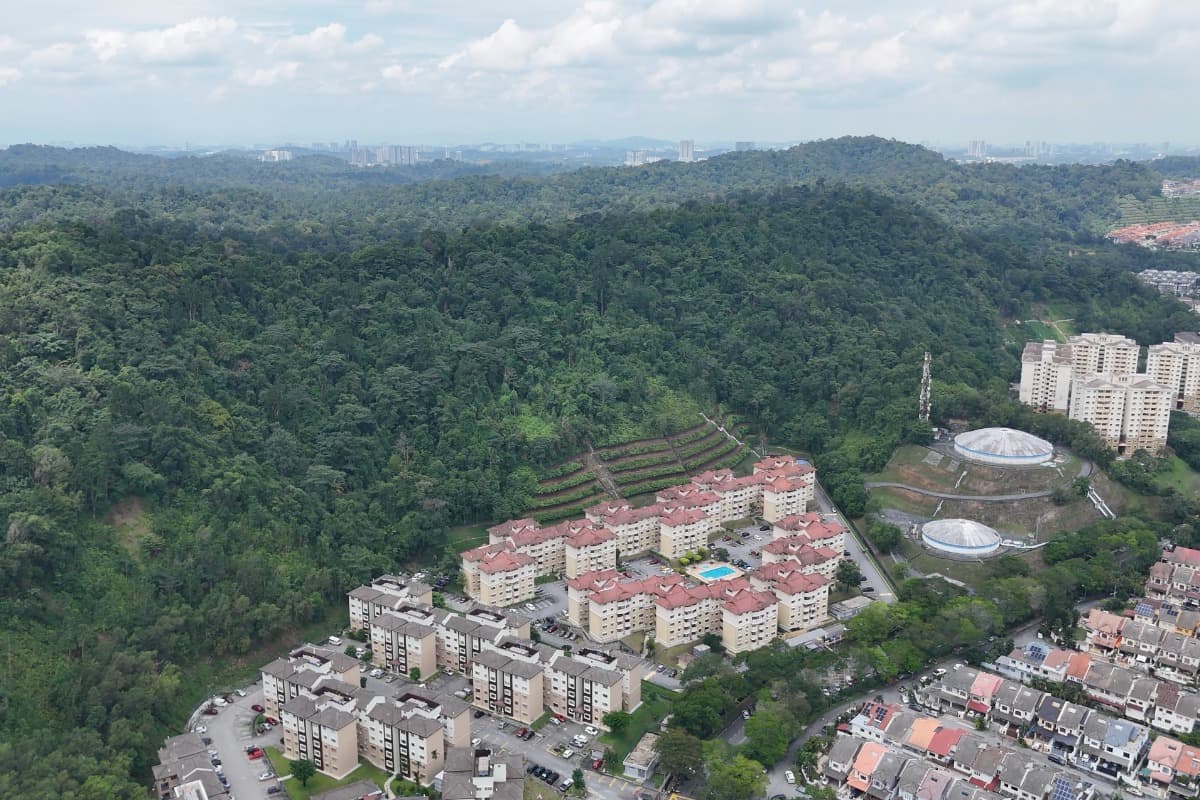
THE parties involved in the sale and purchase of a 169-acre parcel in Permatang Kumbang, Puchong — the Selangor government and Perano Properties Development Sdn Bhd, controlled by the Jakel Group — have remained tight-lipped, making it difficult to understand many issues surrounding the purchase, including why land that cannot be developed was acquired in the first place.
In 2017, the Federal Court ruled that the tract was not suitable for development.
The Edge, seeking clarity on the transaction, sent questions twice over the past two weeks to Menteri Besar Datuk Seri Amirudin Shari’s office and also sent repeated messages and made calls to Datuk Seri Mohamed Faroz Mohamed Jakel, but there has been no response. Sources close to Mohamed Faroz say he has been travelling and is currently difficult to reach.
Mohamad Faroz heads the Jakel group, a family-run business, whose Perano Properties acquired the 169-acre parcel — adjoining the Ayer Hitam Forest Reserve — in two tranches. One, involving about 31 acres with a 99-year lease (of which 75 years remain), was sold in September 2012 at RM13.80 psf, or about RM18 million; the other, a freehold tract measuring 138.35 acres, was sold in August 2019 for RM13.80 psf as well, or about RM83 million.
In total, Perano Properties paid RM101 million for both parcels of land. The price, at RM13.80 psf and unchanged after six years, has raised questions, especially as one tract is leasehold while the other is freehold and would typically command a higher value.

A 30-year veteran in the real estate business says: “The entire 169 acres lies, more or less, along the eastern fringes of Pusat Bandar Puchong and Bandar Puchong Jaya. The Ayer Hitam Forest Reserve lies along the eastern boundary of the whole site.
“The topography of the whole 169 acres appears to be quite hilly, which makes you wonder what Perano Properties’ rationale was when it acquired the 138.35 acres in August 2019 and the bungalow lots and semidetached lots, about 31 acres in total, earlier in September 2012.
“I could give you a much better picture if I saw the land or topography; my opinion is based on a cursory review of the documents available. I am puzzled as to why Jakel would fork out RM101 million for land that cannot be developed.”
Many others are trying to make sense of other aspects of the transaction as well.
A market watcher suggests there may have been a back-to-back arrangement, with Perano Properties acquiring the first 31 acres in September 2012 and, later, via an option or similar structure, the second 138-acre freehold tract in August 2019. This remains conjecture, however, as both Jakel and the state government have remained silent.
To put things in perspective, about 75% of the land consists of Class III slopes (25° to 35° gradient) and Class IV terrain (above 35°), which significantly restricts development potential and may help explain the RM13.80 psf price tag. There is no denying, however, that the land’s location is still considered prime, about 1.5km from IOI Mall in Puchong.
In comparison, land at Abadi Heights, a 20-minute drive from IOI Mall, is priced around RM200 psf, and bungalow land in Bandar Kinrara, roughly 11 minutes away, is going for about RM310 psf. Freehold bungalow land in Lake Edge, Puchong, located about 5km from IOI Mall, has asking prices in the RM400 to RM500 psf range.
In an April 24 statement looking to address woes raised by residents and politicians over the tract of land, Amirudin says: “A property consultant was then appointed to assess the market value of the land in 2012, with the final valuation set at RM13.02 psf, or RM95.3 million in total.
“Three companies participated in the open tender process, and the decision was made to sell the land at RM101 million, 5.9% above the valuation.”
Still, why the land was sold at RM13.80 psf six years later remains unanswered.
In 2012, the menteri besar was the late Tan Sri Abdul Khalid Ibrahim.
There is also some confusion over why the 138.35-acre parcel was sold by Menteri Besar Selangor (Pemerbadanan) while the adjoining 31 acres were disposed of by the Selangor state secretary, despite the two tracts being adjacent to each other.
The seasoned real estate player says he cannot explain why neighbouring parcels were held by different state entities. “It beats me … It’s odd.”
Court case to clarify
According to Amirudin, the state government has never approved development on the land — it is adjacent to, and not part of, the Kinrara Ayer Hitam Forest Reserve, having been degazetted in 1926.
A look at the Rancangan Tempatan Subang Jaya 2035 (Subang Jaya Local Plan 2035) on the Subang Jaya City Council (MBSJ) website indicates, however, that the 169-acre parcel has been designated for “perumahan terancang”, or planned housing.
In 1996, the state government had approved the alienation of the tract to two developers — Citrasama Projek Sdn Bhd and Benua Ehsan Sdn Bhd — for low-cost housing, but the proposal was rejected by MBSJ in 2003, as 75% of the land comprised Class III and Class IV slopes exceeding 25°, making it unsuitable for development, and the project was subsequently cancelled.
Citrasama Projek and Benua Ehsan later sought legal redress and, in 2017, the matter reached the Federal Court, which ruled in favour of MPSJ.
Court documents state that, during the appeal process, the state government on April 2, 2008, issued new hillside development guidelines titled “Garis Panduan Perancangan Pembangunan di Kawasan Bukit dan Tanah Tinggi Negeri Selangor” (Selangor Planning Guidelines for Hillside and Highland Development), under which projects on Class III and IV highlands would not be approved.
On June 2, 2008, the Selangor Housing and Property Board issued a circular directing local authorities to reject applications involving Class III and IV land. These developments effectively worked against Citrasama Projek and Benua Ehsan.
Separately, the joint-venture agreements between Citrasama Projek, Benua Ehsan and state-linked Permodalan Negeri Selangor Bhd had also lapsed.
MPSJ rejected the application for a development order on Oct 14, 2008, raising questions over why Perano Properties proceeded to acquire the land for RM101 million despite likely development constraints.
More puzzling is that Jakel, after acquiring the 169 acres, pledged the parcels to Bank Rakyat, while Malaysian Trustees Bhd also holds a caveat over the land.
A check on the Companies Commission of Malaysia (SSM) website shows Bank Rakyat has an open charge created in 2022, alongside charges totalling RM1.1 billion involving Malaysian Trustees.
As at end-2024, Perano Properties had total assets of RM569.69 million and total liabilities of RM136.91 million. It generated no revenue in the last five years and suffered after-tax losses of about RM4 million in the last three financial years, from FY2022 to FY2024. The company also had accumulated losses of RM18.57 million.
According to SSM’s website, Perano Properties’ business is stated as “buying, selling, renting and operating of self-owned or leased real estate land, real estate activities with own or leased property”.
Colourful history
The Jakel Group is known to be well connected, having grown from humble beginnings in the early 1980s to its current scale.

In recent years, however, the group has attracted increasing attention, though not all of it favourable.
Perano Development Sdn Bhd, a sister company to Perano Properties, came under scrutiny last year after reports linked it to a 32-acre tract off Jalan Cheras that houses the Kuala Lumpur City Hall (DBKL) Health and Environment Department. Perano Development had placed a caveat on the land in August 2013.
DBKL vacated the site in 2025, raising questions over whether the parcel is ultimately owned by DBKL or Perano Development, and, if the latter, the price paid for it.
In 2014, the 32-acre Cheras parcel drew further interest when another Jakel-linked company, Dupion Development Sdn Bhd, acquired nearby land occupied by the Cheras velodrome from DBKL for RM133.49 million.
In November 2024, Radium Development Bhd (KL:RADIUM) acquired 5.26ha in Cheras — the velodrome site — for RM458 million, about 3½ times what Jakel had originally paid for the land. Questions were raised over whether DBKL could have secured a better deal.
In mid-2025, questions also arose over why state-controlled Permodalan Nasional Bhd (PNB) was partnering with Symphony Life Bhd (KL:SYMLIFE) and JBiz Development Sdn Bhd, a Jakel Group unit, to develop a 19.1-acre tract in Damansara Heights. The joint venture — PJS Damansara — is equally held by the three parties and comprises two blocks of office towers and eight blocks of serviced residences, with an estimated gross development value of RM4.4 billion.
The question then was why PNB felt the need to partner with two developers that were much smaller than itself rather than handle the development alone.
As for publicly traded companies, Jakel Capital Sdn Bhd holds a 21.47% equity stake in renewable energy company Cypark Resources Bhd (KL:CYPARK), among others.
The Jakel Group has largely shunned the limelight and does not give interviews or explain its corporate moves. Until the parties involved in the sale of the 169-acre parcel in Ayer Hitam, Puchong, provide clarity on what transpired and why the land was acquired, the transaction is likely to remain viewed as opaque.
Save by subscribing to us for your print and/or digital copy.
P/S: The Edge is also available on Apple's App Store and Android's Google Play.