

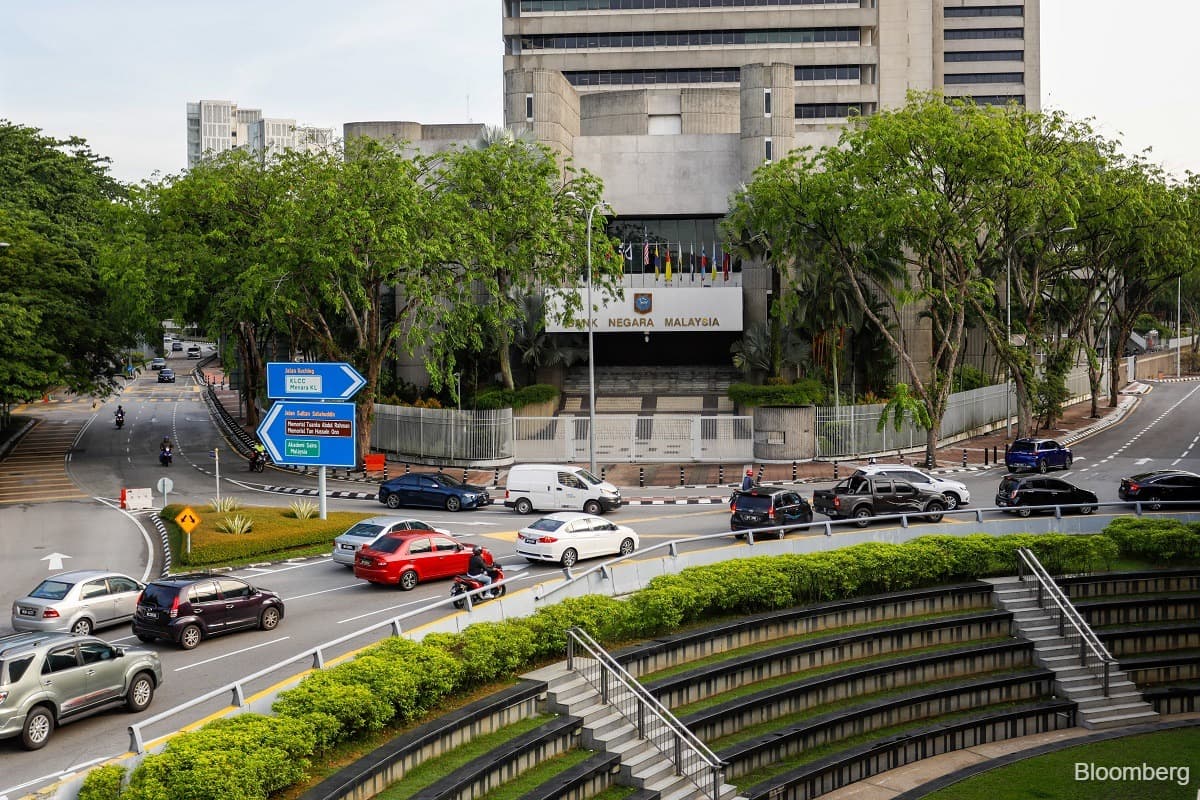
KUALA LUMPUR (May 19): Economists expect Bank Negara Malaysia to keep its key interest rate steady for the rest of the year, even as consumer price pressures are set to intensify following April's spike to an 18-month high.
Inflation in April rose 1.9% compared to the same month in 2025, official statistics show, primarily driven by higher transport and fuel costs, triggered by the ongoing conflict in the Middle East and supply disruptions in the Strait of Hormuz. The headline figure is the highest since October 2024, exceeding March's 1.7% year-on-year (y-o-y) increase.
The latest reading matched Bloomberg's consensus, noted both UOB Global Economists and Market Research and Kenanga Research, though it came in slightly below UOB's estimate of 2%.
"Inflation dynamics remain aligned with our view that supply-driven pressures from the Middle East conflict will intensify in the coming months. Barring any changes to fuel subsidy policies, inflation is forecast to surpass 2% from May onwards, bringing full-year 2026 inflation to an average of 2%," UOB said. This is above 2025's 1.4%, but still within BNM's estimate of 1.5-2.5% for the year, it added.
However, despite the acceleration in April's headline numbers, core inflation — which excludes volatile fresh food prices and price-administered items — eased marginally to 2% y-o-y, from 2.1% in March, further converging to headline inflation. "This suggests recipient signs of softening demand or the absence of excessive demand pressures," UOB noted.
"Overall, transitory inflation pressures, moderating demand-driven price dynamics, and ongoing uncertainty from the Middle East conflict support the case of continued vigilance by BNM. At the 1Q2026 GDP briefing last Friday (15 May), BNM reiterated its data-dependent stance, noting that its baseline incorporates a three- to six-month impact from the conflict. We, therefore, maintain our view for OPR pause at 2.75% until clearer shifts in global and domestic conditions emerge. The next policy decision is scheduled for July 9," UOB said in a note.
Kenanga Research, who is likewise expecting BNM to keep the OPR at 2.75% throughout 2026, said it will do so with policy stability as the central policy objective. "Domestic demand conditions remain resilient, while underlying inflation pressures are still relatively manageable despite renewed geopolitically driven commodity risks. At the same time, heightened external uncertainty and continued ringgit resilience should BNM sufficient space to remain flexibility," it said.
Supply-chain pressures loom over food prices
While the transport index jumped significantly to 4.1% y-o-y in April — its highest level since 2022 and up from 1.6% in March — food and beverage inflation saw a more muted uptick to 1.2% from 1.1%. However, analysts flagged that a broader food price pass-through is on the horizon for the second half of 2026.
In UOB's note, senior economist Julia Goh and economist Loke Siew Ting highlighted that global oil and key raw material supplies — including domestic inputs — are approaching critical levels by end-June. They also pointed to recent comments by Agriculture and Food Security Minister Datuk Seri Mohamad Sabu, who had warned of impending food price hikes due to escalating costs of fertiliser, logistics and animal feed — such as grain and soy imports — that account for up to 70% of chicken production costs.
Kenanga Research echoed this cautious outlook, noting that supply chain lags will eventually hit consumer pockets, as "sustained disruptions around the Strait of Hormuz continue to pose upside risks through higher imported fuel and fertiliser costs".
"Transport inflation remains the most immediate transmission channel, although historical pass-through dynamics suggest food inflation typically follows with a lag as higher logistics, packaging, and farm-input costs gradually filter through supply chains. While targeted fiscal transfers and subsidies should cushion part of the near-term impact, rising transport and production costs are likely to erode household purchasing power over time," Kenanga Research added.