

This article first appeared in The Edge Malaysia Weekly on May 18, 2026 - May 24, 2026
As Malaysia hurtles towards aged nation status, the government is shifting its gaze from social welfare to structural reform. Central to this transition is the National Ageing Blueprint (NAB), a cornerstone of the 13th Malaysia Plan (2026-2030) (13MP), which reclassifies ageing as a cross-sector development variable rather than an isolated ministerial burden.
The strategy aims to formalise the purple economy — a burgeoning care sector intended to relieve the “sandwich generation” from the dual pressures of childcare and elderly support. By professionalising caregiving and integrating universal design into urban planning, the government seeks to bridge the gap between cultural preferences for ageing in place and the harsh economic realities of a shrinking labour force.
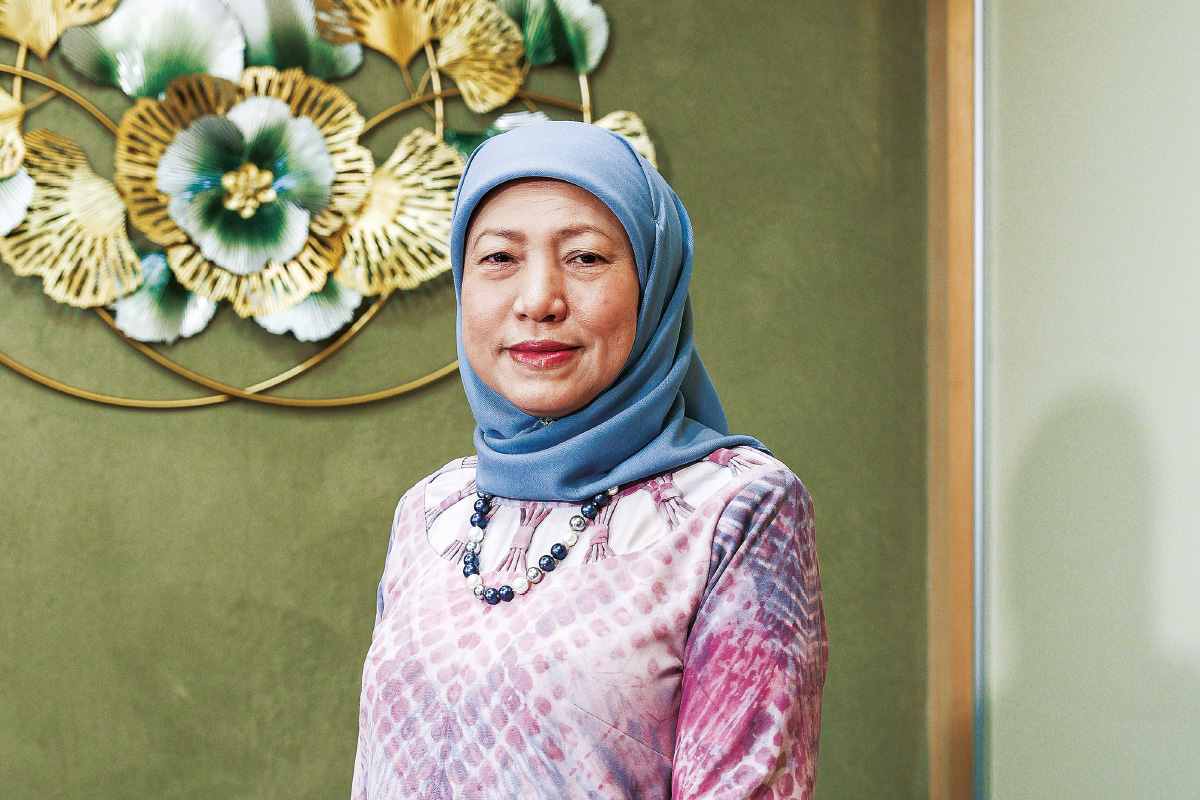
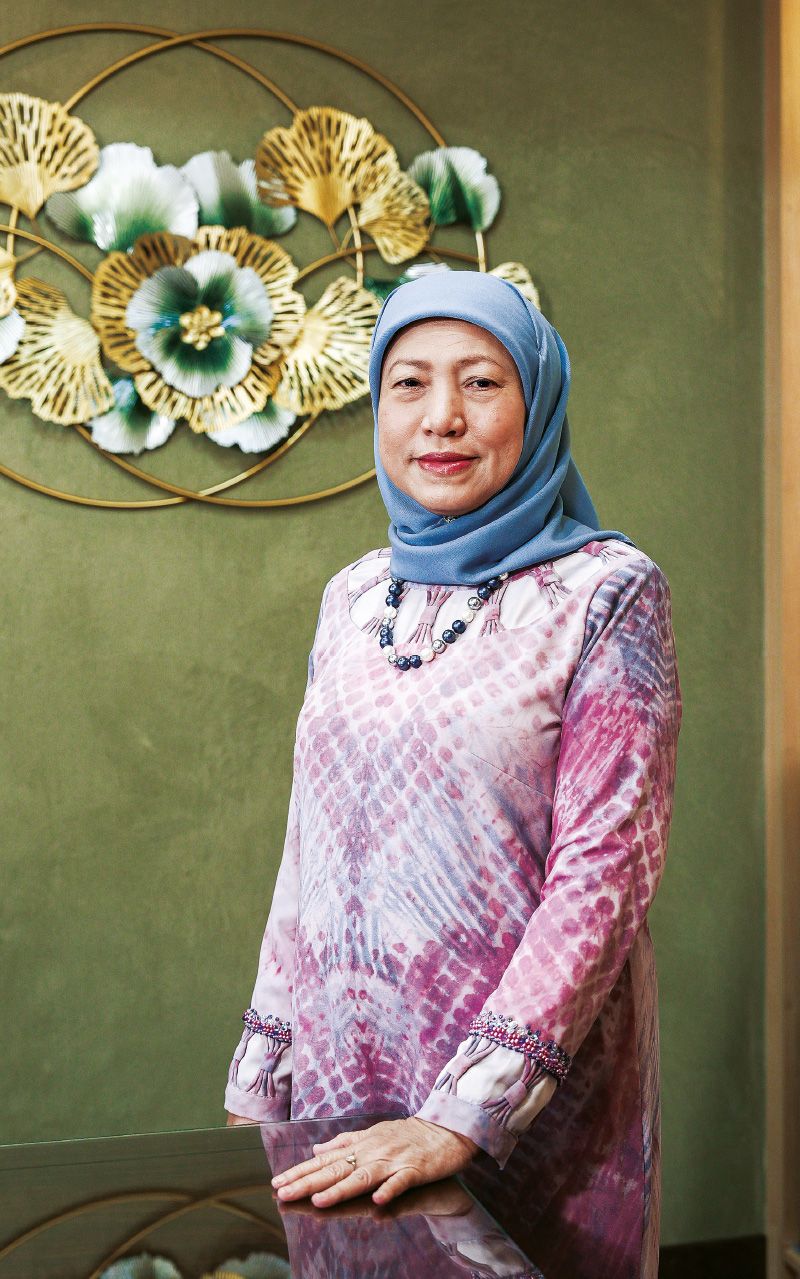
From exploring national long-term care insurance to incentivising private-sector assisted living, Minister of Women, Family and Community Development Datuk Seri Nancy Shukri tells City & Country how the government intends to transform a demographic time bomb into a sustainable silver economy, ensuring longevity is matched by both dignity and productivity.
City & Country: Malaysia is projected to become an aged nation within two decades. From the ministry’s perspective, what would fundamentally change in how the government approaches development once ageing becomes a structural reality rather than just a social issue?
Datuk Seri Nancy Shukri: Thank you for this opportunity to share our ministry’s progress. We have shifted from mere planning to active prioritisation. Our guidance is now strictly aligned with the NAB under the 13MP. This involves a multi-layered strategy: the NAB, the National Plan of Action for Older Persons (2026-2030), and the Malaysia Care Strategic Framework and Action Plan (2026-2030). Altogether, these frameworks strive to strengthen an integrated, community-based care ecosystem for the nation.
In our culture, we are very much into home-based care and prefer to retire in our own house. Nonetheless, as the government, we need to intervene in what we can do to help the nation manage and create the holistic aged care ecosystem. In NAB, we outline the policies, frameworks and comprehensive action plans covering the economy, employment, education, social protection, healthcare and long-term care. Its focus is being translated into strategies and initiatives under the 13MP to prepare the country towards becoming an aged nation.
Meanwhile, the government has also identified four key pillars under NAB: (i) long-term care; (ii) the labour market and skills; (iii) fiscal and social protection; and (iv) retirement savings. Together with MoH (Ministry of Health), the Ministry of Women, Family and Community Development (KPWKM) has been appointed as a co-lead for long-term care, and this mandate was confirmed by the National Economic Action Council (MTEN).
Overall, I would like to highlight the importance of building a sustainable, permanent care economy because it is not only for us, but our future generations. This means expanding community and home-based care, professionalising care work and supporting family caregivers, especially women, through training, incentives and shared responsibility across government, private sector and communities.
To support this industry, my ministry launched the Malaysia Care Strategic Framework and Action Plan (2026-2030) on Nov 4, 2025. This is to ensure an inclusive and sustainable care economy ecosystem for the well-being of people of all ages. This framework outlines the provision of a long-term care ecosystem and enhancing well-being through legislation and support services. It requires a lot of planning and cross-ministry responsibility. In short, Malaysians should expect care that is closer to home but coordinated and future-ready.
Sometimes, we receive questions on why we don’t just build more care centres for older people. Again, it goes back to the value and message we wish to send out. Building more homes might send a message that it’s okay for children not to want their parents to live with them. This is not what we want to see in Malaysia.
How do you define our success in preparing Malaysia for our ageing population? Is it independence, affordability, dignity, productivity, or something else?
Well, success cannot be defined by one dimension alone. It is about whether Malaysia builds a society where ageing is secure, purposeful and supported across the life course. From my ministry’s perspective, success rests on five outcomes:
- Independence with support: Older persons should be able to live safely in their own communities for as long as possible, supported by age-friendly infrastructure and accessible services.
- Dignity and protection: Ageing must not be associated with neglect or discrimination. Legal protection and social inclusion are fundamental benchmarks.
- Economic security and affordability: In line with 13MP, we are strengthening income security, employment opportunities and social protection, so that growing older does not mean falling into poverty or dependency.
- Productive and active ageing: The NAB emphasises continued participation, whether through employment, volunteering, caregiving or lifelong learning, so that the elderly remain contributors to families, communities and the economy.
- Sustainable care ecosystem: Through the National Plan of Action for Older Persons, success will be measured by how well we develop long-term care systems, support caregivers and mobilise public-private partnerships.
Ultimately, we will know Malaysia is ready when longevity is matched by quality of life, when people can age with purpose and dignity, not fear or financial insecurity, and stay connected to society. For the corporate sector, this transition also signals opportunity in the silver economy, retirement planning solutions and community care investments.
Many cities in Malaysia are designed for the young and for car-dependent populations. What needs to change in city planning to make cities more senior-friendly?
Today, the provision of elderly friendly facilities is paramount. When I was in charge of public transport in 2013 (Nancy was the minister in the Prime Minister’s Department, where her portfolio included overseeing the Land Public Transport Commission), the planning was for the whole nation. We wanted to reduce car dependency, which is why we have the LRT and MRT. We also introduced the concept of the last mile with ride-sharing services to help people get from the station to their homes.
In KPWKM, our goal is to ensure that all citizens, regardless of age or background, can remain actively engaged and collectively reap the benefits of national development. To ensure our elderly remain independent and socially connected, we must shift away from car-dependency towards inclusive, transit-oriented and walkable urban environments.
The National Plan of Action for Older Persons outlines strategies to ensure safe environments, including the expansion of Age-Friendly City and District projects, which is in line with the WHO (World Health Organization) Age-Friendly Cities and Communities (AFCC) framework. It is an age-friendly city that integrates inclusive policies, accessible infrastructure, responsive services and supportive social environments that address the diverse needs and capacities of older persons. As of today, we already have cities like Taiping, Ipoh, Penang Island, Sibu, Kuching, Petaling Jaya, Kuala Lumpur and Seberang Perai joining the AFCC Global Network.
In my ministry, our strategies also include prioritising older persons for occupancy in PPR (People’s Housing Projects), establishing comprehensive profiles of the elderly living alone through the e-WE (e-Warga Emas) system and upgrading public facilities to universal design standards in both new and existing buildings. In this regard, city planning must strictly enforce these universal design planning guidelines, so that buildings are easily accessible to all. These initiatives are also translated into the Physical Planning Guidelines for Elderly by the KPKT (Ministry of Housing and Local Government).
We must also leverage smart city initiatives, such as integrated tracking systems, to monitor the safety of older persons, especially those with cognitive decline, and ensure seamless connectivity. This will enhance their confidence to navigate the city independently.
To foster social connectedness, we are repurposing facilities like community centres and Senior Citizen Activity Centres (Pusat Aktiviti Warga Emas — PAWE) as hubs for interaction. This approach facilitates intergenerational bonding and prevents social isolation.
I found it interesting to observe the activities in PAWEs. In the kampung, the elderly organise different activities — some create bands, some do Zumba, and some engage in economic activities like selling homemade foods. It is more than just a venue, but a place for the senior citizens to reclaim their sense of purpose, foster deep community ties and age with both dignity and joy.
Ultimately, we are committed to empowering PAWE as a one-stop centre for all senior-related services and support, as outlined under the National Plan of Action for Older Persons.
We have seen more establishment of large-scale township developments in the Klang Valley. How does your ministry work with KPKT to ensure the needs of ageing residents are considered in new townships from the start, rather than being retrofitted later?
Our approach has always been upstream policy integration, not downstream retrofitting. Ageing considerations are being embedded at the planning and regulatory stages together with the KPKT, so new townships are designed to be age-ready from the outset rather than modified later at higher cost and lower effectiveness.
First, under the 13MP and NAB, ageing is treated as a cross-sector development variable. This means urban planning, housing, transport and community facilities must incorporate universal design, accessibility and proximity to essential services as baseline requirements.
Second, we collaborate with KPKT to integrate Physical Planning Guidelines for the Elderly and AFCC frameworks into local plans, structure plans and housing development guidelines. These include barrier-free public spaces and community care facilities within residential zones.
Third, embedding social infrastructure early. We emphasise community-based care and ageing in place. New townships are encouraged to incorporate daycare centres for older persons, health outreach facilities and intergenerational spaces and safe public environments at the design stage. We want the community to be responsible for themselves, though we do provide grants to help.
Fourth, KPWKM really hopes the local authorities put this as a priority to play a critical role in project approvals and enforcement. I believe KPKT is strengthening technical guidance, awareness and capacity, so ageing considerations are reflected in development approvals, not treated as optional add-ons.
Ageing is a shared life course issue, not a problem

Fifth, we recognise the gender dimension of ageing; since women often outlive men, we must prioritise the specific vulnerabilities faced by older women in public spaces.
In addition, our ministry has utilised Universal Design Planning Guidelines led by KPKT as a platform to champion the necessity of cities for all ages, emphasising that universal accessibility is not a luxury, but a responsibility. It is our duty to ensure that the built environment honours our elderly, individuals who have contributed immeasurably to Malaysia’s progress, by providing them with a city that is safe, accessible and inclusive. That is how we shift from reactive retrofitting to anticipatory planning.
Most Malaysians want to age-in-place but current housing stocks aren’t always prepared for that. What policies are being considered to ensure future housing is senior-friendly?
Now, Malaysia’s housing stock is only partially capable of supporting ageing in place. Most homes were not designed with ageing in mind and would probably lack features like step-free access, safe bathrooms and proximity to services. However, this also presents an opportunity. With targeted retrofitting, age-friendly housing standards and better integration of housing with community care, ageing in place can become a realistic and cost-effective solution for Malaysia.
That aside, I have been suggesting to my colleague, YB Nga Kor Ming (minister of KPKT), that when they are planning and building new government flats, they must make the fifth floor and below elderly friendly, such as incorporating fixtures to hold on to in washrooms and non-slippery floors. I have come across cases where 60-year-olds seek shelter because of an abusive living environment. And we don’t want to encourage sending people to old folks’ homes just because the house is not suitable for the elderly to live in anymore and causing family conflicts.
Going forward, the focus is on strengthening coordination and aligning housing standards, local government planning and care services, so older persons can remain safely in their homes for longer. We are exploring quotas for seniors in public housing on lower floors and piloting initiatives to integrate PAWE with health services. We view the private sector as a partner and encourage developers to move beyond luxury retirement villages towards affordable assisted living solutions.
What is your view on the mushrooming of private luxury or upscale retirement homes in recent years? How do you view the role of the private sector and developers in meeting future senior housing demand, and how do you regulate the quality without stifling innovation?
Personally, I believe it is good to have these options. Many young people today live in small apartments or simply don’t have the capacity to look after their parents. There are also some elderly people who may be healthy enough to live alone, but still need someone to help them maintain their house and look after their daily needs, so these retirement homes are ideal for them if they can afford it. After all, it is all about their personal preferences. It is not that the children are ‘pushing’ their parents out; it is about having the option to choose how they want their retirement life to be.
As Malaysia is an ageing nation, I see these new senior housing models as being increasingly important to meet the rising demand and give options to the market. While family-based care remains relevant, urbanisation and longer life expectancies mean we need more diverse options.
The private sector and developers will be key in meeting these future housing demands, particularly in assisted living, integrated retirement communities and age-friendly mixed-use developments. This is also an important part of the emerging silver economy.

In this regard, we view the private sector as a critical partner in the care economy, which is a new growth area in the 13MP. Nonetheless, we encourage developers to move beyond luxury retirement villages and invest in affordable assisted living solutions.
I think at the end, the goal is to strike the right balance, strong quality assurance without stifling innovation, so older Malaysians have safe, dignified and realistic housing choices as they age.
One of the biggest challenges of the aged care industry is a lack of manpower, particularly professional caregivers and nurses. How is the government preparing for the tipping point where family-based care is no longer sustainable?
The ‘sandwich generation’ is being financially and emotionally crushed, caught between supporting their children and paying for their parents’ medical costs. This often leads to women dropping out of the workforce to provide unpaid care. If you look deeper, it is actually further shrinking our tax base.
The 13MP proposes a sustainable long-term care ecosystem governed by a central authority to oversee childcare, disability care, eldercare and faith-based institutions. This reflects an integrated care framework that spans all age groups and support needs.
Meanwhile, we are also in the progress of professionalising the purple economy (the care industry) by providing standard training for caregivers. Regardless of whether they eventually work overseas, training them provides us with professional people to care for our elderly, disabled and children. The NAB even proposes exploring a national long-term care fund or insurance options to enhance financial sustainability.
All these are well supported by the National Plan of Action for Older Persons, which emphasises enhanced welfare and long-term care governance and expanded community programmes, and it is never just establishing a standalone financing system.
How soon will the ecosystem be ready? What are the lessons — positive or cautionary — that Malaysia has learnt from countries that already have a comprehensive ecosystem, such as Japan and South Korea?
We hope to achieve this before 2030. In five years, success will be measured by visible shifts: healthier and financially secure older persons, a functioning care ecosystem with expanded community services and age-friendly environments becoming the norm.
If in five years, Malaysians see that growing older no longer means becoming vulnerable or isolated, but remaining connected and protected, then we are prepared. In the meantime, we also need the Ministry of Finance to help with talks on investment and savings for the younger generations, so they can be financially independent as they age.
Malaysia is drawing two key lessons from countries like Japan and South Korea. The positive lesson is the importance of investing early in healthy ageing, age-friendly communities and strong community-based care, which helps older persons remain independent and reduces pressure on hospitals. The cautionary lesson is that if ageing is addressed too late, countries face workforce shortages, rising care costs and over-reliance on institutional care. For Malaysia, the message is clear: to prepare early, to strengthen community care, and to keep older persons active and economically engaged for as long as possible.
A lesson that Malaysia draws from Japan is its long-term care insurance system. Japan introduced a dedicated long-term care system early, with clear eligibility, shared financing between government and users, and strong emphasis on home and community-based care rather than institutionalisation. This helps older persons receive care while ageing in place and reduces pressure on hospitals.
For Malaysia, the key takeaway is not to copy the system wholesale, but to adapt its principles, building a sustainable long-term care framework, strengthening community and home-based services, developing a trained care workforce and ensuring predictable financing. Starting early allows the system to grow gradually and remain affordable as the population ages.
Ageing is a social shift. What role does your ministry play in reshaping how Malaysians think about ageing — moving from seeing it as a burden to a shared future?
Our ministry plays a very important role in reframing ageing as a shared life course issue, not a problem. We do this by mainstreaming ageing considerations across all policies. We want to shift mindsets by promoting active ageing and intergenerational solidarity.
Personally, I don’t want to be a burden to my children. I have to be fair to them because they have their own life. If I can afford it, I would stay in a senior living centre and continue to do what I can to contribute to society. I believe that when older persons are seen as contributors, not dependants, ageing becomes a shared future that benefits everyone.
Save by subscribing to us for your print and/or digital copy.
P/S: The Edge is also available on Apple's App Store and Android's Google Play.