

This article first appeared in The Edge Malaysia Weekly on May 18, 2026 - May 24, 2026

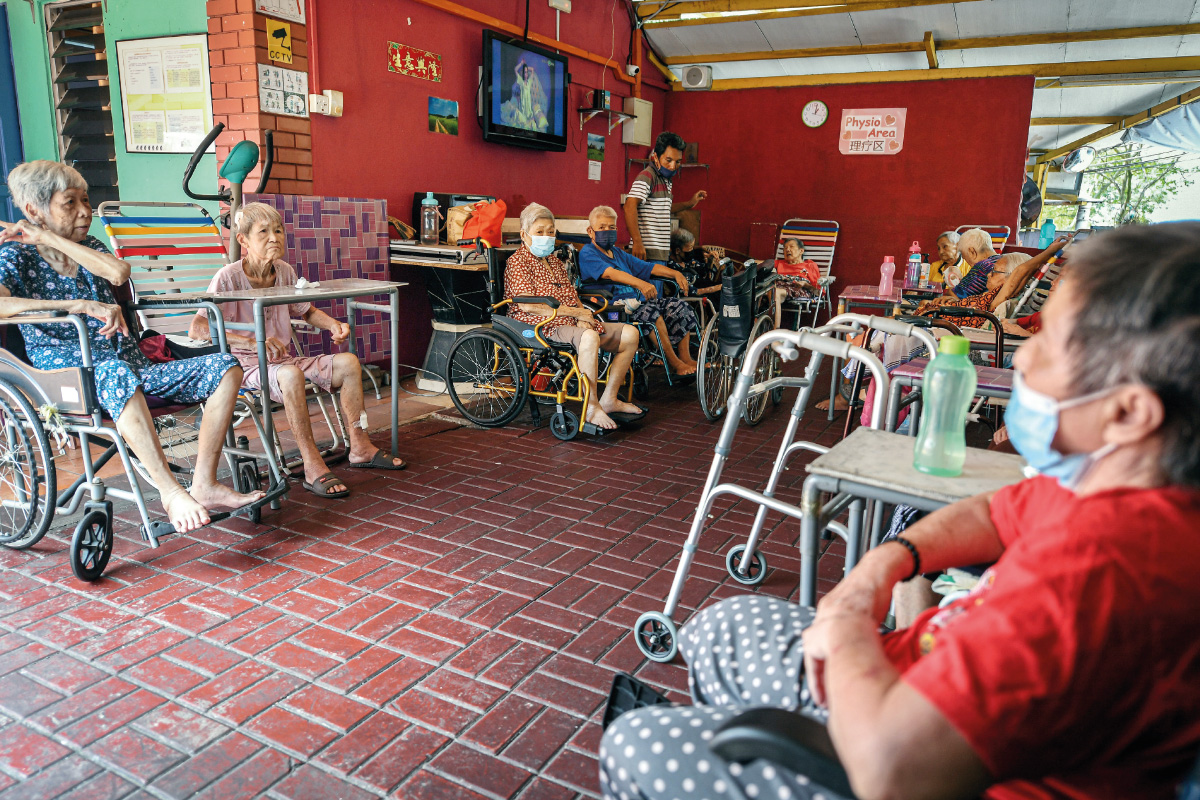
Aged care operators say Malaysia is not prepared for an ageing population, despite projections that the number of elderly will triple by 2040. The main problems are slow and complicated licensing processes, a lack of reliable data, manpower shortages and policy inconsistencies.
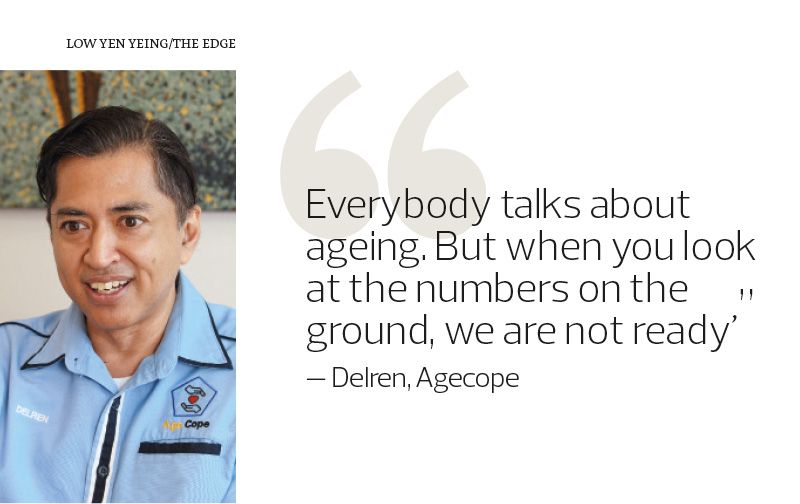
“Everybody talks about ageing. But when you look at the numbers on the ground, we are not ready,” Association of Residential Aged Care Operators of Malaysia (Agecope) president Delren Douglas tells City & Country in an interview.
Registered as a national association on Sept 4, 2018, Agecope comprises professional practitioners working in the aged care health industry. Its mission is to improve the standard of care for the elderly by collaborating with the related ministries and agencies to bring about positive changes in the industry. As at end-May, it had more than 380 members, from more than 400 centres representing 12,000 beds. It is also one of the eight founding members of the Malaysian Coalition on Ageing.
Delren says when Agecope was formed, there were 381 licensed age care centres nationwide. Today, there are about 450, even though the actual number of operating centres is estimated to exceed 2,000.
“That is an increase of just 70 centres in eight years. At the same time, the government’s own projections show the elderly population is going to triple [by 2040]. The growth in licensed aged care centres is nowhere near in tandem,” he points out.
Delren says of greater concern is the more than 2,000 centres operating nationwide without a licence. He attributes this situation to complex procedures involving multiple departments, high architect fees, strict approval requirements, zoning restrictions and mandatory reapplications every five years instead of automatic renewal.
“They are not necessarily illegal in the conventional sense. Many hold business registrations or are NGOs (non-governmental organisations) registered with the Registrar of Societies. What they lack is the final licence under the Care Centres Act 1993. Why? Because obtaining and renewing that licence is [like navigating] a labyrinth,” he says.
To be licensed, a care operator must secure approvals from local town planners, the Fire and Rescue Department (Bomba), the local council and the Welfare Department under the Ministry of Women, Family and Community Development (KPWKM).
“Miss one step and the application stalls. It is not just the first application but every five years, because instead of automatic renewal, you must submit a completely new application every five years. And the whole process can take 12 to 18 months. On top of that, the architect certification fees to apply for the licence alone can range from RM6,000 in the smaller towns to RM20,000 to RM30,000 in urban areas. For many operators, especially NGOs serving the lower-income B40 segment, it is financially untenable,” he says.
Compounding the issue is a requirement by many local councils for neighbours’ approval to set up or continue operating an aged care centre. In some areas, 100% of immediate neighbours must give their consent before a centre can submit a licence application.
“When you renew your licence after five years, your new neighbours may object even if the centre has been there all along. And if one disagrees, you may not get your licence renewed again. Some unreasonable reasons for objection that I have encountered include [how an aged care centre] will affect the property prices in the area. And sadly, such a reason is acceptable to them [authorities]and they will not interfere. The operator has to convince the neighbours in order to get the licence approved,” he explains.
While the number of fully licensed, privately owned age care centres is growing slowly, the federal government itself runs only 11 elderly care institutions nationwide. Together, they can accommodate about 1,600 residents, but the demand is much higher and rising. Delren believes this is why most of the unlicensed centres continue to operate.
“Being unlicensed and unregistered comes with a few risks — such as [not having access to] government-initiated welfare benefits or incentives. For example, during the [Covid-19] pandemic, some of the unlicensed centres did not manage to receive help from the government; some weren’t even included in the national vaccination programme list.”
To address the problem, Delren recommends a two-year nationwide amnesty to identify all existing care centres. This will help in the collection of industry data, understanding operational barriers and working towards proper licensing.
“Let them come out [to register themselves with the association or the government] so that the government will know how many there really are, why they are stuck [in obtaining the full licence]. And from there, we can work backwards to help them and regulate the industry. The first step towards reform is always data collection,” Delren stresses.
He adds that the data collected will help the government plan more effectively, particularly in industry regulation and developing a national aged care blueprint. This includes addressing pressing industry challenges such as caregiver capacity and broader manpower strategies.
Missing workforce
Currently, Agecope’s members collectively care for about 12,000 elderly residents but are facing a shortage of 1,400 caregivers.
“Generally, Malaysians are reluctant to work in caregiving due to perceptions of low pay, difficult work and limited career prospects. Many centres rely on foreign workers, who are often employed illegally, due to the absence of a formal foreign caregiver category,” Delren says.
“It is also due to there being no mandatory national standard for caregiver training and regulation in the country. People cannot see a future working as a caregiver. They would rather be a nurse because it is a professional job, under a [national] system, regulated and has better career prospects.”
Malaysian Association for Social Care Professionals and Homes (Masoc Care) secretary general Dr Melody Ang points out that the country’s biggest challenge in moving the aged care industry forward is not infrastructure but manpower.
“Malaysia has good hospitals. Private nursing homes and retirement residences are also mushrooming due to the high demand for aged care centres. What is dragging the industry [back] is the lack of professionally trained caregivers. Many centres and families rely on untrained domestic helpers or nurses, but it is not like all centres can afford hiring nurses,” Ang says.
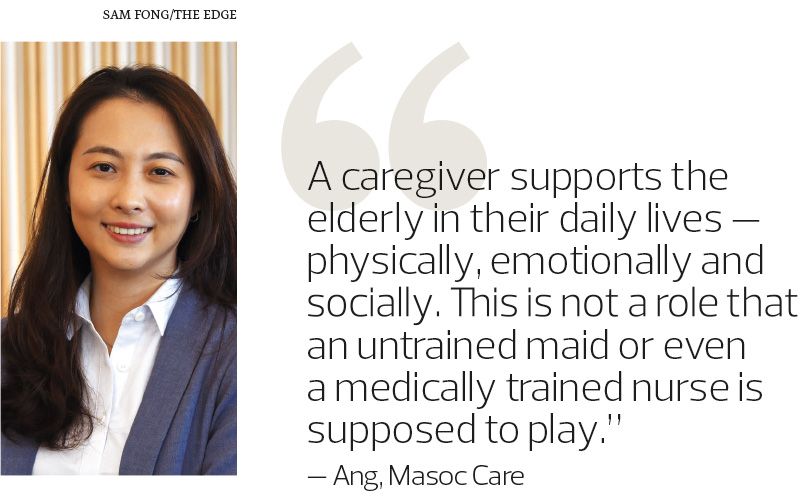
“In this case, the caregiver plays a very different role. A caregiver supports the elderly in their daily lives — physically, emotionally and socially. This is not a role that an untrained maid or even a medically trained nurse is supposed to play.”
More importantly, she highlights that without proper training, care often becomes purely task-based: feeding, bathing or assisting with mobility. This approach overlooks the emotional and psychological needs of elderly individuals, contributing to a faster decline in health and well-being.
“When people don’t have the right philosophy of care, they treat the elderly as objects. They focus only on eating, toileting or walking, but they forget that the person is still a human being … Caregiving can be physically and emotionally exhausting. That is why Masoc Care’s main focus is on caring for the caregivers because they are playing a crucial role.”
Humanising senior care
Masoc Care was founded in 2018 by a group of professionals trained in the senior living ecosystem in super aged nations like Japan and the UK. It strives to help Malaysia develop a localised syllabus of care methods and train skilled caregivers based on its care philosophy known as Kaigo, with the aim of transforming the senior care industry through training, awareness and international collaboration.
“Japan is currently the oldest society in the world, with nearly 30% of its population aged 65 and above. Over the decades, it has developed a sophisticated care system that focuses not only on medical treatment but also on independence and dignity. Central to this approach is the philosophy known as Kaigo,” Ang says.
Kaigo, she explains, is about humanising senior care. The core of the philosophy is to bring back the independence and dignity of the elderly as they age.
“In many Asian cultures, caring for elderly parents often means doing everything for them, but in Japan, independence is encouraged even in very old age. And Kaigo means, rather than doing everything for an older person, caregivers are trained to empower them to remain as independent as possible. This philosophy is central to our association’s training programmes.”
She highlights that the philosophy not only addresses the root problem of manpower shortage in ageing countries including Malaysia but also aims to change the mindset of the elderly and public perspective on caregivers, encouraging more people to join the industry.
“You will see an 80-year-old Japanese auntie opening the door herself and scolding you if you try to help,” Ang says with a laugh. “That independence comes from society respecting the dignity of the elderly. However, in our culture, filial piety often means doing everything for the elderly. But actually, that can remove their independence and put all the burden on the caregiver.
“In many cases, the caregiver is not a hired [person] but a family member. Consequently, professional training should not be limited to those entering the industry; it is essential for everyone, particularly the younger generation … A core message of Masoc Care is that professional caregiving skills are more than just a means of livelihood — they are a vital life skill for supporting loved ones in times of need, much like first aid, CPR or AED training.”
Ang says a strategic paradigm shift is required to address the manpower shortage in the aged care sector. Training must extend beyond those pursuing a professional career to include anyone with elderly family members at home. This broader approach is crucial to achieving the goal of ageing in place — a retirement concept the association is actively promoting to ensure seniors can age with dignity and safety within their own homes.


Making ageing in place a reality
While nursing homes and aged care centres are mushrooming in response to surging demand, Masoc Care is looking beyond traditional facility-based solutions. It is engaging with key stakeholders to advocate for a structural rethink of how the local housing market can better support an ageing population.
Traditional retirement homes often require elderly individuals to relocate once their health declines, which can cause emotional distress and social isolation.
“Relocation trauma is a very serious issue. When someone has to leave their home and move somewhere else because they need care, it can accelerate their decline,” Ang shares.
“Studies show that most Malaysians would rather retire at home and in the community that they are familiar with. The desire to stay home is there, but it is often sabotaged by structural limitations, ranging from a shortage of professional caregivers to restrictive home designs and space constraints. In many cases, these factors make ageing at home an unrealistic dream.”
To address this, the association is promoting “Care-Return” or Careturn Property. The idea is to integrate caregiving systems directly into new residential developments, allowing residents to age in place within familiar communities.
Instead of building isolated retirement villages, the model encourages mixed-age neighbourhoods where residents support one another and can access professional caregivers when needed. The project will be supported by certified Kaigo managers and caregivers.
Ang says care services will be organised through a dedicated pool of Kaigo managers and caregivers assigned to the development. “Local youths will be identified and trained in advance to build a stable workforce that can support residents as they age. By planning the workforce ahead of time, care services can be delivered within the community, allowing residents to remain in their own homes rather than relocating to external care facilities.
“We have been in talks with some developers, and some are showing interest because it widens their market without needing to change their business models. We should be able to see the launch of the first Careturn Property within the next 12 to 16 months,” she notes.
The concepts of “everyone a caregiver” and “ageing in place” are not new, and have been proven effective in super aged nations such as Japan. Agecope’s Delren believes these will help in addressing the manpower shortage and improve the perception of caregivers.
“At current policy level, uncertainty adds to the paralysis. The Private Aged Healthcare Facilities and Services Act 2018 (PAHFAS) proposed shifting care centres under the Ministry of Health from the KPWKM, effectively upgrading them to nursing home standards. On paper, that sounds progressive. But in practice, the sector is not ready,” he says.
He explains that under the Act, one nurse is required for every four residents. Unfortunately, Malaysia doesn’t even have enough nurses for hospitals. “Who is going to bear that cost [of upgrading and manpower]? NGOs cannot afford that. And the Act remains frozen until today. The industry is stuck in limbo due to this.”
‘Malaysia needs to put its house in order first’

Rethinking ageing plan
Licensing, manpower shortage and regulatory uncertainty aside, Malaysia still faces significant barriers to building a comprehensive, sustainable elder care system.
“Financial pressures are rising. Care centres serving lower-income groups are subject to SST (sales and service tax) because they are classified under ‘wellness’ rather than ‘healthcare’, the same category for massage parlours and karaoke [outlets]. In contrast, high-end nursing homes and private hospitals are exempt. How can that be right?” Delren asks.
The SST increases costs for B40 families. NGOs are especially strained due to reduced donations and low funding, he adds.
To address long-term sustainability, Agecope proposes creating a compulsory elderly care fund for working Malaysians and developing trust-based financial mechanisms to support elderly care costs.

“Start a compulsory fund or insurance scheme for today’s working young people — maybe RM9 a month — to pay for their own elderly care in the future. The fact is, the trend of people not marrying or not having children is rising. They will need care too when they are old but may not have enough funds if nothing is done now,” Delren says.
The idea, he adds, is similar to long-term care insurance schemes in countries such as Japan and Germany, where workers contribute during their working years to help cover the cost of care in old age.
Delren also highlights that the rapid depletion of Employees Provident Fund (EPF) savings is becoming more common among members. To mitigate this, he proposes a structured mechanism to channel personal assets into regulated trust funds designed to generate long-term care yields. “Many retirees exhaust their EPF savings within just a few years. We should consider a model where a portion of one’s assets is placed into a regulated trust to fund aged care through recurring returns.”
He cites the example of a retiree liquidating a property valued at RM300,000. By placing the proceeds into a trust fund yielding a targeted annual return of 6% to 7%, the individual could generate sufficient passive income to cover care costs without eroding the principal.
“However, strict oversight is non-negotiable. Such schemes must be regulated by the Securities Commission or Bank Negara Malaysia to prevent ‘fly-by-night’ scams. The resulting income should then flow directly to fully licensed and government-regulated care centres,” he says.
Once the sustainable aged care system has been established, Delren envisions a future where Malaysia will evolve into a premier hub for silver tourism by leveraging a well-regulated ecosystem and a trained workforce.

“With a robust, government-regulated framework, Malaysia can become a global destination for elderly care. We shouldn’t be exporting caregivers; we should be importing retirees. Our neighbour, Thailand, is starting [to do] that already.”
To bridge the gap in domestic equity, Agecope proposes a “three-for-one” cross-subsidy model. Under this initiative, the association aims to attract foreign retirees whose market-rate fees would subsidise local care.
“For every three international residents we bring in, our members commit to providing care for one B40 Malaysian free of charge. The model is a win-win as it reduces government queues, upgrades centres and brings an inflow of funds, and cross-subsidises local care,” he says. “But before we talk about being a hub, our house must be in order. Malaysia said during the Asean Summit that it wants to lead in caregiving, but if your house is not in order, how can you lead?”
Overall, the sector urgently needs regulatory reform, coordinated national leadership, proper data collection, workforce development and financial restructuring. Without decisive action, Malaysia risks facing a rapidly ageing population with insufficient, unregulated and unevenly distributed care services.
“We are far behind [in preparing to be an aged nation] but it is not too late to catch up. Everybody says they are aware, but awareness is not action. We know the problems. We have given the solutions. Now someone must decide to move,” Delren states.
Save by subscribing to us for your print and/or digital copy.
P/S: The Edge is also available on Apple's App Store and Android's Google Play.