

This article first appeared in The Edge Malaysia Weekly on May 18, 2026 - May 24, 2026
With the hot and humid weather in Malaysia — exacerbated by the ongoing heatwave and climate change — students are suffering in the sweltering heat of classrooms that are not equipped with air conditioners nor designed to handle the heat.
That is a challenge that a recent Malaysia Green Building Council (malaysiaGBC) study on 10 schools in Kuala Lumpur aims to address, which was supported by the Danish Trade Council under the Ministry of Foreign Affairs of Denmark and the UNDP GEF Small Grants Programme, and carried out in collaboration with the Ministry of Education, Ministry of Natural Resources and Environmental Sustainability and the Kuala Lumpur Federal Territory Education Department.
The initiative is part of malaysiaGBC’s National Green Schools Programme, Phase 1, launched last month, which aims to establish a scaleable model for low-cost and zero-carbon school retrofits.
Not all of the schools were oriented in optimal directions to get low-angle sun during mornings and afternoons, which means some schools experience more heat than others. Consequently, many classrooms use curtains to block the sunlight streaming through the windows, which stops natural ventilation and worsens the heat.
“We found that the ceiling fans were inadequate and couldn’t cover the whole classroom. If you use the highest speed, it becomes noisy and affects teaching … We also found that the schools close the windows at night, so they don’t benefit from having ventilated classrooms, because cool night air can lower temperature in the classroom for free,” says IEN Consultants Sdn Bhd managing director Gregers Reimann, who conducted the study.

The immediate solution that many people may think of is to install air conditioners in the classroom. But this can significantly increase the school’s energy bills, even if it is fitted with solar panels.
Ron Pickering, business director for Malaysia, Indonesia and ANZ at Rockwool Malaysia Sdn Bhd, which contributed technical expertise for the initiative, shares his experience of helping a local school raise funds to settle hefty electricity bills after it equipped classrooms with air conditioners.
“They only get a RM5,000 subsidy from the government for their electricity bills, which exceeded RM10,000,” says Pickering, resulting in a huge financial burden for the school.
Meanwhile, the company, which specialises in insulation, helped some schools in Melaka install insulation on the ceiling, thus preventing heat transfer from the roof into classrooms.
“Rockwool insulated [the roof of] a couple of schools in Melaka, and the teachers were so thankful because they said the students can now study. It was too hot for them before this, and they had to get out of the classroom. Everybody had to go to the lower floor or the hall to study because it was too hot on the top floor,” says Pickering.

This is one of the core messages of the initiative, which is to highlight that Malaysian schools can be retrofitted to be more climate adaptive and comfortable for students through passive methods that could be more affordable.
“Many Malaysian schools are already designed around natural ventilation, which is inherently low-carbon and well suited to the local climate. The opportunity is to build on this foundation by improving comfort conditions — through better air movement, shading, insulation and overall building performance — without needing to retrofit schools into fully air-conditioned spaces,” says Mitch Gelber, CEO of malaysiaGBC.
“This is important, as most schools were not originally designed for full air conditioning, which would require more complex, costly and energy-intensive interventions.”
Several schools in Malaysia have also been designed based on earlier standards and operating conditions. With rising temperatures and more frequent extreme weather events, there is an opportunity to adapt and optimise these environments through practical and low-cost interventions, adds Gelber.
“The findings show that relatively modest adjustments can significantly improve comfort levels and learning outcomes while also reducing energy demand, making this a highly actionable opportunity.”

Focus on passive strategies first
The priority retrofit interventions identified by the study include the installation of ceiling insulation and external shading systems, which reduces heat gain through roofs and direct sunlight. High-performance ceiling fans can also be installed to improve airflow, and electric lighting systems upgraded to optimise daylight and reduce glare.
Technologies like solar panels, which are more costly, can be added after a school building is retrofitted to become more energy-efficient, thus reducing overall energy consumption.
These interventions will improve the environmental performance of schools, and prepare Malaysia for worsening climate change impacts that are expected.
“In 2026, environmental performance is no longer the exclusive domain of high-end or commercial developments. We have to get to the grassroots. As climate change intensifies, we’re feeling the heat intensity rise … Malaysia’s public schools represent one of the most extensive and impactful buildings in the country, that’s why we want to participate in shaping the daily learning environment for millions of students,” says Serina Hijjas, president of malaysiaGBC and principal director of the architecture firm Hijjas Architects + Planners.
“By prioritising the conditions that matter the most — comfort, well-being, ventilation and visual quality — the programme establishes a clear, scaleable pathway towards low-impact, high-performance, low-carbon and climate resilient schools.”
A CarbonScore assessment was conducted on the schools to establish a baseline of building-related emissions, highlighting operational energy use from cooling and lighting as a key driver of emissions. The study findings are published in a report that is available on malaysiaGBC’s website.
For the next phase of the initiative, the council hopes to retrofit a school based on the findings of the study, and look for more partners to make this happen.
“We want to really move forward and show the public that we can improve the learning environment in schools with these strategies, and eventually look at how we can work with the authorities to come up with a new blueprint for future schools,” says Logen Chetty, senior regional manager at Rockwool Malaysia.
For this to happen, there must be collaboration with all stakeholders, including the government and the private sector, he adds.
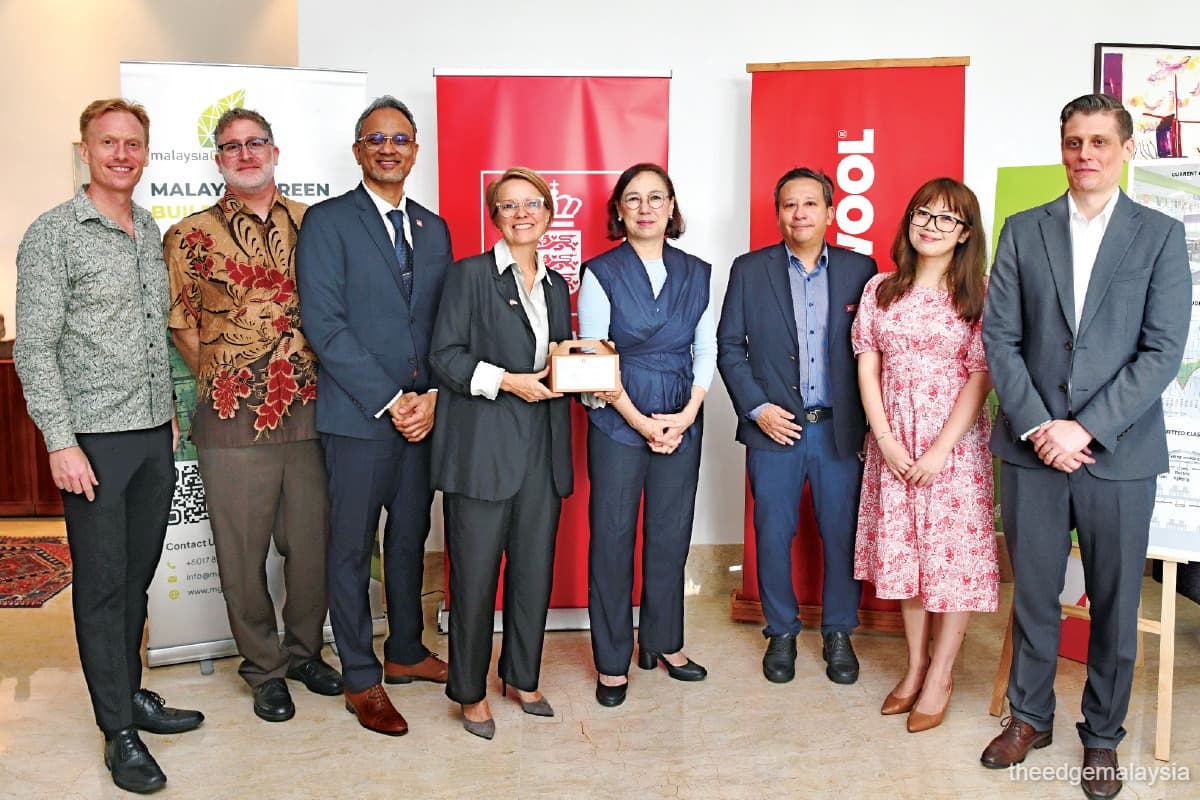
Rockwool is a founding member of the Danish Embassy’s Green Transition Alliance (GTA), which brings together Danish companies across sectors such as building materials, energy and sustainable technologies, and works with local partners to promote Denmark as Malaysia’s green transition partner. Earlier last month, malaysiaGBC became the GTA’s first knowledge partner.
Save by subscribing to us for your print and/or digital copy.
P/S: The Edge is also available on Apple's App Store and Android's Google Play.