

This article first appeared in The Edge Malaysia Weekly on May 4, 2026 - May 10, 2026
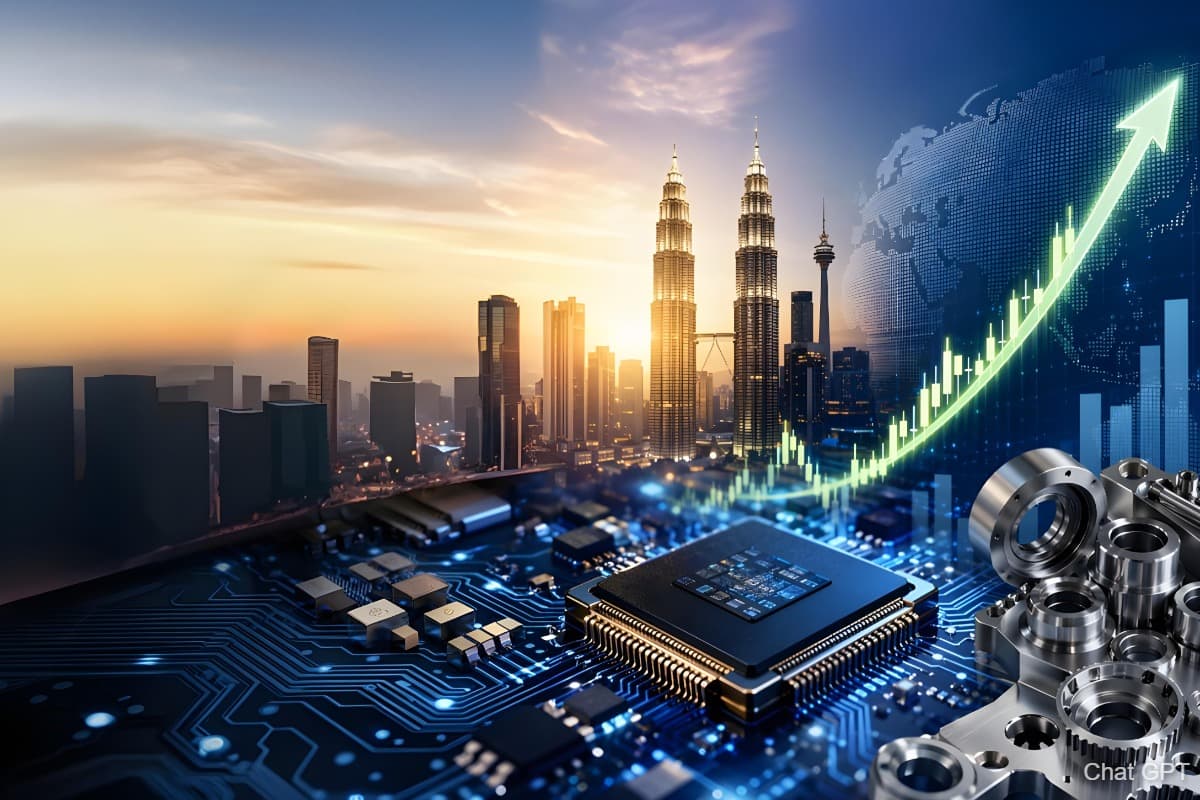
BURSA Malaysia’s semiconductor stocks have staged a sharp comeback, with investors piling back into the technology sector, which had spent much of the year lagging the broader market.
Over the past one month, several chip-related counters, including industry bellwethers Inari Amertron Bhd (KL:INARI), Malaysian Pacific Industries Bhd (KL:MPI), Unisem (M) Bhd (KL:UNISEM) and ViTrox Corp Bhd (KL:VITROX) have posted strong double-digit gains, lifting their year-to-date performance and reviving interest in one of the exchange’s most closely watched export sectors.
The rebound comes after a difficult start to 2026, when many technology-related companies were weighed down by a stronger ringgit and weaker US dollar, a combination that clouded earnings prospects for companies that bill largely in the greenback. The sector had also failed to fully participate in the earlier global rally driven by memory chip shortages, leaving valuations comparatively subdued.
Now, investors appear to be returning on expectations that the next leg of the semiconductor cycle may be broader and more durable. Market watchers say order recovery first emerged among front-end players involved in wafer fabrication equipment and higher-end manufacturing processes, before gradually filtering through to back-end names engaged in testing, packaging and automation solutions.

The renewed optimism mirrors moves on Wall Street, where global semiconductor stocks such as Nvidia Corp, Advanced Micro Devices Inc (AMD) and Broadcom Inc have rallied in recent weeks on sustained spending tied to artificial intelligence (AI) data centres, firmer pricing environment, and an improving analogue market.
Better-than-expected results from US chipmaker Intel Corp and Taiwanese pure-play foundry Taiwan Semiconductor Manufacturing Co Ltd (TSMC) have also added to the positive sentiment.
For Malaysia, the key question is whether the current rally is merely sentiment-driven or the start of a more meaningful rerating.
Unisem chairman and group managing director John Chia Sin Tet says the semiconductor upward cycle in Malaysia “has barely started”.
“I don’t think the OSAT (outsourced semiconductor assembly and test) stocks have gone up a lot. If anything, the OSATs were beaten down heavily in the early part of the year because of the stronger ringgit and weaker US dollar. Investors were worried that the OSATs would get affected,” Chia tells The Edge.
“True enough, most of us got hit in the first quarter. It was only in the past month that we [were] recovering. Yes, if we look at other parts of the world, many tech stocks have gone up a lot, in the US, China, Hong Kong, Taiwan and South Korea. Now, Malaysian tech stocks are just catching up.”
OSATs refers to companies that provide services such as chip assembly, packaging and testing to multinational corporations. In Malaysia, Inari, MPI and Unisem are widely regarded as the Big Three in the OSAT segment.
“What we are seeing now is that AI and data centre infrastructure is gaining traction, which would revolutionise what we do and what we use in the years ahead,” Chia says.
“The AI boom will be far greater than the previous up cycles that we have seen in the PC, smartphone, 5G and Internet of Things eras.
“The front-end and back-end activities work quite closely together. The time lag is not very long. You can’t be producing wafers without the back-end supports.”
Stock-chasing carries valuation risk
While the US rally driven by Nvidia and the hyperscalers provided the initial spark, BIMB Securities Sdn Bhd director of research Mohd Redza Abdul Rahman warns that the market is now seeing a “fundamental decoupling”.
“The buying interest in names like ViTrox and Inari is increasingly tied to the ‘back-end revolution’. As AI chips become more complex, the demand for high-precision automated test equipment (ATE) and sophisticated vision inspection is no longer cyclical — it is structural, where local buying is driven by earnings validation,” he explains.
Redza acknowledges that the concern earlier this year was that a strengthening ringgit — now stabilising at the RM3.94-to-RM3.96 level — would erode the competitive edge of exporters.
“However, the AI boom has fundamentally altered the margin math for local players. AI-related components and testing services carry significantly higher average selling prices (ASPs). This ‘high-value mix’ acts as a natural hedge against the appreciation of the ringgit,” he says.
Nevertheless, Redza cautions that investors must distinguish between pure-play AI beneficiaries and companies still anchored to legacy segments — such as low-end consumer tech or automotive products — where margins remain thin, reliant on high volumes and sensitive to currency movements.
“After a sharp rally, we are moving from the ‘anticipation phase’ to the ‘harvest phase’. Momentum chasing at these levels carries valuation risk; so, focus on the selective, fundamental-first approach,” he advises.
AmInvestment Bank Bhd head of equity research Paul Yap frames the recent rally as “risk appetite first, AI narrative second”. He points out that local funds had earlier raised cash levels amid concerns over the US-Iran conflict.
“Once ceasefire talks emerged, that cash quickly became buying power, especially as funds looked to recover performance. The US semiconductor rally also helped reset sentiment and gave investors a reason to revisit Malaysian tech,” says Yap.
Beyond direct AI demand, he adds, there is also a broader supply chain localisation angle.
“Front-end semiconductor companies are diversifying and localising more work, which creates a waterfall effect for Malaysia’s precision engineering companies,” he says.
Yap cautions, however, that headwinds have not disappeared, as a stronger ringgit against the US dollar continues to weigh on export-oriented players — particularly those with US dollar revenues and ringgit-denominated costs.
“Some companies are already renegotiating with customers to share the currency impact, but the ability to fully pass on cost will depend on demand-supply dynamics. Companies with stronger AI-related demand, better order visibility or more specialised capabilities will have more pricing power and a better chance of defending margins,” he notes.
The research house has been advising clients to trade the rally, as near-term momentum could still be sustained, given improved risk appetite and excess liquidity seeking deployment.
“Investors should be mindful, however, that this rally is still largely liquidity-driven. For long-term investors, we would not advocate chasing highs. The AI cycle will not benefit all players equally and, once liquidity fades, fundamentals will matter again,” Yap predicts.

ViTrox and Inari
With a market capitalisation of RM10.4 billion and RM7.8 billion respectively, ViTrox and Inari are currently the most valuable tech companies on Bursa Malaysia. Within a month, ViTrox’s share price has climbed 32%, whereas Inari’s has surged 61%.
Malacca Securities research head Loui Low Ley Yee highlights that the renewed momentum in these two firms is “meaningfully anchored” in AI-specific demand, rather than purely imported sentiment from the US rally.
“ViTrox has been positioning for this wave since at least 2024. As a leader in AI-driven machine vision, the company has integrated AI into nearly 80% of its product line-up, applying deep learning algorithms across its inspection systems to automate defect detection with high precision,” he observes.
Notably, the Penang-based ATE firm’s strategic intent was surprisingly unveiled at Computex 2024, when Nvidia CEO Jensen Huang featured ViTrox as a key partner in its “AI-driven factory” ecosystem — effectively confirming the company’s role in the supply chain for Nvidia’s Blackwell server racks, with its inspection machines indirectly serving hyperscalers such as Google, Microsoft Corp and Meta Platforms Inc.
For Inari, the AI angle is two-pronged, says Low. On the smartphone side, despite near-term weakness in radio frequency (RF) components, the upcoming device replacement cycle — accelerated by AI-enabled smartphones — is expected to drive demand for more complex RF modules.
On the datacom photonics front, Inari has expanded chip fabrication and assembly capacity at its P13 facility in Penang to meet rising demand for fibre-optic transceivers tied to AI data centre buildouts.
“While this segment currently represents 17% to 20% of group revenue, incremental growth is anticipated as AI-driven optical demand accelerates,” he says.
While the long-term case for technology remains intact, Low admits that the near-term caution is warranted after the recent run-up. Thus, waiting for a pullback to establish or add positions at better levels is a sensible approach.
“At the stock selection level, the key distinction is straightforward: Companies with direct AI infrastructure exposure deserve a premium valuation. Those whose AI narrative is primarily aspirational — still driven predominantly by smartphones and automotive cycles — warrant more scrutiny before chasing the rerating,” he advises.
Tradeview Capital Sdn Bhd chief investment officer Nixon Wong Gok Hey concurs that the AI linkage for testing and inspection players such as ViTrox is real, as increasingly complex AI chips require higher testing intensity, driving demand for advanced inspection systems.
He notes that Malaysia is part of the advanced semiconductor packaging chain but has yet to reach the cutting-edge scale of Taiwan and South Korea. As a result, share price movements are still largely driven by beta exposure to the global semiconductor rally — meaning they move largely in step with it — led by US optimism around Nvidia, AMD and Intel.
“These AI enthusiasms lift global tech valuations and attract fund flows into the sector,” he says.
Currency impact is more immediate
Wong adds that AI makes structural changes by raising the long-term demand floor and increasing chip complexity, which supports a higher capital expenditure (capex) cycle in testing and packaging, benefiting local companies.
It should be noted, however, that most local tech firms generate revenue in US dollars, meaning a weaker greenback could offset the positive impact of higher order values in ringgit terms.
“Currency impact is more immediate and mechanical compared to AI’s gradual and structural demand growth, which takes time to come through,” Wong says.
He adds that while AI provides a tailwind to sector earnings, near-term volatility may still arise among companies with legacy exposure to non-AI segments such as smartphones, consumer electronics and industrial products.
Wong admits that investors’ expectations have moved ahead of earnings, with the AI narrative already priced in before earnings are confirmed.
He advises investors to stay selective on stocks with higher exposure to advanced packaging and AI-related segments, especially those with strong order book visibility (higher book-to-bill ratios), which he says implies a greater ability to pass through costs or manage foreign exchange via margins.
Investors should then wait for earnings to validate the narrative. “Malaysian companies are still price takers of global trends; so, watch for US hyperscalers’ capex and inventory cycles,” he says, adding that he advocates more disciplined positioning by accumulating on pullbacks and focusing on quality names.
Vision Group managing director Chua Zhu Lian agrees that the ringgit headwind is “real and structural” rather than transient.
He notes that most companies bill in US dollars while their cost base is largely in ringgit, meaning every 1% appreciation of the local currency can compress gross margins by 30 to 50 basis points, depending on cost structure.
“AI does not neutralise that pressure, at least not for the broader OSAT pack,” Chua warns, as AI-related revenue remains small relative to overall earnings. He adds that revenue is still dominated by the smartphone, automotive, industrial and consumer electronics segments, each facing its own cyclical or structural challenges.
Chua points out that AI meaningfully alters the earnings trajectory mainly in the equipment and high-end packaging space, particularly for companies exposed to capex cycles rather than legacy end-markets.
“Capex cycles tend to be lumpier but also more pricing-power-driven, which is why ViTrox could expand margins even with a stronger ringgit,” he says.
In contrast, he notes that traditional OSAT players such as Unisem and MPI are benefiting partly from trade diversion as customers reroute orders away from China, and partly from global inventory normalisation, rather than a direct AI demand pull.
“Investors should be careful not to conflate the two drivers,” Chua cautions, adding that while local tech stocks often move in tandem with US semiconductor names such as Nvidia or TSMC, that reflects “sentiment beta, not earnings delivery”.
He stresses that the disconnect is evident in the numbers, noting that aggregate core earnings across the listed coverage universe grew only modestly through 2025, even as the sector index rebounded sharply from recent lows.
All in all, Chua says, his approach is to remain selective rather than chase stocks.
Staying selective
TA Securities research manager and tech analyst Tony Chan Mun Chun recommends staying selective on fundamentally stronger names with meaningful exposure to AI-driven demand.
“AI represents a multi-year growth theme that will remain a key driver of the global semiconductor industry,” he says, adding that investors should closely monitor upcoming quarterly results, as any spillover from AI demand should translate into revenue and earnings growth. He highlights order book trends and shifts in product mix towards AI-related segments as key indicators to watch.
Chan notes that while the US technology market has rallied strongly over the past two years, the local technology index remains relatively subdued. As such, he believes the recent uptick is driven more by spillover from AI-related demand than by broad-based optimism from the US semiconductor rally.
Nevertheless, he acknowledges that currency and material costs remain the key challenges for the sector.
“The spillover from AI-related demand is unlikely to materially alter the overall earnings outlook for local listed players, as only a limited number of companies — such as ViTrox, Frontken Corp Bhd (KL:FRONTKN) and Coraza Integrated Technology Bhd (KL:CORAZA) — have meaningful exposure to AI-driven demand,” he says.
In general, says Chan, most local players continue to rely heavily on the legacy consumer, industrial and automotive segments, with limited exposure to higher-value AI-related products.
Interestingly, SEMICON Southeast Asia 2026 will return to Malaysia after last year’s edition in Singapore, with the industry event set to take place from May 5 to 7 at the Malaysia International Trade and Exhibition Centre in Kuala Lumpur.
As regional chipmakers, suppliers and investors gather, the focus will be on whether recent optimism in the sector is backed by firmer orders, fresh investments and clearer signals of the next upward cycle.
Save by subscribing to us for your print and/or digital copy.
P/S: The Edge is also available on Apple's App Store and Android's Google Play.