

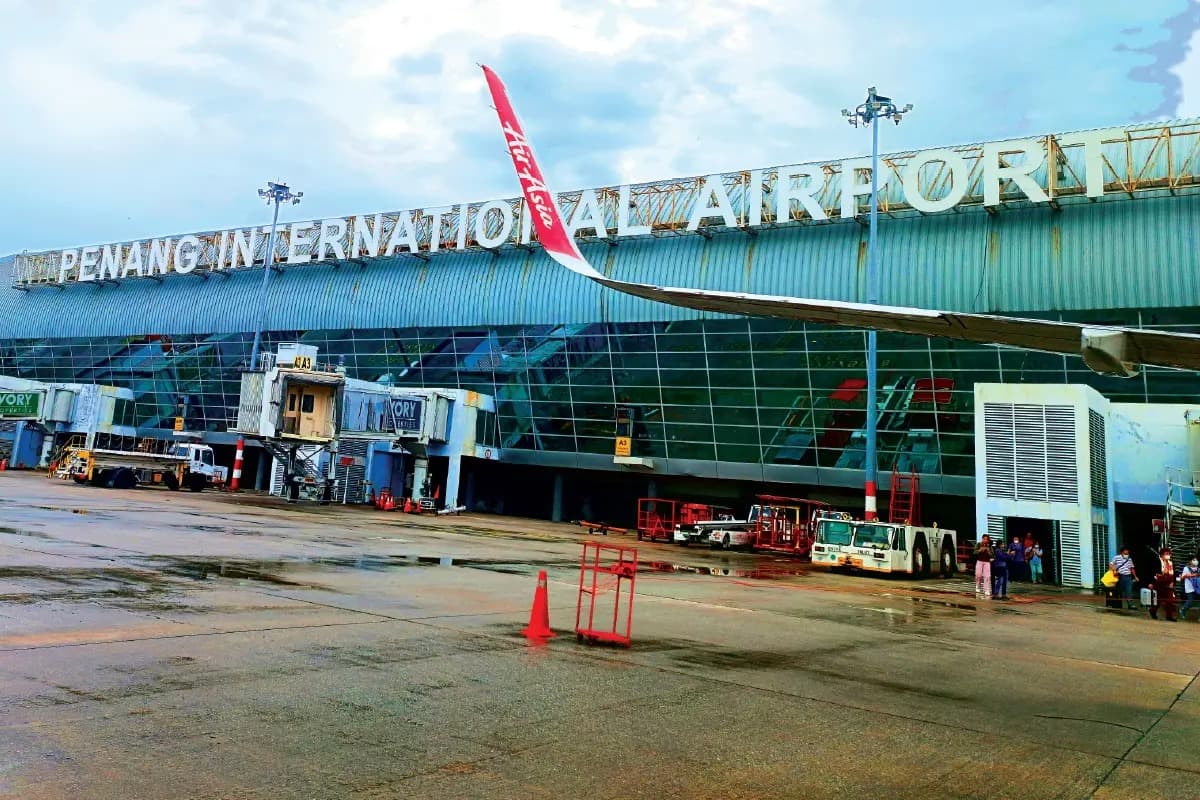
GEORGE TOWN (May 7): The Penang International Airport is expected to handle 5% more air cargo in 2026, according to the Penang Freight Forwarders & Logistics Association (PFFLA), despite higher oil prices and global tensions.
Its honorary secretary general, Ali Ahmad, told The Edge demand from the electronics and electrical industry is strong. About 70% of June’s cargo space has already been booked, and cargo performance in the first quarter was better than in the same period last year.
The airport is an important cargo hub, handling about 70% of Malaysia’s air cargo because many multinational and semiconductor companies operate in Penang. Penang is home to global chip giants Intel and AMD, as well as other semiconductor technology leaders such as Broadcom and Infineon Technologies.
PFFLA forecasts air cargo volume to rise 5% to 165,184 tonnes in 2026, up from 157,308 tonnes in 2025.
“Despite the tariff issue and geopolitical tensions, the air cargo traffic at the Penang International Airport improved by 19.58% in 2025 compared with 126,511 tons in 2024,” Ali said.
PFFLA’s projection outpaces IATA’s Global Outlook for Air Transport forecast that global air cargo traffic would increase by 2.6% in 2026.
Ali said fuel surcharges are reviewed every two weeks and have not changed since April. However, they are 5% to 10% higher compared to a year ago.
Jet fuel price for the week ended May 1, 2026 was US$181.22, about 101.3% higher than a year earlier.
Pentamaster Corp Bhd (KL:PENTA) expects higher shipments of its semiconductor test and automation equipment in 2026, with volumes in the second, third, and fourth quarters projected to be 5% to 10% higher than in the same periods previously.
The company plans to air-ship 200kg of equipment in the second quarter and another 500kg in the second half of 2026. In the first quarter, it already shipped 220kg.
A 2025 KPMG and Global Semiconductor Alliance survey found that 93% of industry leaders expect revenue growth in 2026. However, companies remain cautious due to risks such as trade tariffs, geopolitical uncertainty, and potential energy shortages for advanced chip manufacturing.