

This article first appeared in The Edge Malaysia Weekly on May 4, 2026 - May 10, 2026
IN the geopolitical whirlwind surrounding the tightly controlled rare earth elements (REEs) industry, Singapore-listed Southern Alliance Mining Ltd has established its presence, following a related-party acquisition of a profitable mining operation in Perak last year.
While Malaysia is still seeking a pathway to develop its REE sector, Southern Alliance Mining — the only licensed raw REE exporter in the country today and one of just three listed REE producers outside China — has already outlined plans to expand its footprint in REE mining and potentially move further up the value chain.
The group’s next acquisition target — a company with rights to a potential REE mining project in Labis, Johor — is eyeing a pilot with the Forest Research Institute Malaysia (FRIM) to explore REE extraction in a forest ecosystem, which could be the first of its kind in the country, where most of its REE deposits are located.
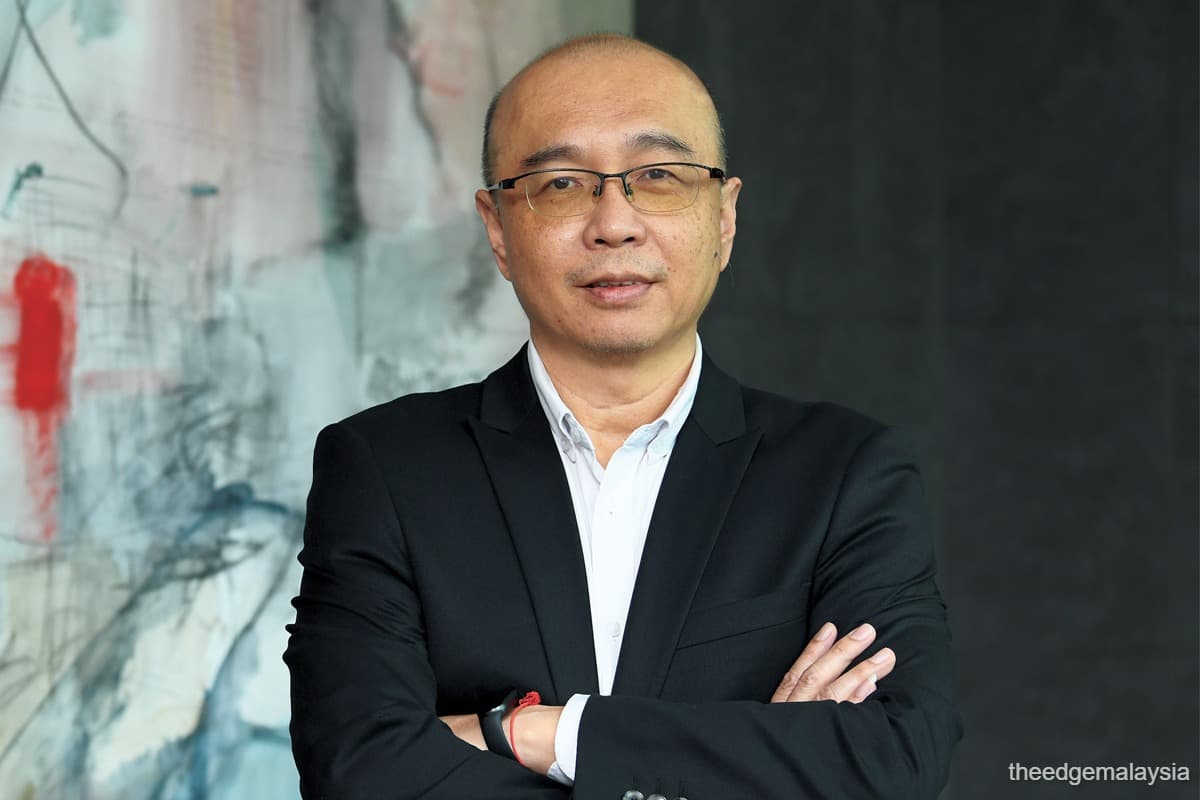
“We have completed exploration and are now at the EIA (environmental impact assessment) stage. This usually takes two to three years,” says chief operating officer Lim Wei Hung in an interview with The Edge. “What we will try to demonstrate is how to maintain the forest footprint as much as we can, building a series of measures that could ultimately become a standard for other operating mines.”
Southern Alliance Mining diversified from iron ore mining into REE in 2025, following the acquisition of a 40% stake in MCRE Resources Sdn Bhd for RM242.4 million in a cash-and-share deal.
The transaction is a related-party deal, with the vendors of the 40% stake including Southern Alliance Mining’s co-founder, controlling shareholder and managing director Datuk Seri Pek Kok Sam as well as a company linked to Lim. The purchase consideration was settled with RM23.4 million in cash and the issuance of new Southern Alliance Mining shares at 44.71 Singapore cents.
MCRE Resources Sdn Bhd operates an REE mine in a rubber plantation in Gerik. In the six months ended Jan 31, 2026 (1HFY2026), Southern Alliance Mining’s 40% equity interest in MCRE contributed RM7.82 million in profit after tax on revenue of RM63.07 million, translating into a net margin of 12%.
MCRE sells its rare earth carbonates entirely to a partner in China. These carbonates remain in a raw form and have yet to undergo further processing and separation into individual oxides, which are then used across sectors such as electrical and electronics, renewable energy, defence and automotive applications.
Southern Alliance Mining’s entry comes at a time when global demand for various REEs remains firm, amid tight supply controls by industry leader China, particularly for heavy REEs used in high-spec electronics and commanding significantly higher market prices.
Of the 22 companies outside China said to be in the REE sector, half are still in the exploration phase, while eight are developing their assets. Only three are operational — Southern Alliance Mining, Australia-listed Lynas Rare Earth Ltd (Lynas), and US-listed MP Materials Corp.
Compared with open-pit mines operated by its peers, Lim says Southern Alliance Mining’s in-situ leaching mine in Gerik — and Malaysia’s REE deposits in general — have a higher concentration of heavy REE, namely terbium and dysprosium (TbDy), used in high-temperature permanent magnets.

Other countries with similar deposits include Brazil, Vietnam, Myanmar and Laos, he explains.
As most deposits are located in forest reserves, however, a clearer policy framework is needed — hence the FRIM pilot project, which is expected to run until 2029, including the post-mining phase, according to earlier government announcements. Southern Alliance Mining could acquire 100% of the mining company Labis, in which Pek holds a 79% stake.
Lim sees the forest ecosystem mining pilot as a key hurdle for the Malaysian REE industry to overcome in establishing a domestic value chain. This is because the upstream segment remains the weakest link, and without a steady pipeline of deposits, downstream ambitions risk being undermined by a lack of feedstock, he says. “You can’t mine or process what you don’t have.”
Southern Alliance Mining is the only entity in Malaysia that has received federal government approval to export raw REE, with the arrangement beginning in 2022 as a pilot programme before transitioning into full-scale commercial operations.
Putrajaya has otherwise banned the export of raw REE but not refined material, while encouraging those seeking to tap local deposits to also invest in domestic refining capabilities, with the aim of capturing greater economic benefits and facilitating knowledge transfer.
The only player in Malaysia’s midstream segment is Lynas, which imports ore from Australia, refines it at a plant in Gebeng, Pahang, and exports refined products to customers in Japan. Lynas is also making efforts to refine heavier REEs and has signed a memorandum of understanding to source raw REEs from Kelantan, underscoring the quality of Malaysia’s deposits.
No other company in Malaysia has expanded into refining, as there is insufficient upstream production to justify the multibillion-dollar investment required for refining plants. Malaysia’s REE export ban has instead driven some parties to illegally mine and export REEs on a smaller scale.
“We put emphasis on value-add without ensuring the security of supply,” says Lim. “The right approach is to build confidence in your resource. The only way is to carry out exploration. [Southern Alliance Mining is] more ready to grow [along the value chain than the others].”
Diversified mining portfolio
In the upstream space, being an REE mining pioneer in Malaysia puts Southern Alliance Mining in a strong position. Its Gerik mine’s REE production capacity could double to 5,000 tonnes per year by end-2027, once the third of its nine land plots comes online, according to reports.
The miner is also exploring opportunities with a potential partner in Brazil, leveraging its mining capabilities while aiming to bring REE products to market more effectively.
“We are still young,” Lim says, when asked about the company’s plans. “We (MCRE) started REE mining in Malaysia in 2022 … Malaysia has what it takes to be a very important partner in the supply chain. What we need is to ensure we work within the constraints that we face.”
Southern Alliance Mining, which began operations as a mining subcontractor in 2001 and launched its own iron ore venture in 2008, has had two decades of first-hand experience in the mineral mining business. Managing director Pek owns a 58.91% direct stake in the firm, followed by non-independent non-executive director Datuk Teh Teck Lee (13.62%) and Datuk Lee Tek Mook (8.4%).

Thanks to the REE venture, Southern Alliance Mining’s 1HFY2026 net loss narrowed to RM4.2 million, or 0.77 sen per share, from RM10.28 million, or 2.1 sen per share, as revenue nearly doubled to RM137.3 million, from RM70.28 million in 1HFY2025.
The losses came from the group’s iron ore segment, which contributed 54% of group revenue, or RM74.24 million, but posted RM11.79 million in losses after tax.
Lim says Southern Alliance Mining is still stabilising its iron ore mining business, which has transitioned from open-pit to underground mining in Chaah, Johor. According to company data, iron ore production rose to one million tonnes in FY2025, with sales tripling year on year. The group also holds rights to explore five additional potential mines in the state.
“Chances are the iron ore mining operations will stabilise in the current calendar year,” says Lim.
The group is also working on expediting exploration activities in the next 18 months as well as completing EIA for its potential gold prospects in Mersing, Johor, although the exercise could take another three or four years, Lim explains.

As at April 29, shares in Southern Alliance Mining traded at 42.5 Singapore cents apiece, giving it a market capitalisation of S$270.62 million (RM835.35 million). Its net cash position as at end-January stood at RM97.17 million, with retained earnings of RM255.78 million, although it carries RM167.83 million in negative merger reserve on its equity.
Will Southern Alliance Mining turn around soon? Lim points to other factors at play, including the US-Iran conflict and its impact on oil prices, which is pushing up the price of explosives and chemicals used in Southern Alliance Mining’s underground and in-situ leaching mining processes.
REE prices are also highly volatile, and China’s domestic market controls have created a dual pricing structure — one for China and another for the rest of the world.
“REE is not about big volume — just a few hundred thousand tonnes per year, and that is [even] before [breaking it down] into the specific elements. Smaller volumes mean less liquidity, and prices will be volatile. Geopolitics will add further uncertainty to pricing,” Lim explains.
But with countries increasingly seeking to establish their own REE supply chain, coupled with sustained global demand in an increasingly digitalised and electrified world, the venture comes at the right time.
For Southern Alliance Mining, the strategy remains consistent across its portfolio: ensuring geological confidence in its mining exploration and production assets.
“Malaysia is at the intersection of ionic clay, which is suited for heavy rare earth,” Lim says. “You can see our margin on a per-tonne basis ... When we look at a mining company, we must look at the quality of the reserve. That determines how well they perform.”
Save by subscribing to us for your print and/or digital copy.
P/S: The Edge is also available on Apple's App Store and Android's Google Play.