

KUALA LUMPUR (May 5): Malaysia unveiled a fresh set of measures to ease cost pressures amid global supply disruptions that continue to affect domestic prices and businesses.
The government will expand its nationwide discounted goods programme, provide financial support to paddy farmers, and push for lower rental rates for small businesses operating in government-linked premises, Prime Minister Datuk Seri Anwar Ibrahim announced on Tuesday.
WATCH: Govt expands discounted goods programme
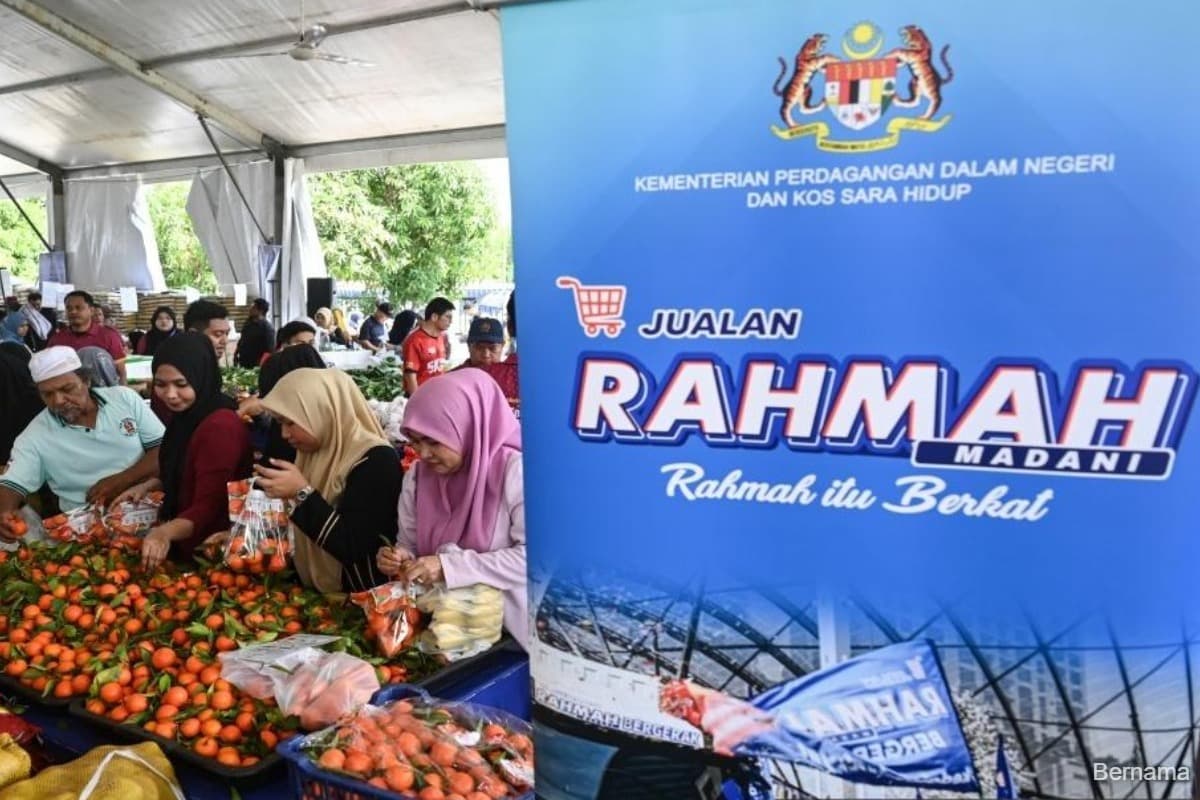
The Jualan Rahmah Madani programme — a subsidised sales initiative offering essential goods at below-market prices — will be scaled up to 30,000 events in 2026, from more than 25,000 held last year.
The programme will now be conducted weekly across all state constituencies, with a fixed schedule in order to improve accessibility, as well as extended to selected rural areas in addition to urban locations.
Anwar said the initiative aims to reduce the cost of essential goods by as much as 30% while focusing on small traders. “We do not want this to become a platform for big corporations, but rather an opportunity for small traders to sell goods at lower prices,” he said.
The government will also provide an upfront payment of RM200 to paddy farmers to support planting activities as many face higher costs for machinery and inputs. The initiative, which carries an initial fiscal cost of RM48 million, is expected to benefit about 240,000 registered farmers.
The initiative follows earlier increases in agricultural incentives, including higher subsidies for ploughing, at a time when the country faces weather-related disruptions such as prolonged dry spells in main farming regions.
WATCH: PM urges lower rents for small businesses
Anwar has instructed agencies such as Majlis Amanah Rakyat and UDA Holdings to reduce rental rates at their properties. He also called on state governments and local authorities to implement similar reductions starting this month, in a bid to ease financial burden on small traders and hawkers.
The latest measures come at a time when ongoing geopolitical tensions in the Middle East had disrupted the global supply chain. Now in its third month and showing no signs of easing, the conflict has raised prices of everything from oil to fertilisers.
Broader structural pressures remain even as the government continued to provide fuel subsidies costing an estimated additional RM5 billion per month, Anwar noted. He said the government will continue to review the situation and plan further measures through regular policy discussions.
“These steps may not fully resolve the challenges, but they are intended to reduce the immediate burden on households and small businesses,” he added.