

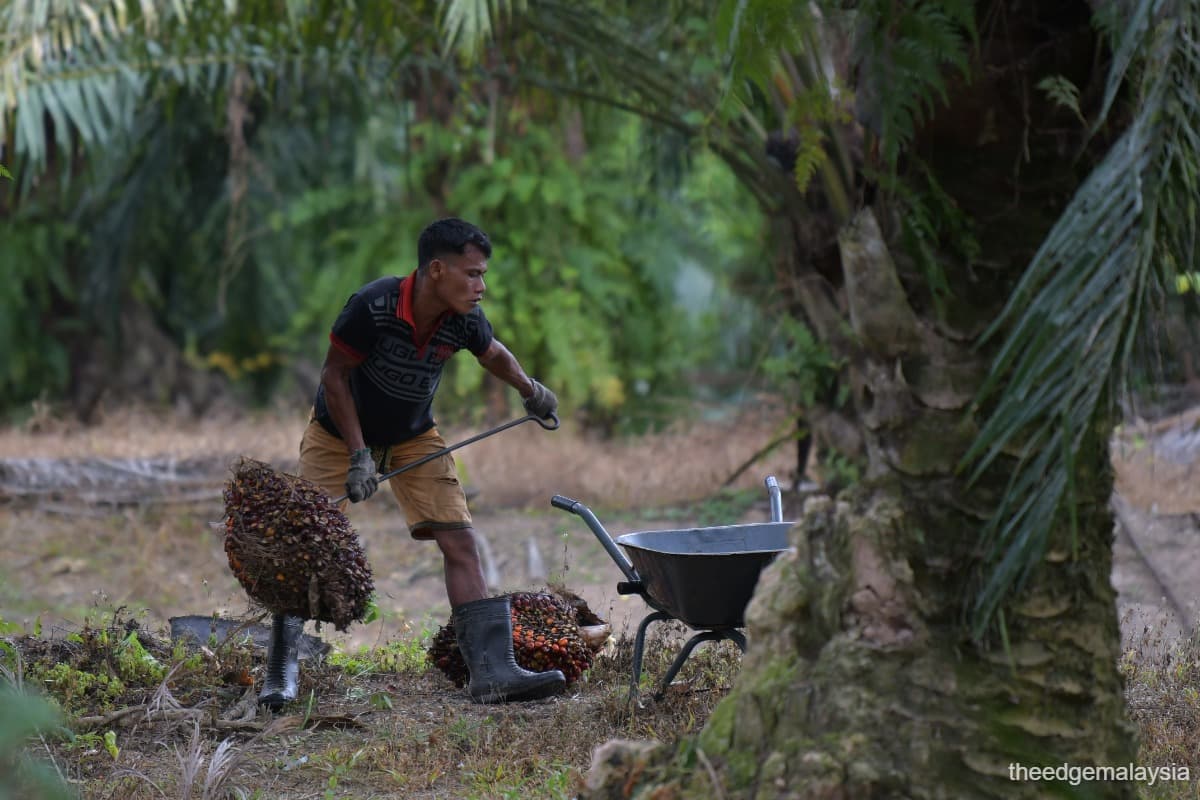
My name is Joseph, and Labour Day has set me thinking about work, dignity and quiet service. In my own faith tradition, this date also brings to mind St Joseph the Worker, remembered not for grand speeches, but for duty, craftsmanship, humility and faithful labour. Yet the values he represents are not confined to any one faith. They speak more broadly to the dignity of work, the honour of service, and the many people who build quietly without needing the spotlight.
In that spirit, this reflection is about Labour Day in the plantation world: people, palms and the future of plantation work — especially those whose hands, minds and hearts keep the industry standing, often without applause.
Labour Day is often marked with familiar phrases: workers are the backbone of the economy; people are our greatest asset; human capital matters. All true, of course. But in the oil palm industry, these are not decorative slogans. They are field reality.
The fruit does not walk by itself to the mill. The field does not maintain itself. The mill does not think by itself — at least not yet.
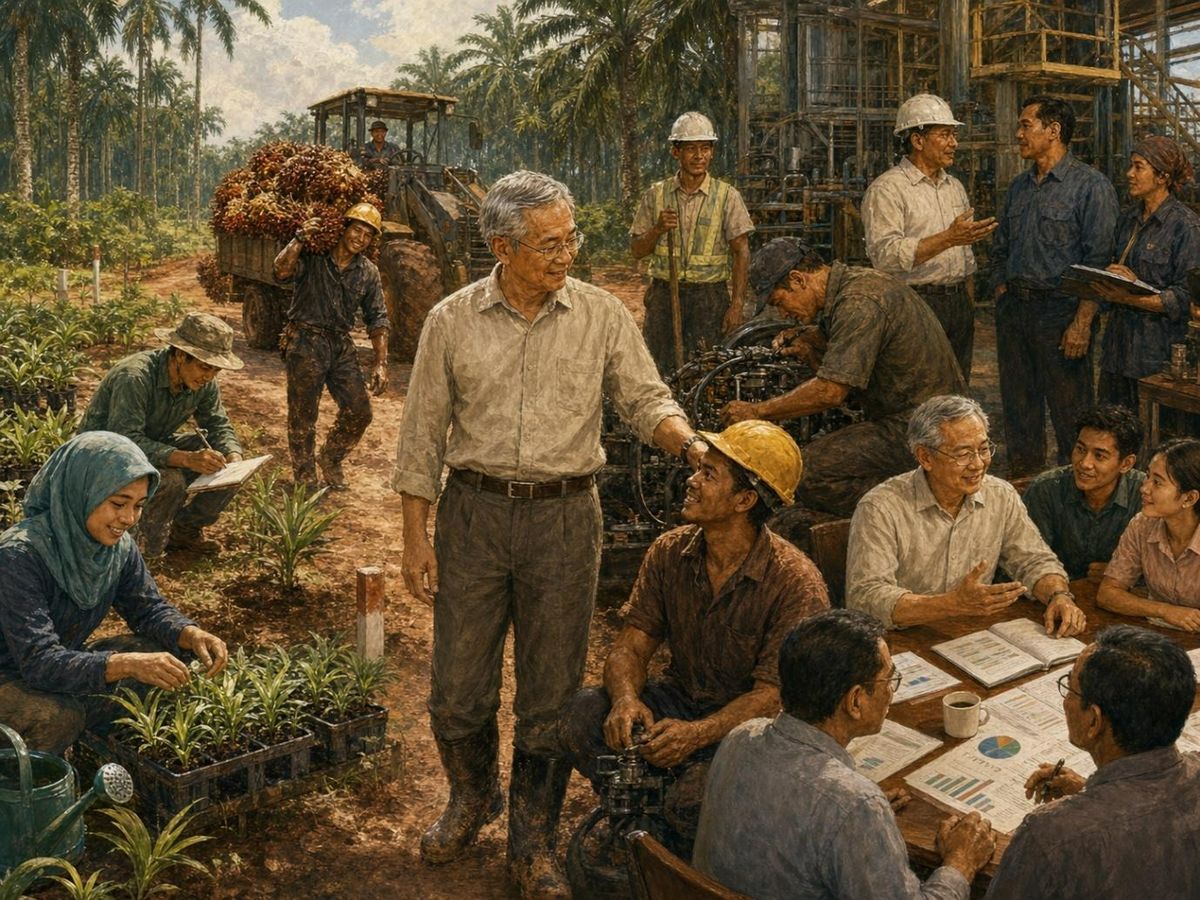
Behind every tonne of fruit bunch or crude palm oil, every export figure, sustainability claim, corporate presentation and cheerful aerial photograph of green estates, there are people. Some are visible. Many are not. Harvesters, field workers, mandore, drivers, mechanics, estate assistants, mill engineers, researchers, sustainability officers, nursery workers, clerks, trainers and managers all form the human chain that keeps the industry alive.
Palm oil today is increasingly discussed in terms of carbon, compliance, environmental, social and governance (ESG), traceability, artificial intelligence and market access. These are important conversations. But at its heart, oil palm remains a people industry.
If Labour Day means anything to this sector, it is a reminder that the future of palm oil will not be secured by technology, regulation or slogans alone. It will be secured by people who are respected, trained, fairly rewarded and given a future worth staying for.
Resilient, experienced — but under strain
The current state of human capital in oil palm may be described as resilient, experienced and indispensable — but under strain.
The most immediate challenge remains workforce availability, especially in field operations. Malaysia’s oil palm sector continues to depend heavily on foreign labour, particularly for harvesting and other demanding field tasks. These are often called 3D jobs — dirty, dangerous and difficult. Some would add a fourth D: demeaning. I would be careful with that word. The work itself is not demeaning. What demeans the work is when society fails to respect the people who do it.
This is not merely a labour issue. It is a strategic risk. When workers are short, harvesting intervals stretch, loose fruit is lost, yields suffer, costs rise, mill throughput is affected, and the whole value chain feels the strain.
At the same time, skills required in the industry are changing rapidly. We still need strong field discipline, agronomic knowledge, crop husbandry, machinery handling and mill engineering. These fundamentals remain sacred. No app can replace poor agronomy. No dashboard can fertilise a palm. No algorithm can fix a broken culvert during heavy rain.
But we now also need people who understand sustainability standards, traceability, data systems, biodiversity, occupational safety, carbon accounting, automation and digital tools. The modern planter can no longer be only a field person. He or she must also understand regulation, people management, technology, markets and public perception.
The challenge, therefore, is not only to find enough workers. It is to build, sustain and reward a new human capital ladder — from skilled field workers and technicians to digitally literate supervisors, technically grounded managers and leaders who can connect estate, mill, market, sustainability and society.
But ladders must lead somewhere. If we want people to stay, grow and take pride in this industry, they must be fairly remunerated, properly trained and able to see a clear career pathway. Otherwise, we are not building a ladder. We are merely asking people to climb without showing them where the next rung is.
Progress, pressure and the image problem
The industry has come a long way over the past decade, though not always as fast, evenly or deeply as we would like. There is now greater awareness that workers are not merely a cost item. They are central to productivity, reputation, sustainability and business continuity. Without them, the finest strategy remains a PowerPoint presentation waiting for someone else to do the hard work.
We have seen improvements in worker housing, safety, welfare, certification, training and compliance. Sustainability standards have pushed companies to take labour practices more seriously. Issues once handled quietly at estate level are now discussed in boardrooms, audit reports, customer conversations and, occasionally, uncomfortable headlines. That is progress — even if progress sometimes arrives wearing the shoes of pressure.
There is also greater recognition of technical skills. Mechanisation, harvesting tools, transport systems, mill automation, drone mapping, digital monitoring and sustainability reporting all require a different workforce profile. The old assumption that plantation work is only about strong hands and long hours is no longer sufficient. We need trained hands, thinking minds and committed hearts.
This is where technical and vocational education and training, or TVET, deserves greater attention. I have seen how technical and vocational pathways can give young people dignity, confidence, employability and purpose. Not every young Malaysian will become a doctor, lawyer, accountant or influencer. But many can become excellent technicians, mechanics, welders, machine operators, drone operators, assistant managers, estate entrepreneurs or mill specialists.
The industry must honour these pathways more seriously. A good mechanic who keeps estate operations running deserves respect. A capable mill technician who prevents downtime protects value. A skilled harvester who understands crop quality contributes directly to national income. These are not minor roles. These are the hands and minds that keep the industry alive.
Still, plantation work continues to suffer from an image problem. Too many young people see it as old-fashioned, remote, difficult and lacking glamour. We have not told our story well enough. We have not sufficiently shown that this industry feeds nations, powers economies, nurtures smallholders, sustains rural communities and offers real careers.
The industry has improved its systems. Now it must improve its story.
From silos to synergy
The biggest opportunity ahead is to reposition oil palm careers for a new generation.
If we continue presenting the industry as merely hard field labour, we will struggle to attract young Malaysians. But if we present oil palm as a modern biological, technological, sustainability and business ecosystem, we have a much stronger proposition.
The industry offers opportunities in agronomy, mechanisation, AI, digital mapping, mill engineering, biodiversity, circular economy, biomass, renewable energy, ESG reporting, food safety, logistics, trading, communications and entrepreneurship. That is a rich canvas. We must connect these opportunities to Gen Y, Gen Z and soon Gen Alpha in language they understand — without pretending plantation life is easy. But it can be meaningful.
The biggest risk is that human capital development remains fragmented. Estates train in one corner, mills in another, sustainability teams in another, while headquarters speaks yet another language of strategy, compliance and finance.
The future requires integration — and leadership that can embrace diversity, connect the dots and turn separate strengths into shared advantage. The estate cannot be separated from the mill. The mill cannot be separated from quality, energy, emissions, traceability and market expectations. Sustainability cannot sit apart from operations. Technology cannot be treated as a decorative dashboard.
Human capital must therefore be developed across the full value chain, not trapped in compartments. The industry needs people who can understand the field, respect the mill, read the market, manage compliance and work across functions. The next leap in productivity and credibility will come not from silos, but from synergy.
Another risk is over-reliance on foreign labour without a serious transformation plan. Foreign workers have contributed greatly to the industry, and they deserve respect, fair treatment and proper recognition. As mechanisation will take time to mature and scale, they will remain strategically important to keeping estates productive and mills supplied.
But dependency without transformation is dangerous. Rising labour costs, including minimum wages, cannot be absorbed sustainably if productivity does not improve in tandem. Labour shortages, regulatory changes, recruitment costs, welfare expectations and social scrutiny will continue to test the old model.
The answer is not to dismiss foreign labour. It is to build a smarter transition — fair employment practices, better training, productivity-linked systems, practical mechanisation and clearer pathways for a more skilled plantation workforce. Otherwise, the industry may find itself paying more, producing less efficiently, and wondering why the sums no longer add up.
The opportunity is to create better jobs, not merely fewer jobs. Mechanisation and digital tools should reduce drudgery, improve safety and raise productivity. They should move people up the skills ladder — towards technicians, mechanics, machine operators, data users, supervisors and problem-solvers.
In the next few years, the winners will be companies that invest not only in machines, but in people who can operate, maintain, interpret and improve those machines. A shiny machine without trained people is just expensive furniture with moving parts.
AI, boots and the mechanic still needed
AI and digital technology are beginning to change the industry, but we must keep our feet on the ground. AI is not magic. It is a tool. A powerful tool, yes, but still a tool.
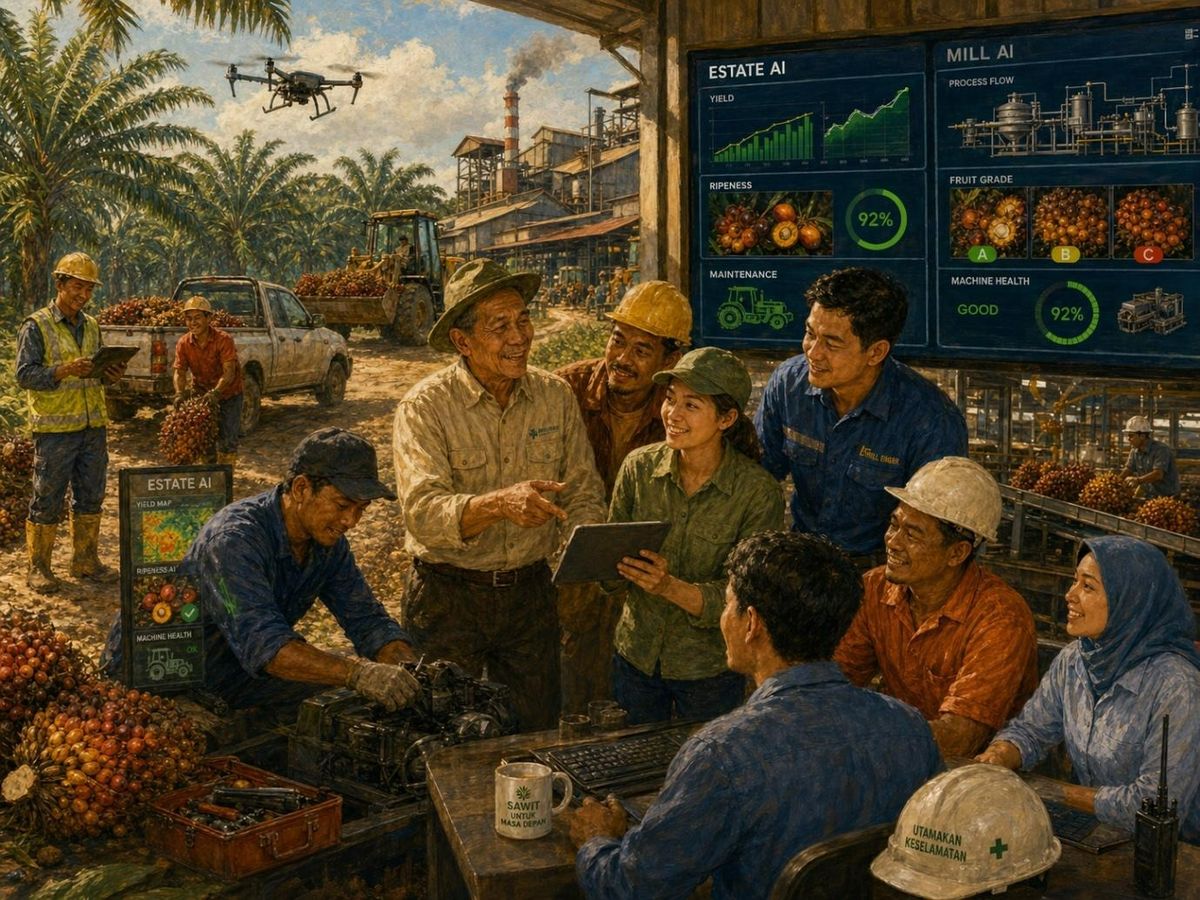
In mills, sensors, automation and predictive systems are already helping to improve efficiency, reduce downtime, optimise operations and reduce dependence on manual intervention. AI can monitor processes, identify patterns, detect deviations and recommend responses faster than traditional systems. The opportunity is real.
But let us start with one caution: AI cannot rescue poor engineering. It will merely report the chaos faster — perhaps with nicer graphics.
A smart mill is not a workerless mill. Even with automation, it still needs people — fewer perhaps, but better trained, more alert and more technically capable. AI can analyse patterns and recommend actions. In some cases, responses may even be executed automatically through the control system.
But responsibility cannot be automated away. Decisions ultimately remain with the management team, who must validate, adjust or override recommendations based on judgement, safety and real-world conditions.
Sensors may detect, cameras may watch and algorithms may suggest. But people must still interpret, repair, verify and take responsibility when steel, steam, oil and fruit refuse to behave politely.
In estates, digital tools are emerging through mapping, drones, satellite imagery, field data capture, vehicle tracking, worker monitoring, fertiliser planning, yield recording and sustainability documentation. Over time, estate operations, mill performance and management dashboards will increasingly need to read from the same reliable data stream.
The future estate manager must still understand palms, soil, rainfall, terrain, workers and field discipline. Those fundamentals will not disappear. But he or she must also understand, appreciate and use data — not as decoration for reports, but as a practical tool for better decisions, faster responses and sharper accountability.
The impact on jobs will be mixed. Some repetitive or physically demanding tasks may be reduced. But new roles will emerge. We will need people who can maintain machines, troubleshoot sensors, analyse field data, manage digital records, interpret AI recommendations and still apply practical judgement. AI may tell us what it sees. Experienced people must still decide what it means.
The future is not AI versus workers. It is AI plus workers — provided workers are upskilled. If we fail to train people, technology will widen the gap. If we train them well, technology can raise dignity, safety, productivity and pride.
The danger is to over-sell AI as a miracle cure. The industry has seen many technologies arrive with loud promises and make quiet exits. For AI to work, we need good data, disciplined operations, reliable connectivity, practical maintenance, capable supervisors, honest business cases and a change of mindset among owners and decision-makers.
Otherwise, we may end up with dashboards that shine beautifully in the boardroom while the field still waits for a mechanic.
From seedlings to boardrooms
Over the years, my journey in oil palm has taken me from research plots to estate roads, mill discussions, boardrooms and industry platforms. I hope that, despite the long journey, some plantation mud has remained respectfully attached to the boots.
That journey has taught me one enduring lesson: plantations are not built by strategy papers alone. They are built by people — often ordinary people doing difficult but meaningful work with extraordinary commitment. A good harvester, careful nursery worker, disciplined mandore, reliable mechanic, wise estate manager or dedicated mill engineer can make the difference between theory and reality.
Leadership in plantations is therefore not only about meetings, numbers and reports. It is about walking the fields, listening to people, understanding constraints, respecting experience and making decisions that balance productivity, humanity and long-term stewardship.
It also calls for empathy. People do not grow in a culture of fear alone. They grow when discipline is matched with guidance, accountability with fairness, and ambition with care. To me, this is the human side of plantation leadership: believing in second chances, continuous improvement and the better side of people.
One may speak of earnings before interest, taxes, depreciation and amortisation (Ebitda) in the boardroom, but in the field, one must also understand rainfall, roads, labour, fertiliser, loose fruit, morale and the occasional tractor that chooses the worst possible time to break down.
In this later season of life, I often think of my role as a “second harvest” — to write, mentor, speak and share what experience has taught, especially with younger people entering the world of work. Knowledge should not retire when people retire. It should be passed on with humility, honesty, wit and hope.
On Labour Day, perhaps that is the reminder worth keeping. To honour labour is not only to thank workers once a year. It is to build an industry where people can grow, earn, learn, lead and take pride in what their hands, minds and hearts have helped to create.
For in the end, the future of palm oil will not be decided by machines alone, nor by markets or regulations alone. It will be decided by whether we still know how to value people — those who harvest, repair, manage, innovate, teach, lead and quietly keep the industry standing.
That, to me, is the true meaning of Labour Day in the plantation world: not sentiment, not ceremony, but respect — translated into training, fairness, opportunity and a better rung on the ladder.
Joseph Tek Choon Yee is a former president of the Malaysian Estate Owners’ Association and past chief executive of the Malaysian Palm Oil Association.