

This article first appeared in The Edge Malaysia Weekly on April 27, 2026 - May 3, 2026
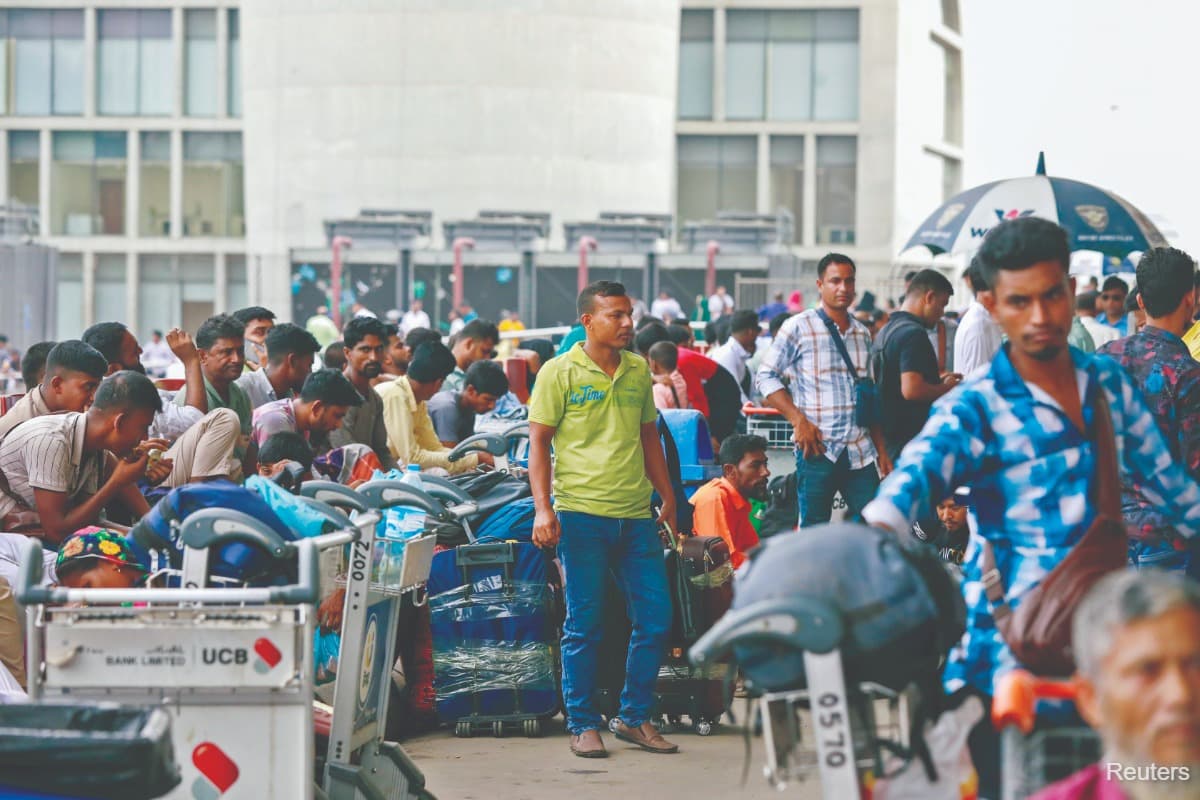
THE recruitment and processing of foreign workers in Malaysia has turned into a high-stakes political firestorm. At the core of the issue are persistent allegations that the system tolerates the exploitation of foreign workers, particularly those from Bangladesh, leaving them trapped in crippling debt.
The controversy centres on several key figures and a digital infrastructure that has become as lucrative as it is contentious.
Two names currently dominate the headlines. One is the Minister of Human Resources Datuk Seri R Ramanan, who advocates using a new system said to be capable of eliminating the exploitation of workers at the village level in Bangladesh. The other is Datuk Seri Aminul Islam, the founder of Bestinet Sdn Bhd, which developed and managed the Foreign Workers Centralised Management System (FWCMS).
The FWCMS is currently being used by the home ministry to process foreign worker documentation before an electronic Temporary Employment Visit Pass or PLKS is issued. Bestinet receives RM215 for the issuance of every PLKS via FWCMS.
Allegations of corruption and exploitation of migrant workers have been levelled against Bestinet and Aminul. Both have denied all the allegations, arguing that the FWCMS helps reduce the exploitation and debt bondage of workers by automating and centralising a previously opaque process.
Last week, Ramanan confirmed that Bestinet had proposed a new system called The Universal Recruitment Advance Platform (Turap), resulting in criticism of the government. It has also drawn calls for greater transparency in what has become a multi-billion ringgit industry. But how did the industry become so lucrative?
When did Malaysia start to recruit migrant workers in a big way?
In the early 1990s, Malaysia opened up its labour market to migrant workers to fill vacancies in the plantation sector, which were not filled by locals.
It started with a programme rolled out by the home ministry in 1993 to hire Indonesian workers. By 1998, the country had an estimated 400,000 migrant workers, mostly Indonesians. From 1999, Bangladeshi workers started arriving here in large numbers and some of these early arrivals subsequently became agents who recruited workers from Bangladesh in return for a fee.
How did the migrant worker recruitment system evolve through the years?
At first, the recruitment and processing of workers was done by local companies that had been issued licences for the job. Quotas were given out to each licensed agent.
However, in 2005, an “outsourcing system” was introduced. Instead of employers recruiting the workers they needed directly, they could hire foreign workers from outsourcing companies. These companies handled everything: recruitment, visas, medical checks, housing and payroll. This was the start of a very lucrative business, with human labour as the commodity.
By 2008, more than 1,000 such outsourcing companies had been licensed by the ministry. Tan Sri Azmi Khalid was the home minister between March 2004 and February 2006, before he was replaced by Tan Sri Mohd Radzi Sheikh Ahmad, who helmed the ministry between February 2006 and March 2008.
This outsourcing system was eventually halted by the Malaysian government in 2012, following reports of abuse and neglect. A freeze in the recruitment of foreign workers was also put in place. That ban would subsequently be partially lifted and reimposed, as the government balanced the industries’ need for foreign workers.
From 2016 until 2018, it facilitated the rehiring of undocumented workers.
A pivotal shift happened in January 2018, when the government adopted the use of Bestinet’s FWCMS. A letter of acceptance (SST) for the use of the system was issued to Bestinet by the home ministry, under then minister Datuk Seri Dr Ahmad Zahid Hamidi, just four months before the 2018 general election.
Is the FWCMS used only to process Bangladeshi workers?
No, it is also used to process worker documentation for all source countries that export labour to Malaysia. However, it is mostly used for Bangladeshi workers, who have in recent years replaced Indonesia as the main source of migrant workers for Malaysia.
The FWCMS solution is also increasingly used in Nepal.
Why is Dhaka against Bestinet and the use of FWCMS?
The current administration in Bangladesh has expressed opposition to FWCMS and Bestinet. In particular, Dhaka has accused Aminul, a Bangladesh-born naturalised citizen of Malaysia, of being part of a small network of manpower recruitment agents aligned to the previous Bangladeshi government headed by Sheikh Hasina Wazed, who was ousted in August 2024.
The situation came to a boil in late 2024 when Bangladeshi authorities requested the arrest and extradition of Aminul and his associate, Ruhul Amin, on charges of money laundering, extortion and trafficking of migrant workers.
Ruhul was also the former secretary-general of the association governing manpower recruitment companies in Bangladesh.
Why are controversies related to foreign labour confined largely to workers from Bangladesh?
This is because Bangladesh is the only country where the workers are prepared to pay huge sums of money to work in Malaysia. Workers recruited from villagers have to pay a chain of intermediaries throughout the recruitment process to get here.
According to a 2021 agreement between Malaysia and Bangladesh, a worker seeking a job here is supposed to only pay BDT78,990, which is about RM2,540, to get employment here. In reality, the cost is more than RM20,000 per worker.
The business of exporting manpower is so lucrative in Bangladesh that politicians want a hand in it. After its previous government fell, at least 10 politicians — including two ministers — have been implicated in charges of corruption and money laundering in relation to the export of manpower.
The corruption has spilled over to countries that require foreign labour from Bangladesh. Decision-makers in these importing countries are often “incentivised” to open up the market to labour from Bangladesh.
With Malaysia’s 2021 memorandum of understanding (MoU) with Bangladesh set to expire this December, “lobbying” for market access has already begun. Dhaka has proposed that 426 recruitment companies be considered for the recruitment of their workers to Malaysia when a new MoU is signed.
Save by subscribing to us for your print and/or digital copy.
P/S: The Edge is also available on Apple's App Store and Android's Google Play.