

This article first appeared in The Edge Malaysia Weekly on April 27, 2026 - May 3, 2026
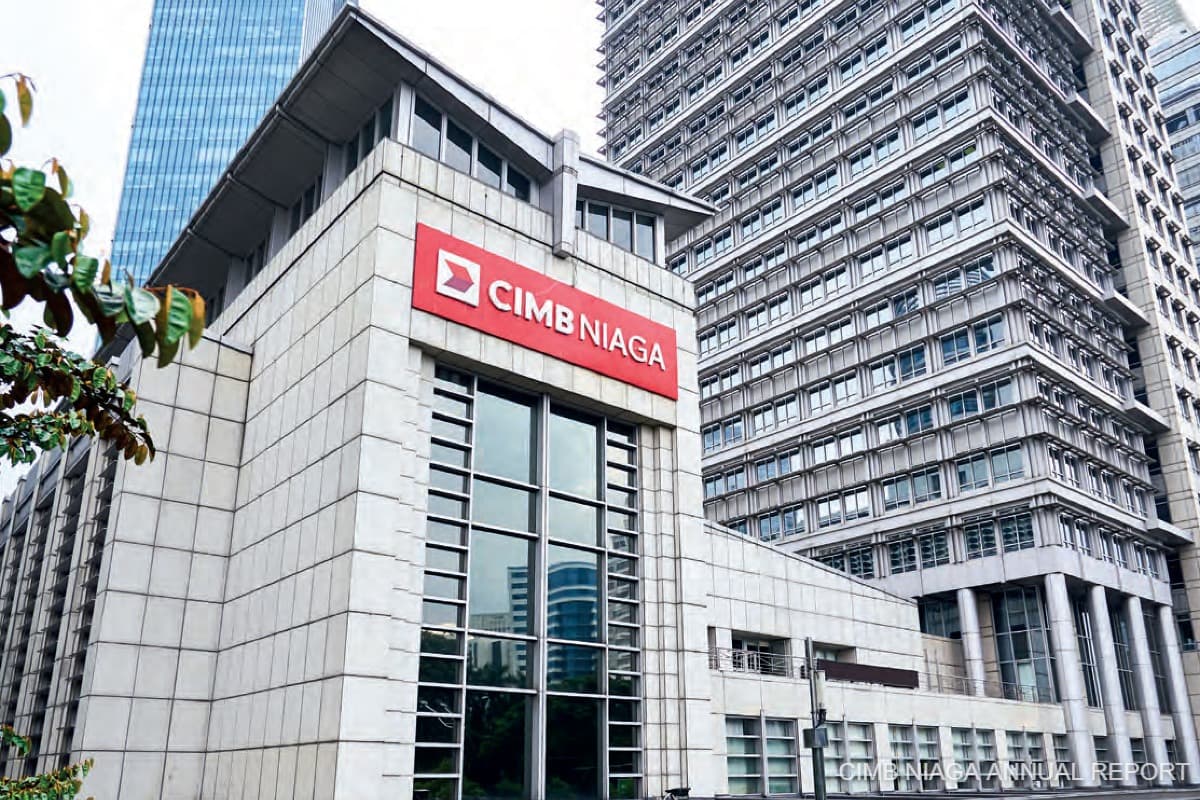
PT Bank CIMB Niaga Tbk, the Indonesian subsidiary of CIMB Group Holdings Bhd (KL:CIMB), will spin off its Islamic business into a standalone bank in the final quarter of this year, a move that will help it cement its position as one of the country’s largest Islamic lenders.
“We expect the spin-off to be in the fourth quarter,” its president director and CEO Lani Darmawan tells The Edge in a virtual interview. The timeline is based on the bank’s latest engagement with its regulators.
The spin-off is aimed at complying with the country’s regulatory requirements while giving its Islamic business greater room to grow.
Islamic banking assets in Indonesia, the world’s most populous Muslim nation, have grown rapidly over the years, outpacing that of conventional assets. However, they account for only about 8% of the country’s total banking assets — compared with over 40% in Malaysia — pointing to relatively low penetration and suggesting room for much stronger growth.
Indonesia’s Islamic banking assets stood at IDR1,028 trillion as at October 2025, according to latest data from Otoritas Jasa Keuangan (OJK), the main financial regulator.
CIMB Niaga’s standalone Islamic bank, which will be known as Bank CIMB Niaga Syariah, would have around IDR70 trillion (RM16 billion) in assets. It will start off with 30 branches nationwide, says Darmawan.
“Currently, we have about 7% market share in terms of syariah banking in Indonesia. As a unit usaha syariah — basically, an Islamic business unit or window within the bank (CIMB Niaga) — we are right now the largest syariah bank in Indonesia. But overall, we are the second-largest Islamic bank in Indonesia, after Bank Syariah Indonesia (BSI). We are almost head-to-head with Bank Tabungan Negara (BTN), which did the spin-off [of its Islamic banking unit] a couple of months back,” she shares.
Indonesia mandates a spin-off — basically, a separation — of Islamic banking units with assets exceeding IDR50 trillion or holding more than half of the parent bank’s assets. The units have to be converted into separate banks, or transferred to other banks.
BSI was created in 2021 from the merger of the Islamic banking units of three state-owned lenders, including PT Bank Mandiri (Persero) Tbk. Late last year, another standalone Islamic bank, PT Bank Syariah Nasional (BSN), was launched following its spin-off from state-owned lender BTN.
All eyes are now on the next expected Islamic spin-off — that of CIMB Niaga. According to Darmawan, there is no single fixed deadline for Islamic spin-offs to happen. OJK engages with individual banks to assess their readiness to launch.
Open to M&A and IPO
CIMB Niaga plans to ramp up the Islamic business, including through potential mergers and acquisitions (M&A), and is also weighing the possibility of an initial public offering (IPO) down the road. However, as CIMB Niaga is already listed on the Indonesia Stock Exchange, a pertinent question that arises is whether the group will want two separate listings on the exchange.
“Currently, we are still discussing it,” Darmawan says, when asked about an IPO for CIMB Niaga Syariah. She points out that such an exercise is unlikely to take place anytime soon, as it requires significant preparation time. “We will update investors if there is an exact plan for an IPO,” she adds.

According to Darmawan, CIMB Niaga is “very much open” to M&A — for both its syariah and conventional businesses — should the right opportunity arise. “We have several [opportunities] that we are looking at,” she says, but declines to elaborate.
In late February, Bloomberg reported, citing unnamed sources, that CIMB Group was among the lenders interested in HSBC Holdings plc’s retail banking business in Indonesia. HSBC is undertaking a strategic review of its business there and may decide to sell it.
Opportunities for Islamic banking in Indonesia are huge given the large Muslim population, government support for such business, and the fact that there are not many standalone Islamic banks, says Darmawan.
“We are designing syariah banking differently. Our focus will be more on retail and SMEs (small and medium enterprises). There will be less dependence on branches for transactions. The investment is more towards digital, so that customers can do any transaction digitally,” she says.
Last year, CIMB Niaga’s Islamic financing grew by over 10%. “This year, we are forecasting around 8% to 10% growth. We are recalibrating our focus more towards retail and SME, which overall is actually smaller in terms of [financing] ticket size,” she says.
Following the spin-off exercise, CIMB Niaga will still be able to offer Islamic services to its customers, but on behalf of CIMB Niaga Syariah, with the assets booked on the latter’s balance sheet.
“Once it is spun off, we will still adopt a dual-banking model, as approved by our regulator, OJK. So, in terms of business growth and so on, CIMB Niaga Syariah will be independent. But, it is still our 100%-owned subsidiary,” Darmawan explains.
Fitch Ratings, in a report on Indonesian Islamic banks in February, says it expects Islamic banking financing in the country to grow by about 10% in 2026, and keep its total share of the banking system at around 8%.
“We see significant potential for further growth given the sizeable underbanked Muslim population, and as awareness rises and networks expand. Government-led consolidation, financial inclusion initiatives and the launch of new services such as bullion banking are likely to support the steady growth of syariah banking assets,” it says.
Fitch Ratings believes the competitive landscape will remain relatively unchanged despite the emergence of newly spun-off Islamic banks. “These entities are spin-offs of existing operations, and are unlikely to materially alter competitive dynamics. BSI is likely to remain dominant with around 40% share, utilising its scale advantages and state-backed mandate.” — By Adeline Paul Raj
Save by subscribing to us for your print and/or digital copy.
P/S: The Edge is also available on Apple's App Store and Android's Google Play.