

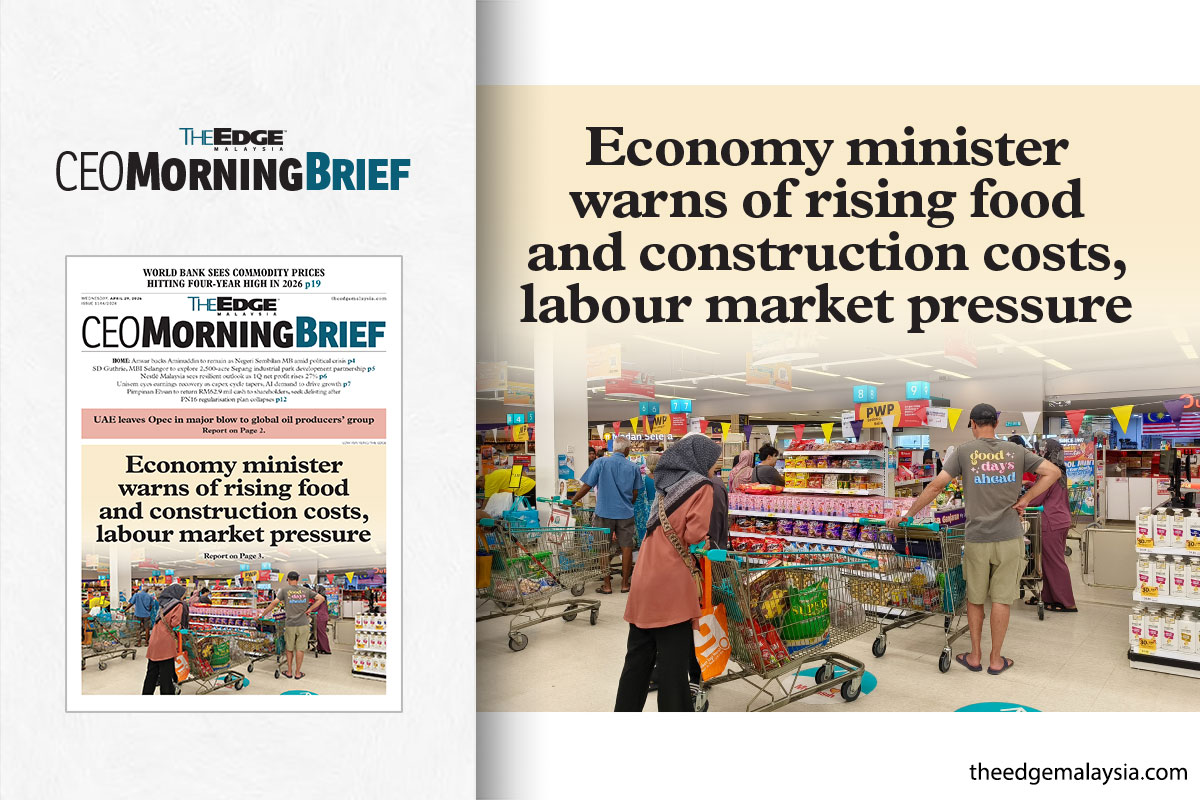
KUALA LUMPUR (April 28): Food prices and building material costs are under mounting pressure, according to Economy Minister Akmal Nasrullah Mohd Nasir, as global supply disruptions continue to affect multiple sectors.
In his latest update on the global supply chain crisis, Akmal said for April 20-22 this year, selected food prices remained relatively stable with changes below 10%, but overall trends were mixed.
Chicken rose 3.3% to RM9.70/kg, Grade C eggs increased 7.3%, spinach climbed nearly 5% to RM5.59/kg, and fresh coconut milk rose 3.6% to RM16.41/kg, reflecting early pressure from higher input and logistics costs.
He said this reflects the importance of price monitoring covering upstream factors such as fertiliser, diesel, energy, raw materials, production, transport and distribution, and not only retail prices.
In construction, costs have risen by an average of 12.6% due to higher prices for diesel, bitumen, logistics, and other inputs. Since materials make up over 60% of construction costs, this is expected to affect ongoing infrastructure projects, although the government has pledged to continue key developments such as roads, schools, clinics, and basic infrastructure.
The labour market is also expected to come under greater pressure in the second quarter of 2026 due to delayed effects from the global energy crisis. Perkeso data showed unemployment benefit applications fell from 7,512 in February to 5,855 in March and 5,734 in early April, with manufacturing, services, ICT, hospitality, and transport among the most affected sectors.
To manage the situation, the government is focusing on social protection, job training, gig worker support, youth development, and strengthening small and medium enterprise resilience.
Akmal said Malaysia is facing wider global economic pressure affecting food, energy, construction, supply chains, and jobs. The government’s focus is to stabilise essential supplies, control living costs, protect employment, ensure key public projects continue, and strengthen long-term economic resilience.
Oil prices remain volatile but slightly easing. Brent crude fell 6.7% week-on-week to US$109.94 per barrel for April 20-24, 2026, though it rose within the week and closed higher at US$112.92 on April 24, before reaching US$113.34 on April 27. This reflects ongoing instability in global supply conditions affecting multiple industries.
No media Q&A session was held after the briefing.