

This article first appeared in Forum, The Edge Malaysia Weekly on April 27, 2026 - May 3, 2026
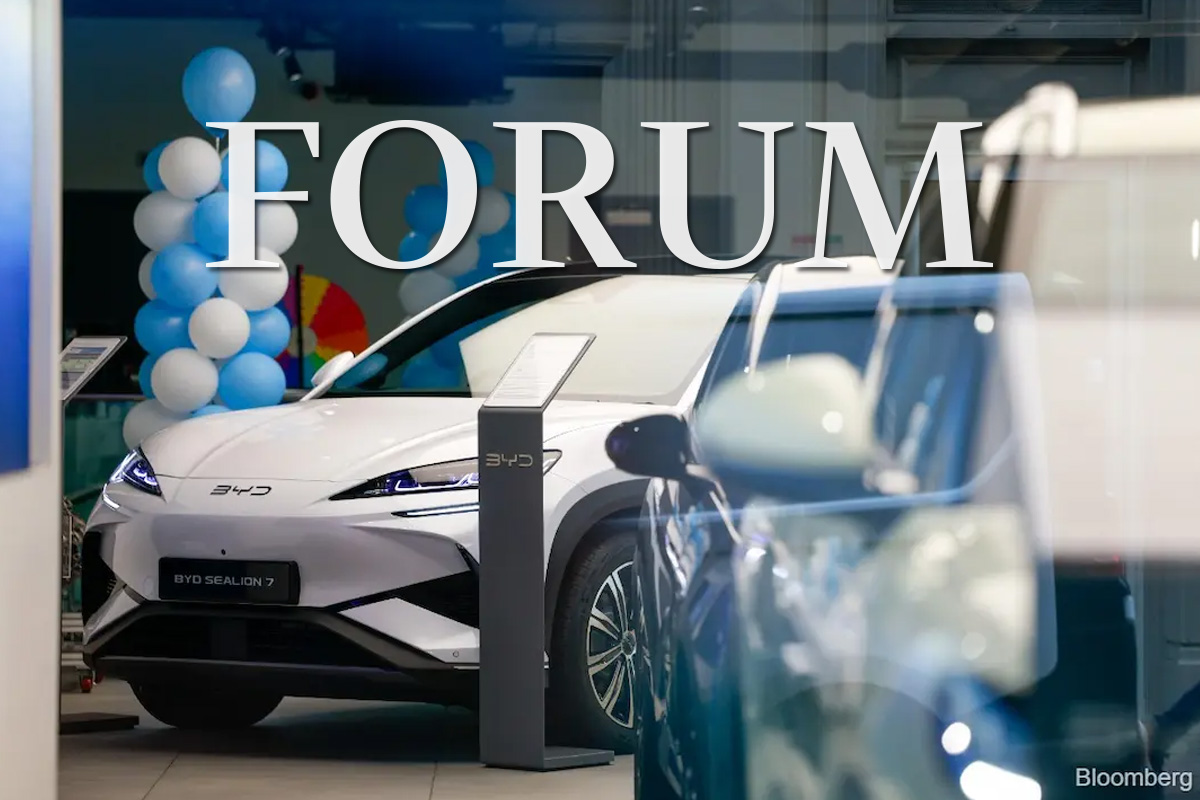
Recently, the Ministry of Investment, Trade and Industry (Miti) came under the spotlight because of reports that the imposition of very stringent conditions was making the Chinese electric vehicle giant, BYD, think twice about its proposed investment in a plant in Tanjung Malim, Perak, to assemble its EV cars. The public backlash from and continued heated discussion on this issue highlights the need for Miti to not only update its National Automotive Policy (NAP) but also find better ways to communicate its policies to an increasingly demanding public audience.
What has changed since the launch of the NAP in 2020?
When the NAP was launched in early 2020, its thrust was three-pronged: (i) Next-Generation Vehicles (NxGV), where electric vehicles were only one component; (ii) Mobility as a Service (MaaS) to prepare Malaysians for different ownership models and; (iii) Industrial Revolution 4.0 in the manufacturing and assembly process.
Since then, there have been three significant changes in the automotive sector, which have to be dealt with and necessitate an update of the NAP. First, the rapid development of the Chinese EV industry has changed the game, with a number of players breaking into the global market with competitively priced and good quality EVs, including BYD, Chery, Zeekr and Xpeng. Secondly, a number of these Chinese EV players have established joint ventures (JV) in Malaysia to assemble completely knocked down (CKD) units, including Chery, with Legenda Beringin with a RM2.2 billion investment in a facility in Hulu Selangor to assemble internal combustion engine (ICE) vehicles, plug-in hybrid electric vehicles and EVs with a target of 100,000 units a year; Zeekr, to assemble its EVs in Proton’s facility in Tanjong Malim; XPENG, in a JV with EPMB to assemble its range of SUV and MPV EVs, including its Range Extended EVs in Melaka; Great Wall Motors with its Haval line of Hybrid EVs already producing in Melaka, and thirdly, the sudden increase in the price of unsubsidised petrol and diesel in Malaysia as a result of the blockade of the Strait of Hormuz.
It is in this context that the decision to impose certain export and localisation conditions on the proposed BYD plant in Tanjung Malim should be looked at.
The challenge for Miti in the automotive industry goes beyond the BYD conundrum. Consideration must also be given to the possible impact of the growing sales of EVs in Malaysia, particularly Chinese EVs, even though locally assembled, because of the negative impact this will have on the important automotive components ecosystem, which includes many local vendors and producers of spare parts, car seats and electronic components. I was informed that a report on the automotive components ecosystem was commissioned by the Malaysian Automotive Component Parts Manufacturers last year and that it was submitted to Miti for further study on how to align the government’s auto policies moving forward with the growing presence of Chinese EV assemblers in the country. One area of potential is to grow the Malaysian ecosystem for electrical and electronic components in EVs, which is tied to moving up the value chain in the semiconductor sector, according to the New Industrial Master Plan 2030.

In addition, Miti must strive to be more transparent in the deliberations and decision-making processes involving the Automotive Business Development Committee (ABDC), a little heard of but powerful committee that “discussed incentive applications under the Multi Sourcing Parts Programme and the Industrial Linkage Programme schemes” for the auto sector. Put simply, this committee recommends tax and other incentives for the CKD players that influence pricing and profitability in significant ways. I have been told that a more transparent scorecard system for the ABDC was developed under the leadership of former Miti minister, Tengku Zafrul Aziz but public announcements on this have been few and far between. Without greater transparency in the ABDC, debates about the level of pricing for CKD versus completely built up EVs (and ICE vehicles) will continue to generate much heat without the necessary information being publicly available.
A far more serious challenge faced by Miti is to “rebuild” its policymaking capability in the auto sector. For many years, including while I was deputy minister of Miti, important policies concerning the auto sector had been effectively “subcontracted” to the Malaysia Automotive, Robotics and IoT Institute (MARii), under the then powerful CEO, Datuk Madani Sahari. While MARii, as a Miti agency, has the mandate to provide input, especially from the auto sector, the policy jurisdiction ultimately still lies with the Miti officers who oversee auto policies. In March 2022, Datuk Madani was arrested by MACC on charges of corruption. In 2024, he was convicted and sentenced to a year in jail. During this time, many of MARii’s staff left the agency, understandably. It will take some time before Miti can rebuild its internal capacity in the auto policy sector and it will also take some time for MARii to find an equilibrium under the leadership of current CEO Azrul Reza Aziz, who took the helm in April 2023.
One gap in the NAP that needs to be addressed by Miti is the lack of a coherent policy on EVs for the two-wheeler market. Not only is this an important segment of the market, with more than 600,000 non-EV motorcycles sold in 2025, a transition to more EV motorcycles will also reduce the amount of government funds being spent on the petrol subsidy.
Finally, Miti must work with other ministries, including the Ministry of Finance, the Ministry of Transport, the Ministry of Natural Resources and Environmental Sustainability and the Ministry of Energy Transition and Water Transformation, to align the government’s strategy and targets on EV adoption in the country. In the NAP 2020, there were no explicit EV adoption targets and the global phenomenon of high-quality, competitively priced Chinese EVs was not yet on the horizon. Fast-forward to post-Covid-19 and Miti announced an EV target of 20% of the total industry volume (TIV) by 2030 and 80% by 2050, which is part of the National Energy Transition Roadmap, launched in 2023. In 2024, EVs comprised 5% of TIV and this percentage will continue to rise, especially if the quota for subsidised petrol continues to be decreased and the subsidised RON95 price starts to increase later this year. What is the EV adoption road map that the government wants to adopt? What impact will it have on the local components manufacturers, especially in the ICE vehicle ecosystem? How will this help the government reduce its expenditure on the petrol subsidy?
I must emphasise the importance of effective public communication of Miti’s policies in this area, especially since the media and the public have become used to regular social media updates by former Miti Minister Tengku Zafrul and his deputy Liew Chin Tong.
These are the challenges that are on the plate of Miti Minister Datuk Johari Ghani, his deputy, Sim Tze Sin and the senior management of Miti moving forward.
Dr Ong Kian Ming is an adjunct professor at Taylor’s University and a former deputy minister of the Ministry of Investment, Trade and Industry.
Save by subscribing to us for your print and/or digital copy.
P/S: The Edge is also available on Apple's App Store and Android's Google Play.