

This article first appeared in Wealth, The Edge Malaysia Weekly on April 27, 2026 - May 3, 2026
AHAM Capital clinched seven awards at the LSEG Lipper Fund Awards 2026, including the Best Equity Malaysia (Provident) Group Award, its strongest showing at the annual industry recognition in recent years.
The firm’s individual award wins span both the Islamic and provident universes. The AHAM Aiiman Quantum Fund swept the awards for Best Equity Malaysia (Islamic) over three, five and 10 years while also taking the Best Equity Malaysia (Provident) award over three years.
Over 10 years, the AHAM Equity Fund won the Best Equity Malaysia (Provident) award while the AHAM Tactical Fund claimed the Best Mixed Asset MYR Flexible (Provident) award.
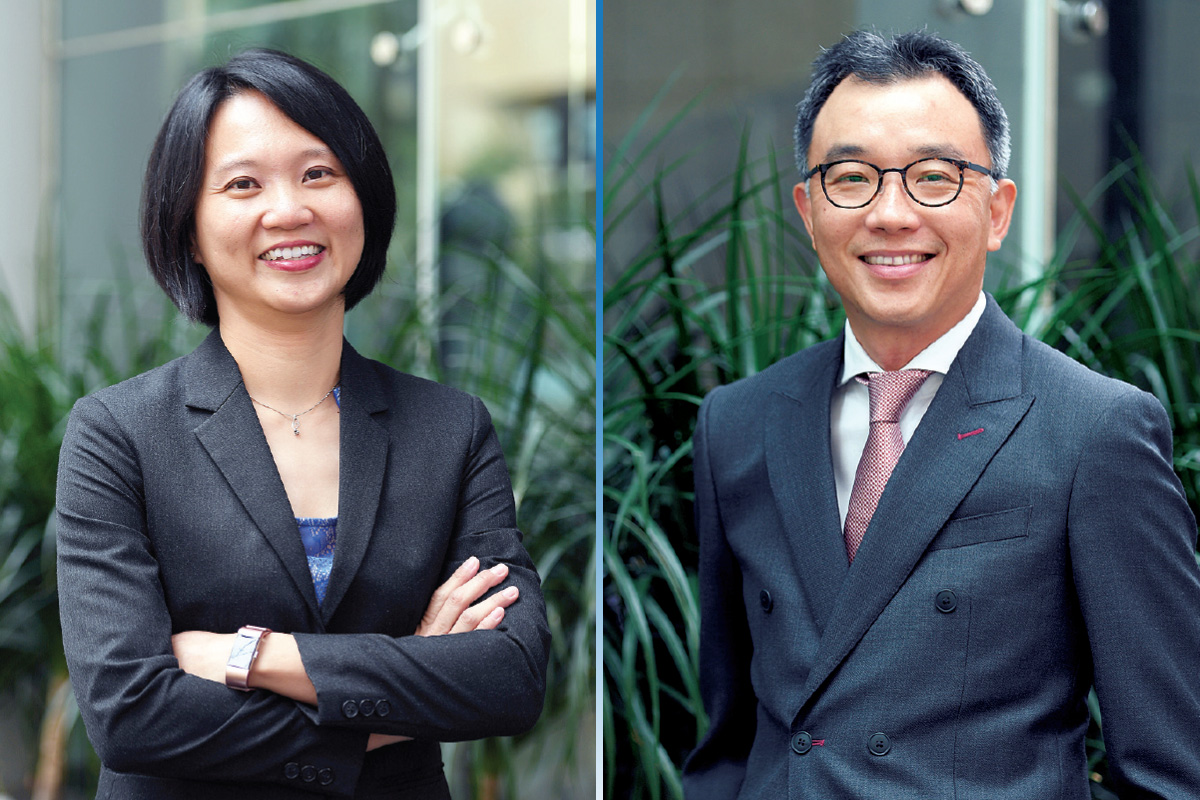
Its associate director of equities Yee Mei Hui says the top contributors to the wins came from the firm’s bottom-up stock picks, including companies in the oil and gas (restructuring play), renewables, utilities, infrastructure and healthcare sectors.
“We were early believers in Malaysia’s National Energy Transition Roadmap (NETR) and data centres, which we see as multi-year themes. Healthcare remains a long-term compounder driven by structural growth from an ageing society and higher insurance adoption,” she says.
The year 2025 was extremely volatile, says Yee, driven by macroeconomic uncertainties and foreign selling of Malaysian equities. Small- and mid-cap stocks lagged behind large-cap ones as risk aversion heightened.
In hindsight, Yee and her team entered last year highly invested, which was not the right strategy as the market was hit by one piece of bad news after another, including the US’ AI chip diffusion policy, the DeepSeek revelation that cast doubt on data centre capital expenditure spending, Trump’s tariff shock and more.
As a result, Yee and her team had to raise cash drastically from January to April to protect capital while waiting for greater clarity in the market. They reduced exposure to export-driven sectors, such as technology but remained invested in domestic names, particularly high-conviction picks.


As markets digested the tariff news flow and shifted their focus back to growth, the team redeployed cash to become fully invested in the latter part of the year to ride the market rebound.
It was about conviction and flexibility during challenging times. Yee says: “Our funds kept a tight holding of our high-conviction picks, both to maximise upside and minimise detractors. We chose to remain nimble, using cash as a tactical allocation tool to protect capital and as a war chest for buying opportunities.”
Gan Eng Peng, chief officer of equities at AHAM Capital, says being flexible with conviction was critical last year, as strategies and positions needed to be changed rapidly in a challenging business environment. No one knew the eventual outcome of the tariff war initiated by the US and there was no point in being hardheaded about the final direction of events until they were revealed.
“We still managed to come out of the event positively by combining flexible conviction, fast positioning into new on-the-ground realities and not being afraid to go against our earlier positions,” he says.
Gan says a key to the firm’s strong showing last year was the team’s ability to identify companies that can grow faster than what the market is pricing in, which is one of the basic tenets of stock investing. Achieving this requires, however, an experienced investment team to process the constant stream of information coming through.
“To go over and above that and to beat the market and peers, one needs to be at the forefront of information. This can be achieved only by having a strong team in full communication, where ideas are shared, challenged and refined in real time, so that the collective effort is greater than the sum of its parts,” Gan says.
Strong engagement and access to key market participants is also necessary, as is minimising the time-to-market for investment ideas.
“At the same time, there must be a shared understanding among the team that investing is an error-prone process. What matters is fostering open and healthy communication so that we function cohesively as a team to build an outperforming portfolio,” he adds.
Entering 2026, Yee says, markets are even more uncertain than last year as the ongoing conflict involving the US, Israel and Iran disrupts supply chains of various goods and commodities, especially oil and gas. But with uncertainties come opportunities.

“Timing and entry points are important. In view of current heightened market volatility, the award-winning funds will take a defensive position in the near term by switching more into income-yielding assets as a hedge, including large-caps and commodities, while raising cash.
“When the coast is clearer, we will look to deploying more aggressively to ride the consequent market rebound,” she says.
It is still the first half of the year but investors have already been caught off guard by the ongoing Middle East conflict, where nothing has been resolved as at early April, says Gan.
The event carries significant risks to the global economy, transmitted via high energy prices, and Malaysia will not be spared if it is prolonged. “The market is on time decay — the longer the conflict drags on, the worse things will get. Investors are not positioned for such a scenario, with hopes of an early end to the conflict being priced into asset prices,” he says.
He adds that the conflict is inherently difficult to predict, given the unclear and shifting objectives of the aggressors. A chain of developments — such as the closure of the Strait of Hormuz, emergency oil releases and a potential shortage of defensive missiles — points to an unexpected turn of events for all parties.
“At this point, the outlook is clouded by the conflict. We would hesitate to take conviction on economic directions until this risk event is behind us or the fog of war lifts. Geopolitics has pushed markets into a state of maximum uncertainty and minimal visibility.
“We would turn aggressive when there is a clearer outcome to the Middle East conflict. There are just too many uncontrollable variables,” he says.
Save by subscribing to us for your print and/or digital copy.
P/S: The Edge is also available on Apple's App Store and Android's Google Play.