

KUALA LUMPUR (April 21): Malaysia should brace for a prolonged global energy crisis while keeping an eye on its food security, an economist said.
With Malaysia’s fuel supply expected to last at least until around June, the bigger issue lies in safeguarding the country’s food supply alongside ensuring long-term energy availability, according to chairman of Khazanah Research Institute Dr Nungsari Ahmad Radhi.
“Even if the war stops tomorrow, supply will not normalise immediately,” he said. “Prices and availability could remain disrupted for the rest of the year.”
Nungsari was speaking to reporters on the sidelines of an economic forum. Trained as an economist, he also has PhD in economics from Purdue University, and currently sits on the board of Bank Negara Malaysia as well as other policy committees.
Early indicators for March have already shown signs of strain on Malaysia from the Iran war. Flash estimates showed the economy grew at a softer-than-expected pace at 5.6% in the first quarter, while export performance has softened amid rising geopolitical tensions and weaker global demand.
While off highs, crude oil prices are still sharply above pre-war levels and significantly higher than the US$65 per barrel assumption used in Malaysia’s Budget 2026, raising concerns over fiscal pressures and subsidy sustainability.
“We should be more worried about inflation, supply shortages and the secondary impact on essential goods,” Nungsari said, noting that food security is becoming an increasingly urgent issue for the country.
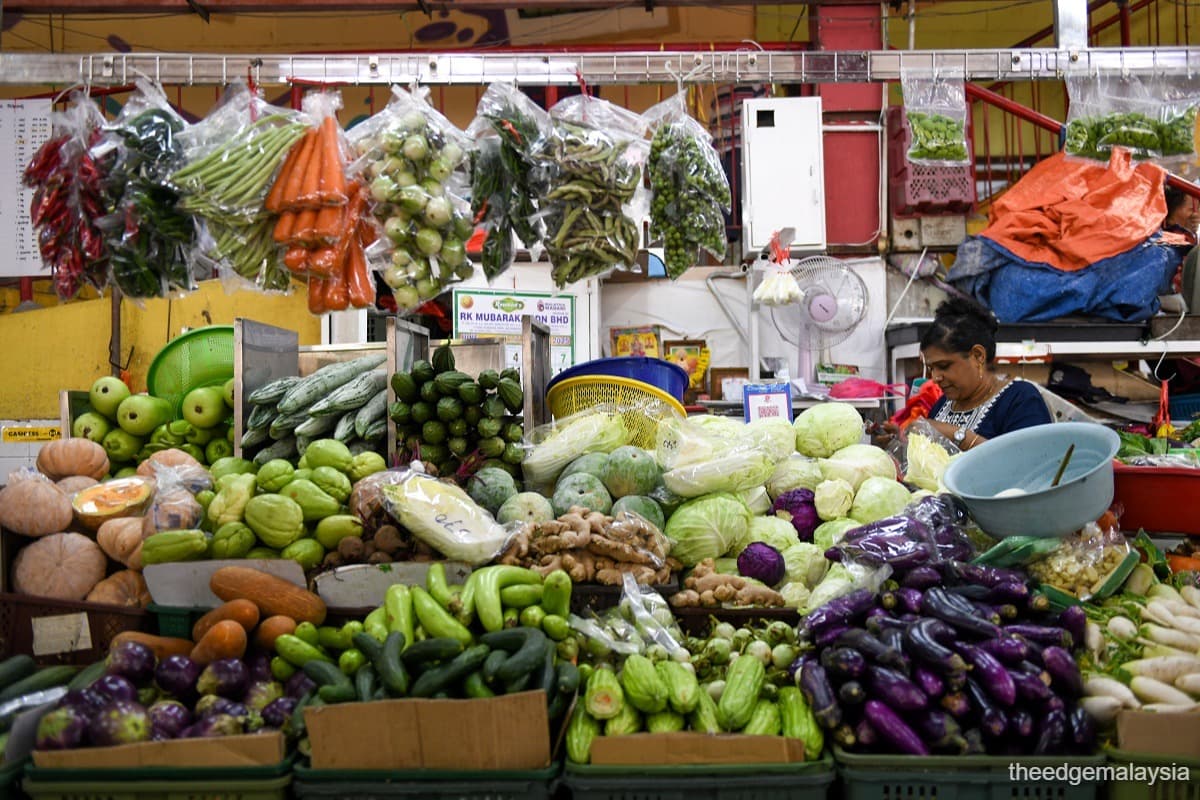
Malaysia is highly reliant on imports for key food items, including staples like rice, certain vegetables, fruits and beef even as the nation has high sufficiency in tropical fruits and poultry.
Supply management
While Malaysia has some reserves for staples like rice, the priority now is to extend the reserves and diversify supply sources, Nungsari said. The government should also monitor the supply chains for critical items such as protein and fertilisers, as higher fuel costs could disrupt production and distribution, he said.
“Energy and food are closely linked. If energy supply is disrupted, it affects everything — from transport to agriculture,” he added.
Deputy Finance Minister Liew Chin Tong, who spoke during the panel discussion on the same event, also noted that Malaysia must change its national narrative from focusing on fuel prices to managing supply and reducing consumption.
Liew called for a “national consciousness” similar to that seen during the Covid-19 pandemic, while urging households and businesses to conserve energy to extend oil available supply.
“If we collectively reduce consumption, we can stretch our supply further from June to July, and possibly beyond,” he said. Malaysia is in a relatively comfortable position for now, with sufficient fuel supply for the next few months, Liew said, but warned that the crisis could last 12 to 24 months.
Malaysia also needs to accelerate its energy transition and reduce dependence on fossil fuels, including investing in electric vehicles, alternative energy sources and more efficient transport systems, as well as discouraging further expansion of fuel subsidies.
At the same time, Liew said that Malaysians should also strengthen its domestic supply chains by leveraging on existing local industrial production. He pointed out that there are opportunities for local industries, including recycling and manufacturing, to fill supply gaps.
“We should mobilise capital into areas where Malaysia already has capabilities, and convert them into new sources of supply,” he added.