

This article first appeared in Forum, The Edge Malaysia Weekly on April 20, 2026 - April 26, 2026
Malaysia is at an important juncture in shaping the future of its healthcare system, where recent figures highlight the scale of the challenge ahead. Out of 5,000 available housemanship positions, 529 were filled, slightly above 10%. This reflects not merely a placement gap, but a broader structural issue that needs a more strategic response.
Malaysia continues to produce between 6,000 and 7,000 medical graduates each year, a strong testimony to our healthcare capacity and core talents. However, the broader system has yet to expand and adapt in parallel to absorb, train and retain these graduates effectively. This has given rise to the situation where Malaysian medical graduates are increasingly being targeted by other countries even before they formally enter the domestic healthcare system.
This imbalance has created a concerning risk, evolving into a form of pre-emptive talent capture, where Malaysian medical graduates are being identified and recruited even before entering the domestic healthcare system. This can no longer be regarded as a simple brain drain issue, but also about how Malaysia can create a more responsive, competitive and forward-looking system that will retain its own human capital and talent.
Heightened scramble for healthcare talent
The World Health Organization projects a future scenario of global shortage of up to 10 million healthcare workers by 2030, where nations are intensifying competition to secure medical talent and top human capital in boosting their national interests and competitiveness.
Particularly among developed countries, a mixture of strategic intent is in place in offering not only higher salaries that can be up to six times higher than Malaysia’s but, more importantly, other appealing factors including structured career pathways, job security, accelerated specialist progression, high-tech clinical environments and globally recognised qualifications.
To compound the problem, our local contract system for medical graduates and new medical talents, which has caused uncertainties for their long-term future, has further added to the higher rate of our medical talents leaving for better offers abroad.
Malaysia’s healthcare talent challenge is no longer a sectoral issue, but a strategic national issue with long-term implications. While Malaysia has improved its doctor-to-population ratio over time, the latest Ministry of Health (MoH) indicators show the ratio at about one doctor to 403 people as at end-2024, which still leaves significant gaps.
While Malaysia continues to generate high quality medical graduates, the lack of sufficient integration between medical education, clinical training, accredited housemanship capacity and longer-term workforce planning has created deeper structural issues of misplaced talents and worsening brain drain. This structural disconnect can create uncertainty, delay transitions from graduation to clinical practice, and place additional stress on specialist development pipelines and public-sector service delivery.
What Malaysia therefore needs is not piecemeal adjustment, but a more integrated and responsive ecosystem that links universities, teaching hospitals, regulators and workforce planners more closely.
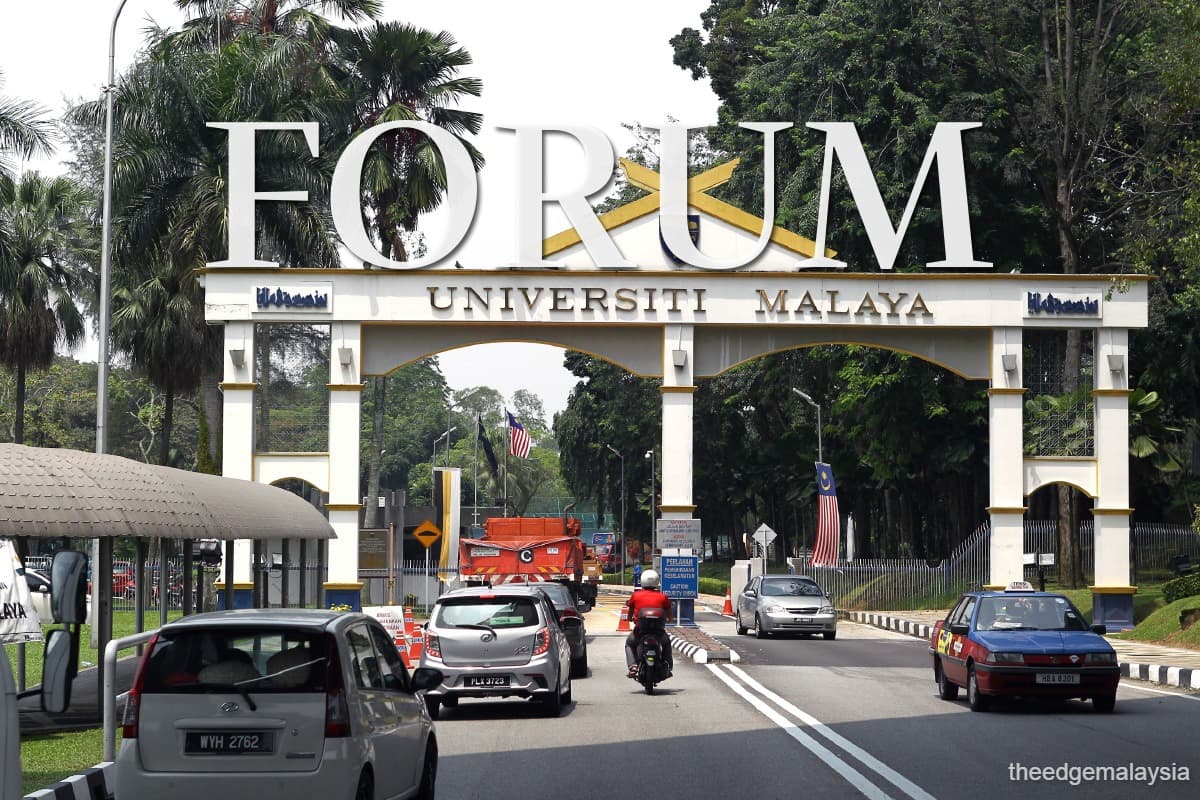
Universiti Malaya is therefore ready now to lead a new way forward in assisting the nation in addressing this shortfall and gap in retaining our talents, and the first step will be to integrate the placement and management of our medical graduates and housemanship in our own campus setting.
We remain ready to manage our housemanship placement for our graduates within our own ecosystem, further ensuring that we create clear and rewarding pathways for our talents, and this model can be used as a new strategic platform for other universities with the teaching hospital mechanism.
While many countries still use national matching or allocation systems for internship, foundation or residency placement, these universities remain deeply embedded in the hospital networks where their students and junior doctors train. This continuity, alignment and institutional integration — rather than complete isolation between university and hospital — is the true international best practice.
The real international lesson is not that universities must replace the state, but that universities with strong medical faculties and teaching hospitals should be empowered to play a structured, deeper and more operational role within a nationally coordinated framework. That is precisely why Universiti Malaya can and should propose this model for Malaysia.
The current housemanship structure is still largely concentrated within the MoH system, and accredited training hospitals remain limited in number.
A more integrated UM-led pathway would not undermine MoH; it would ease MoH’s burden by sharing responsibility through a complementary parallel mechanism, especially in the management of graduates already trained within UM’s own academic-clinical ecosystem.
If UM is able to organise the placement and early clinical management of its own graduates within its own teaching hospital ecosystem, several immediate gains will be felt. First, it reduces unnecessary disconnect between graduation and clinical deployment. Second, it shortens waiting time and administrative friction for a group of graduates already known to the institution, its faculty and its hospital system. Third, it allows MoH to focus more resources on broader national workforce planning, service delivery pressures, and hospitals that do not have the same integrated university-hospital capacity.
This is not to replace the role of the MoH, but to complement it. By empowering UM to manage the placement of its own graduates within its own teaching-hospital ecosystem, Malaysia can reduce pressure on MoH, accelerate the transition from graduation to service, strengthen retention and build a more coherent national pipeline for medical talent.
This model should be further strengthened through close collaboration and synergy with the Consortium of Malaysian Public University Hospitals (KHUAM) and the MoH, for a more structured national synergy can be built in expanding capacity, streamlining placements and strengthening the development of the nation’s medical talent. Only through such strategic coordination can Malaysia develop a model that truly delivers the best value for the country, maximises the returns on investment in local talent, and brings the greatest benefits to the rakyat, healthcare system and national competitiveness.
This is not a challenge to national coordination, but a strategic reinforcement of it. With rising talent loss and growing healthcare pressure, Malaysia can no longer afford a system in which universities produce doctors but remain structurally detached from the management of their early clinical deployment.
For Malaysia, the challenge is not whether it has talent. It does. The challenge is whether the system is designed well enough to keep that talent, develop it fully and align it with national needs.
Universiti Malaya: Ready to lead a national breakthrough
Universiti Malaya already possesses the foundations of a world-class academic medical centre through our integrated ecosystem across related faculties including Faculties of Medicine, Dentistry and Pharmacy, our Universiti Malaya Medical Centre (UMMC), UM Specialist Centre (UMSC) and an expanding multidisciplinary platform including nursing and allied health.
UM has also taken forward-looking steps, in line with the current needs and future demands, including establishing a dedicated Faculty of Nursing to address workforce gaps, and expanding specialist training in critical fields such as geriatric care, precision medicine, digital health, artificial intelligence, nano and quantum medicine.
The model for Universiti Malaya to manage housemanship placement is about strengthening the national system through a whole-of-government and all-of-society approach, where universities serve as strategic partners in addressing capacity gaps. This will create a multi-faceted positive impact on multiple fronts. First, it will expand national training capacity and reduce placement bottlenecks. Second, it will provide structured and predictable career pathways and retain top-performing graduates within Malaysia. Third, it will strengthen specialist pipelines and align Malaysia with global best practices.
The vision must be clear. Through this model, a medical student should enter the system with certainty, whether in UM or in other medical universities, knowing that from the first day on campus, there exists a seamless pathway from undergraduate medical education to housemanship within the same teaching hospital, and to structured progression into specialist training and opportunities in research, academia and leadership.
Beyond placement: A comprehensive national strategy
There has to exist, in parallel, broader reforms that must also accompany this shift. Malaysia must replace fragmented contract systems with stable career pathways and introduce incentive-based retention mechanisms. That will mean a total review of the current contract system model for our medical talents.
There also has to be a mechanism to expand hybrid training models between public and private sectors, invest in high-tech healthcare infrastructure and digital systems and reframe healthcare as a strategic national priority.
Without decisive action, Malaysia risks becoming a training ground for other nations, bearing the cost of education and support system for our home-grown talents while losing the benefit to others. Only with bold reform can conventional dogma of the past be addressed and for a new reformative transformation in our local healthcare ecosystem, to position Malaysia as a regional leader in healthcare, education and research.
Universiti Malaya stands ready — with the governance, capacity and commitment to shoulder this national responsibility. We see this not as an institutional ambition alone, but a national duty. At this moment of consequence, Malaysia must act with clarity, courage and conviction.
Prof Datuk Seri Dr Noor Azuan Abu Osman is vice-chancellor of Universiti Malaya and fellow of the Academy of Sciences Malaysia
Save by subscribing to us for your print and/or digital copy.
P/S: The Edge is also available on Apple's App Store and Android's Google Play.