

This article first appeared in Forum, The Edge Malaysia Weekly on April 20, 2026 - April 26, 2026
Trump 2.0 has been marked by the blatantly aggressive exercise of power to secure US interests as defined by him. While many recent trends even predate his first term, his reduced use of soft power has exposed his bullying, extortionary use of US power.
Rule of law?
Trade liberalisation has been reversed for at least two decades. Almost all G20 developed nations raised trade barriers following the 2008/09 global, actually Western, financial crisis.
The US has illegally weaponised more laws and policies, especially by unilaterally imposing sanctions and tariffs, especially on dissenting regimes.
Often, such threats are not ends in themselves but actually weapons to strengthen the US bargaining position to secure more advantageous deals.
Under World Trade Organization (WTO) rules, members are obliged to extend most favoured nation status to all other member nations.
On April 2, 2025, President Donald Trump announced supposedly reciprocal tariffs, ostensibly responding to others having trade surpluses with the US.
Appealing to the WTO dispute settlement mechanism is futile as the US has blocked the appointment of Appellate Body members since the Obama presidency.
Trump 2.0 has also been trying to get rich investors and governments — mainly from Europe, Japan and the oil-rich Gulf states — to invest in the US.
Most such investments are in financial markets, rather than the real economy. Such portfolio investments have propped up asset prices, even bubbles.
Trump’s bullying is resented but has not been very effective vis-à-vis strong adversaries. Consequently, allies have been most affected and resentful.
Deepening stagflation
Meanwhile, much of the world economy has never really recovered from the Covid-19 slowdown while Western sanctions and tariffs have raised production costs, worsening inflation.
Recent trends have also deepened the stagnation since 2009. Many governments and the International Monetary Fund (IMF) have made things worse by cutting spending when most needed.
Impacts have varied, generally worse in poorer countries, where the IMF limits policy options and credit rating agencies raise borrowing costs.
US Federal Reserve chair Jerome Powell’s interest rate hikes, ostensibly to address inflation, also reversed quantitative easing, which had lowered interest rates from 2009.
Trump’s aggression has reduced economic engagement with the US, inadvertently accelerating de-dollarisation, thus undermining the dollar’s exorbitant privilege.
Central banks worldwide have responded predictably, refusing to be counter-cyclical in the face of economic slowdown, citing inflationary pressures.
Transactional?
Trump’s transactional approach has meant bilateral, one-on-one dealings, further advantaging the world’s dominant power.
Involving one-time asymmetric
zero-sum games, such transactions ensure the US gains, necessarily at the expense of the other. Transactionalism also enables buying influence or corruption.
The resulting uncertainty reduces investments, not only in the US but everywhere, due to greater perceived risks, exacerbating the stagnation. Thus, Trump 2.0 policies have reduced investment and growth.
The whole world, including the US, has suffered much collateral damage but the White House seems content as long as others lose more.
Unipolar sovereigntism
The transitions to unipolar sovereigntism and then to a multipolar world have been much debated.
Three decades ago, the influential US Council on Foreign Relations’ journal,
Foreign Affairs, argued that the post-Cold War unipolar world was actually sovereigntist.
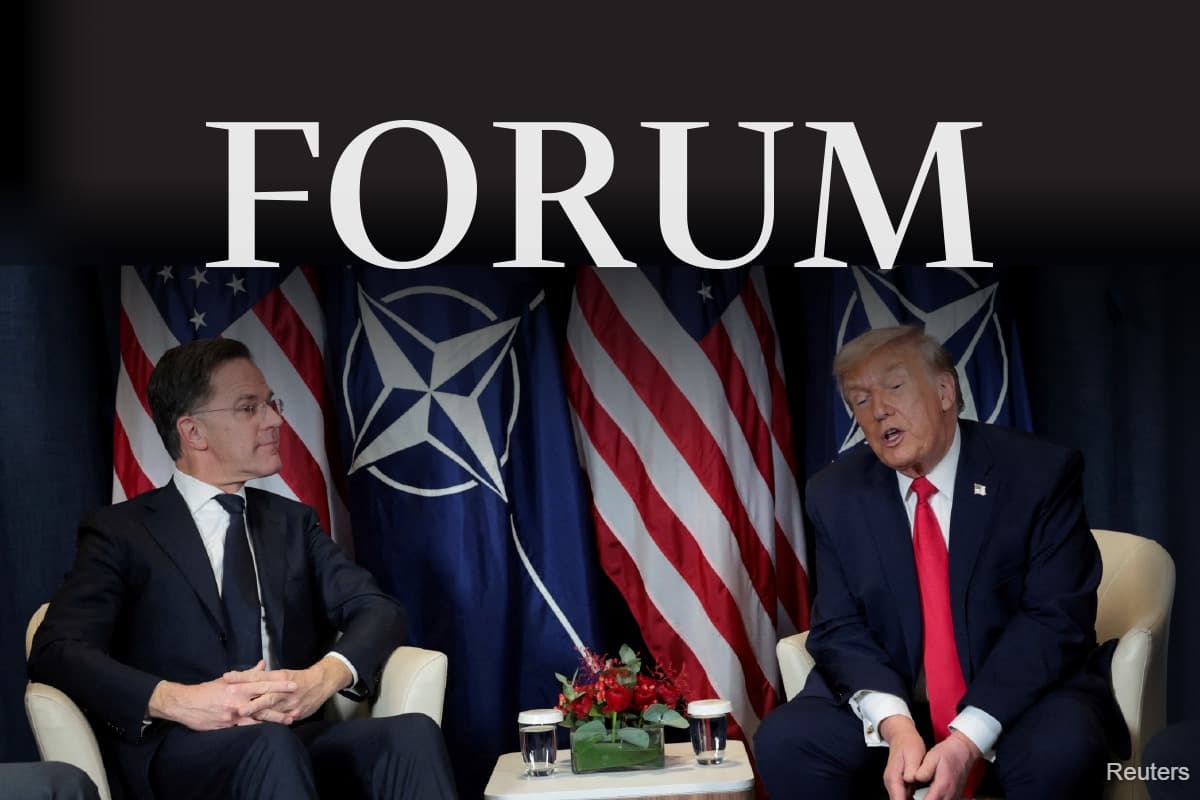
Nato secretary-general Mark Rutte’s “Daddy” reference to Trump suggests that the sovereigntist moment is not quite over, as the US “No Kings” mobilisation suggests.
Trump’s America First clearly opposes multilateralism, generating broader concerns. He has withdrawn the US from many but not all multilateral bodies.
On Jan 7, the US withdrew from 66 international organisations deemed “wasteful, ineffective, or harmful”, addressing issues it claimed were “contrary” to national interests.
Trump’s continued, selective use of multilateral bodies has served him well, retaining privileges, for example, permanent membership of the UN Security Council with veto power.
The UN Security Council’s Gaza ceasefire resolution was used to create and legitimise his Board of Peace, now touted by some as an alternative to the UN!
Trump will not withdraw from the WTO as its Trade-Related Intellectual Property Rights (TRIPS) agreement is key to US tech bros’ trillions from transnational IP.
End of soft power
Some of Canada’s Prime Minister Mark Carney’s Jan 20 remarks at Davos are telling:
“More recently, great powers have begun using economic integration as weapons, tariffs as leverage. Financial infrastructure as coercion. Supply chains as vulnerabilities to be exploited.
“You cannot live within the lie of mutual benefit through integration when integration becomes the source of your subordination … If we are not at the table, we are on the menu.”
Apart from exercising overwhelming military superiority, Trump 2.0 has increasingly weaponised rules, agreements and economic relations to its advantage.
The abandonment of soft power — accelerated by Elon Musk’s DOGE — has ripped the velvet glove off US hegemony, exposing the mailed fist beneath.
USAID and other US government-funded agencies and programmes have been crucial for soft power, fostering the illusion of domination with consent. Abandoning soft power may well increase the costs of achieving America First.
Jomo Kwame Sundaram is currently senior adviser at Khazanah Research Institute. A former economics professor, he was United Nations assistant secretary-general for economic development. He is a recipient of the Wassily Leontief Prize for Advancing the Frontiers of Economic Thought.
Save by subscribing to us for your print and/or digital copy.
P/S: The Edge is also available on Apple's App Store and Android's Google Play.