

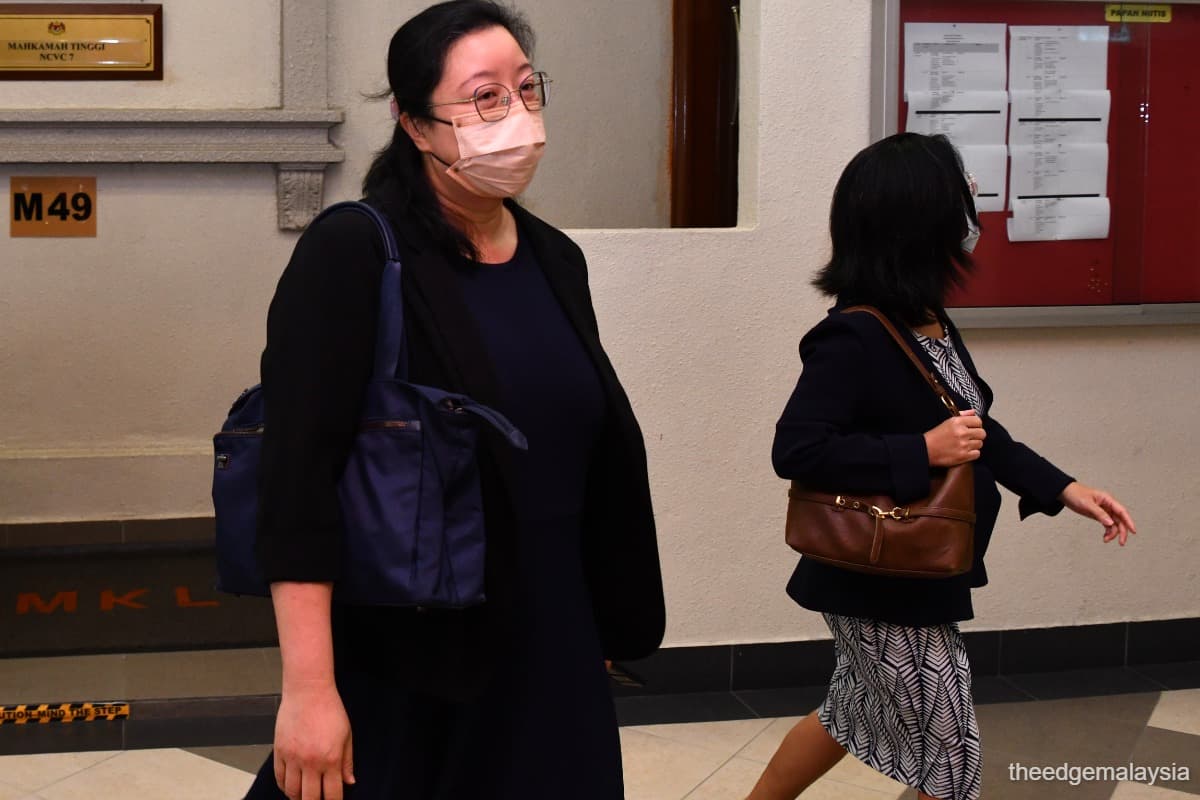
KUALA LUMPUR (April 20): Despite standing to gain from a deceased's will, a beneficiary can still draw up the estate plan, the High Court heard on Monday.
The lawyer who prepared the disputed will involving over RM1.6 billion in assets of gaming tycoon Tan Sri Lim Goh Tong's youngest daughter testified that according to the Wills Act, the beneficiary or their spouse are only barred from being a witness to the signing of the document.
Datuk Low Beng Choo, who drafted two of the three contested wills, said this during the first day of her cross-examination by the plaintiffs' counsel Datuk V Sithambaram.
Sithambaram: Do you agree with me that when drafting a will, a person with interest in the estate of the deceased is prohibited from drawing up the will?
Low: Depends on what you mean interest.
Following some testy back and forth between the senior lawyer and the witness, Low answered: A beneficiary can draw up the will under the Wills Act, but the beneficiary or [their] spouse is not allowed to be a witness.
Sithambaram: So under your interpretation of the Wills Act, the beneficiary in the estate of the deceased can draw up a will?
Low: [That is what is stated] in the Wills Act.
Sithambaram: We can read the Wills Act. I'm asking can or cannot?
Low: My answer remains the same.
Sithambaram is acting for Chan T'Shiao Li, 47, and Kimberly Chan T'Shiao Miin, 44, who are challenging their late mother Lim Siew Kim's capacity to execute the will and the suspicious circumstances surrounding the making of the will.
Lim, who was the Genting Group of Companies founder's third child, passed away due to cancer in July 2022. The 73-year-old left behind three daughters and a son.
In their legal action initiated in 2023, the sisters claim that they discovered two other wills — dated Nov 2, 2021, and April 11, 2022 — following their mother's death.
A third and final will, which was executed, is dated April 28, 2022.
The sisters claim that the short time span between the second and third gave rise to a suspicious circumstance surrounding the preparation and making of the final will.
They also claim that it's not clear why their mother was made to execute her last will hastily, especially since she was not in a position to do so following her deteriorated mental and physical condition.
Their brother, Marcus Chan, who is also a defendant in the suit, was left with properties in Jalan Ampang, Kuala Lumpur; shareholding in Mantap Awana Sdn Bhd; contents of all safe deposit boxes; and 30% of Siew Kim's residuary estate.
T'Shiao Li was left with RM900,000, while T'Shiao Miin got RM100,000.
Lawyer denies any involvement in alleged 'suspicious circumstance'
Part of the dispute is that the sisters claim that they only discovered later that Low had an interest in the deceased's estate through the Dikim Foundation set up by Siew Kim and her late husband, Dick Chan Teik Huat.
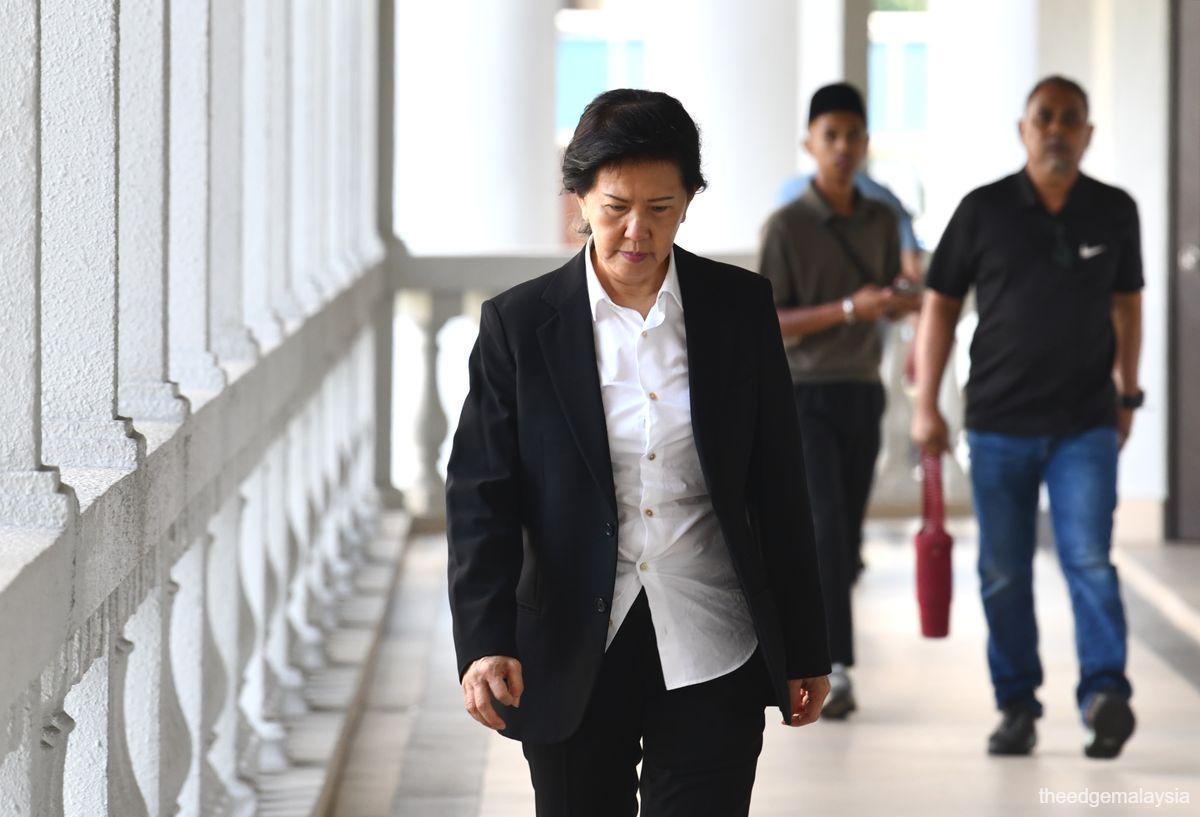
The Dikim Foundation is the major beneficiary of the deceased's will, getting over 70% of the residuary estate.
In one of her main witness statements tendered in court, Low, a practising lawyer with 40-odd years of experience, denied all allegations of her involvement in the purported "suspicious circumstances" surrounding the will.
In the 68-page document, she said that her involvement in all three wills was based on "the very instructions" of the deceased.
"In this connection, the plaintiffs’ allegations against me are entirely concocted and wholly without merit.
"The contents of the last will may not be satisfactory to them [...] but I can confirm [...] that the contents of the last will faithfully reflect the last wishes of the deceased," she said.
In relation to Dikim, Low said that she assumed the role as a trustee of the foundation only from June 2, 2022.
In her witness statement, Low added that she only took on the position following Siew Kim's "repeated requests".
"After the execution of the last will by the deceased and sometime in May 2022, upon the repeated requests of the deceased, I eventually agreed to be appointed as a trustee of Dikim," she said.
Low, who turns 58 this year, is also one of the defendants in the suit.
Previously, the High Court dismissed T'Shiao Li's and TShiao Miin's bid to strike out parts of Low's witness statement.
Judge says would categorise case as public interest
Monday marks the first day of Low's cross-examination. However, proceedings were cut short as Sithambaram said that he was unwell due to an issue with his ear.
Following a brief standdown, High Court judge Mahazan Mat Taib allowed the matter to be adjourned for the day, but not before cautioning parties that the case has to be dispensed with expeditiously.
She said that she considers the case a public interest matter and wanted it on record that the court has to proceed with the matter without inordinate delays.
"[...] I have to remind parties that I have to proceed with the case expeditiously as this case has been going on [for a long time]. I consider this a public interest case as everyone wants to know," she said.
She also noted that the senior counsel was a bit slow-paced during his cross-examination and he ought to get proper medical attention.
She cautioned that should the senior lawyer not be able to conduct his cross-examination when the trial resumes on Tuesday, his associate Ruebankumar Asokan should take over.