

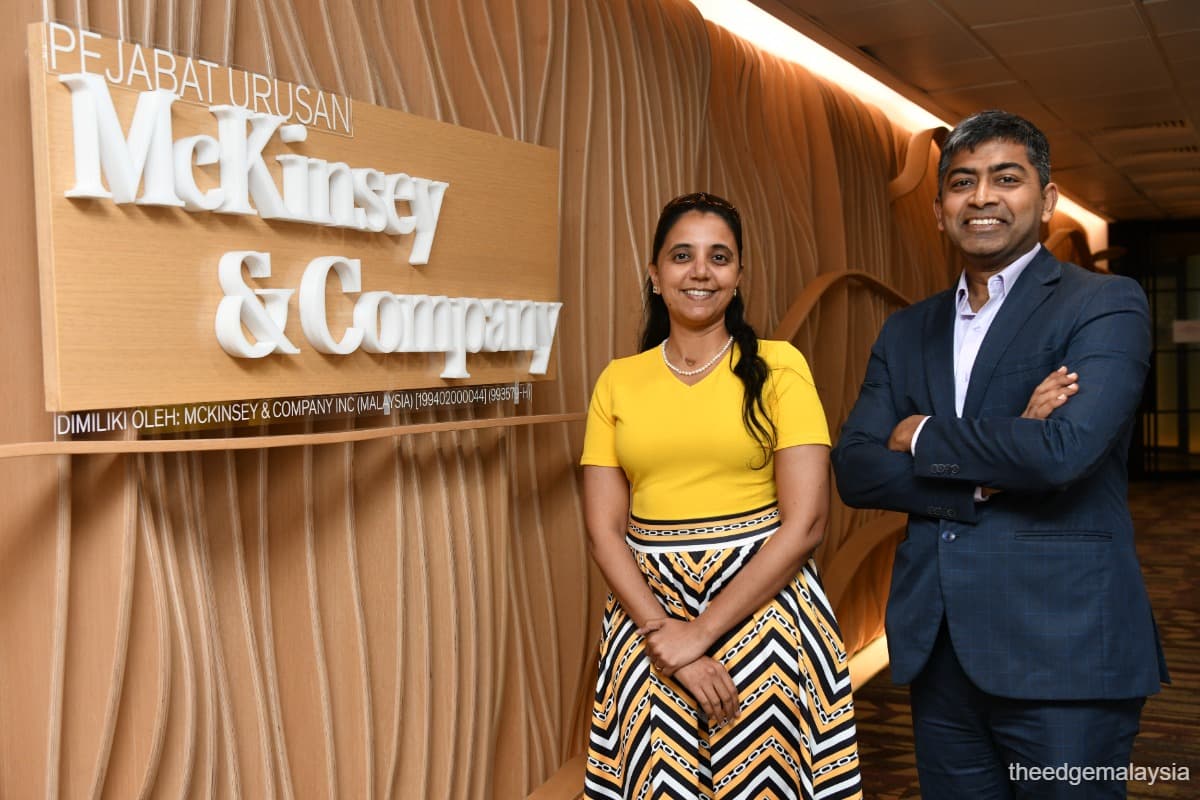
KUALA LUMPUR (April 15): Malaysia has the potential to emerge as a regional AI powerhouse but a bolder policy and stronger adoption among businesses are needed to capture its full value, according to McKinsey & Co.
While Malaysia manages to attract significant investment from global technology giants ranging from Google and Microsoft to ByteDance, the broader ecosystem has yet to fully benefit from AI adoption, said McKinsey partner Vivek Lath.
“If you think about whether Malaysia has what is required to be a regional champion, the answer is absolutely yes,” Vivek said during a media roundtable, pointing to the scale of ongoing investments and the country’s economic strengths.
Google and Microsoft announced multibillion-dollar investments in Malaysia in 2024 while ByteDance plans to invest about US$2.13 billion (RM8.42 billion) in an AI hub and expand its data centre footprint in the country. Johor, in particular, is emerging as a major AI infrastructure hub, having attracted about US$3.8 billion in additional investments from players such as Microsoft and Oracle, driven by relatively low-cost energy and land availability.
Vivek noted that such investments generate economic spillovers, including construction activity and infrastructure development, allowing local companies to participate in the value chain.
However, he cautioned that Malaysia must also ensure that such investment captures higher value-added activities rather than serving primarily as a host for land, power and water resources.
In a report on AI development in Southeast Asia, McKinsey said that despite strong executive intent and rising investment, many companies in the region continue to face structural barriers that prevent AI initiatives from scaling and delivering measurable impact,” noted
According to the consulting firm, closing the gap between investment and measurable outcomes will depend on addressing the emerging issues of talent development, data readiness and organisational transformation.
SMEs lag amid structural barriers
While large corporations are beginning to integrate AI into operations, most SMEs in Malaysia remain at an early stage of adoption, McKinsey noted in its report.
Lack of in-house talent, integration challenges with existing systems and limited budgets were cited as the main key barriers towards AI deployment. Even businesses have flagged the uncertainty over the return on investment from AI initiatives.
McKinsey said although companies that participated in its survey reported improvements in efficiency, innovation and customer experience, the financial returns remained modest. About six in 10 organisations surveyed said AI contributed less than 5% to earnings before interest and tax while nearly one in five saw no measurable impact.
Some business owners remain unconvinced about the immediate need for AI adoption, citing unclear use cases and the absence of a compelling business case.
McKinsey said governments and the entire ecosystems should play a more active role by building shared digital platforms, improving access to affordable AI tools and offering flexible pricing models such as usage-based tokens and local currency billing.